

A Guide to Landscape Photography and Light: Section 1 - Quality of Light
Photography of any kind begins with light. Light is the key fundamental. It is our raw ingrediant as photographers. Whilst Landscape Photography doesn’t allow for us to change the light on a whim, we can still take control of it through our understanding of how light will impact our landscape photographs......

Golden light over the Great Ridge at Mam Tor in the Peak District, UK. But is it hard light or soft light?
Photography of any kind begins with light. Light is the key fundamental. It is our raw ingrediant as photographers. Whilst Landscape Photography doesn’t allow for us to change the light on a whim, we can still take control of it through our understanding of how light will impact our landscape photographs.
Light creates visual mood and atmosphere within our photographs. It’s also responsible for texture, contrast, yes even ‘sharpness’. By understanding a few key principle of light, we can start to take control and determine the impact of light within our photographs. And we’re starting with what is referred to as light quality.
All light is good light.
When photographers refer to the quality of light, we are not using the term to descern good or bad light. We are referring to the quality of the light as being hard or soft. Quite often photographers will also talk about things like diffused light or specular light, golden light or flat light. However these terms are not qualities of light and we will cover them in further sections.
There are two qualities of light: hard light and soft light. But these are not as defined as you may think. In fact, quite often the quality of light is termed in reference to the other, harder or softer. And there are gradations in between the two.
What defines hard or soft light?
In simple terms, hard light produces harder, well defined shadows with high levels of contrast. Soft light at it’s softest will produce little to no shadow with much reduced contrast.
It is the transition between highlights and shadows that is impacted by the quality of light hitting your subject. This is why recognising the quality of light you are photographing in can make a huge difference to how you photograph.

The sun shining down like a spotlight over the Lake District, UK
How is soft light or hard light created?
Light quality is determined by the size of the light source relative to the subject being photographed (the key word here is relative), the larger the light source, the softer the light.
As landscape photographers, our light is sent from the sun and the sun is huge. It’s so big that it would engulf the earth 1.3 million times before being full, that’s pretty darn big! So that must be a soft light then? As mentioned above, the key word is ‘relative’.
The sun sits more than 150 million kilometres away from the earth, so whilst it is unimaginably huge, it is also unimaginably far away. And from our perspective here on earth it actually appears quite small. An easy way to understand this is if you hold out your hand at arms length in between your eyes and the sun. Your hand easily covers it. So despite it’s super huge size, the distance makes it, relative to our perspective, fairly small.
And that’s the reason that the sun is a small light source producing hard light for most of the day.
MOST of the day?
Earlier in this article I wrote that our light for landscape photography is ‘sent by the sun’. I wrote it this way on purpose because, to understand how we get soft light, we have to stop seeing the sun as our only light source.
The softest light we are likely to achieve in favourable landscape photography conditions comes during a time frame known as blue hour. Blue hour exists for a short time before sunrise and after sunset (mostly for much less than an hour!) and occurs at a time when the sun is below the horizon and we are no longer receiving rays of light directly from the sun onto the land. But we do still have light.

Blue hour in the Lake District, UK. With very subtle highlight to shadow transition, this is a great time of day to photograph under soft light
So what’s the source of this light?
Despite the sun being below the horizon, its light rays are still hitting our atmosphere and these light rays get reflected down onto the land below it. In this respect, the atmosphere has now become our light source. And, as the earths atmosphere covers the entire sky above us, it is a much larger light source than the sun. Hold your hand up again at arms length, you can still see the sky all around it right?! That’s because, relatively speaking, it is much bigger than the sun.
It is because of this relative large size that we get soft light with soft shadows. The larger light source is reflecting light in multiple directions and it is those multi directional rays that create much softer light than at any other time of day. The light ‘wraps’ around the land, reducing shadows and contrast.
Cloudy Day? Soft Light!

Cloudy skies. Note the dimished power of the light, also the lack of any hard shadows and reduced contrast in the image
Now transfer this idea to a cloudy day. Forget the idea that the clouds are ‘diffusing’ the light. If we can’t see the sun then the clouds are the light. And if the clouds cover the entire sky then they are a large light source producing soft light. Again, full cloud cover will create multi-directional rays to wrap around the land removing shadows and decreasing contrast. They also diminish the strength of the light.
Above the clouds, the sun is streaming down its rays in the same way and at the same ‘power’ it always does, it is the clouds that reflect some of that light back, reducing the light making it down to us on the land. This will mean that our camera settings need to change to take that diminished light into consideration.
Hard light, Soft light.
We now know that the sun produces hard light whenever it is the only (or most powerful) source of light. But we also understand that when the sun interacts with things closer to earth such as our atmosphere or weather conditions, and we can no longer see direct sunlight, that they become the relative light source.
Right at the start of this article I stated that neither of the qualities of light are definites. That’s because they are relative terms. Even when the sun is at its highest point in the sky, on a clear sky day, its rays are still interacting with our atmosphere, they are still reflecting, defracting and bouncing. That is why we can still see into shadows and it is why, even on the sunniest of days, we still never get a completely defined shadow line. You can actually produce a much harder light in the studio where light bounce and reflections can be controlled and minimised.
And whilst blue hour produces beautifully soft light, by definition, there is even softer light to be found on a moonless night. There is zero transition between highlights and shadows then, because there are no highlights.

A cloud inversion from above looks marvellous and sunny and we can see the reflected light coming back off the clouds and the swift transitions from highlight to shadow caused by the hard light of the sun. The town underneath the clouds will be much darker with super soft shadows due to the cloud coverage acting as the light source.
So the qualities of light are interchangeable even in the landscape. Light quality is harder or softer only in relation to itself.
The harder the light, the more defined the shadows, abrupt transition between highlights and shadows and therefor stronger contrast.
The softer the light, the less defined shadows, smoother transitions between highlights and shadows and lower contrast.
In section two we’ll be discussing the qualities of reflection and how to harness their impact upon your photography. Make sure to sign up for the newsletter below.
Dave

Landscape Photography: The Moment Of WOW!
It is far too easy to ruin an otherwise beautiful shot by overthinking it.How do I know this? I’ve done it, loads of times! And quite often, I’ve done it in pursuit of things unnecessary for the shot the landscape has presented.
Yep, I’ve been THAT photographer. You know the one….
It is far too easy to ruin an otherwise beautiful shot by overthinking it.
How do I know this? I’ve done it, loads of times! And quite often, I’ve done it in pursuit of things unnecessary for the shot the landscape has presented.
Yep, I’ve been that photographer. You know the one….attempting to cram every technique I’ve ever learnt into one photograph, making landscape photography a tick box checklist. There’s a reason why I got like that, although perhaps that is one for another blog.
There's so much to consider for any given photograph. But you really do need to be aware that, in doing so, moments can be missed and shots can become convoluted when you start to overthink the shot.
The moment of wow! Tarn Hows, Lake District National Park, UK
Take the photograph above of the trees at Tarn Hows. The light fleetingly kissing the leaves on an otherwise stormy day with thick dark clouds as far as the eye can see. Overthinking really wasn’t an option.
When I first noticed the cloud breaks shining some light on the trees I was up on the Eastern side of the tarn. Up a hill (for those that know Tarn Hows I was by the memorial stone) creating a much wider photograph of Tarn Hows. Scouting the clouds I could see some further breaks heading towards the tarn. The light traversing across the land as if by magic, you know the kind of light you only really experience during a break in a storm, stunningly beautiful.
There was no real way to capture what I envisioned from where I was stood. Looking down at the tree line from up high would have captured a rather flat image of green on dark blue water. It had to be from the Southern shoreline.
Having tried this composition on earlier trips, I knew that this kind of light would work well, as long as it hit the trees. Lighting the subject matter whilst leaving the further shore treeline in shadow.
Grabbing my camera and bag I ran down the hill and around the path. I’m not built for running at the best of times, never mind with a bag and camera in hand but shockingly I made it to the shoreline just before the last break was about to hit the trees and instinct took over.
It was a moment of WOW, and just a moment, nothing more. No time to think, no time to overcomplicate it....Long telephoto lens to pull the background in, 1/200 of a second as I was going to hand hold, f/7.1 at 135mm. I bumped the iso to 200, underexposing by a stop so that when the light hit, it was just focus, click, create. Within two exposures, the light had passed.
I had worked hard to get it….but not with the camera. Yet it wasn’t sheer luck. In order to envision the shot to begin with required all the experience I had photographing Tarn Hows, otherwise I wouldn’t have been aware of the potential from my lofty position much higher above the tarn.
Lots of journeys out in less than suitable conditions had given me an eye for breaks in the cloud, experience had taught me that if there had been one break, there was likely to be others. The instinct borne out of countless times exposing manually, the camera in auto or semi-auto likely to have exposed for the trees in shadow before the light hit (perhaps not, but I’m glad I didn't have to rely on it).
Everything that had come before had led me to be able to capture the shot as it happened….quick! No option but to just do it. And certainly no option for overthinking.
Simplicity.
Sometimes the light and the land present a scene that demands nothing more.
Dave

Landscape Photography: The Endless Pursuit
One of the bad photography habits I've gotten myself into over the last few years is 'whatifid-ism'. Basically the habit of looking back on a photograph, a photograph that I'd once been really happy with, and had loads of great memories of creating, and tearing it apart as I now have new found knowledge or a different way of doing things…….
One of the bad photography habits I've gotten myself into over the last few years is 'whatifid-ism'. Basically the habit of looking back on a photograph, a photograph that I'd once been really happy with, and had loads of great memories of creating, and tearing it apart as I now have new found knowledge or a different way of doing things.
Self-critique is a good thing to do in landscape photography, but it can easily lead into a thought process of 'that's no longer good enough'.
This photograph of one of the waterfalls at Tarn Hows in the Lake District National Park is a great example of this.
At the time, and in the years since, I’ve been really pleased with this photograph. And it would seem that other people enjoy it too, a few prints have been made and sold and it’s garnered social media likes and loves. But there’s no doubt that there are things I could have done differently on location…..some ‘whatifId-isms’:
'What if I'd' tried a wider lens?
'What if I'd' closed down the aperture to get more clarity on the bottom right?
'What if I'd' spent a little longer searching for a slightly different angle?
‘What if I’d’ given over a little more room to the flow on the left?
Asking questions like these, after the emotion of the day and attachment to the shot has passed, is a great way to learn and improve on your photography. Analysing the shot, mulling over the composition, thinking about other ways you could have done it, are all vital tools in the journey of learning that we undertake through our photographic endeavours.
But asking these questions and finding the flaws within an image doesn't make it a bad shot. One of the biggest lessons in photography is that art is rarely ever (if ever!) perfect. Perfection is not something that you can control anyway. Perfection depends on the photographs relationship with the viewer, not with the artist. Post about a photograph that you think reaches perfection on the internet, you’ll soon find someone willing to tell you that perfection it is not!
But it is the strive for perfection (and this is the goal that we will never reach) that keeps many photographers going. But it is an ongoing push and pull between what is in our heads and our final creation.
So, yes, this shot has some flaws. But it is the shot that I created in that moment. A brief fleeting moment that can never be repeated. So,
'what if I'd' not taken it?
‘What if I’d’ missed that speckled light because I was busy swapping lenses or searching for a better angle?
'What if I'd' closed down the aperture and lost texture in the water?
Then it wouldn't be this photograph. And I like this photograph. And if I'd never taken it, then I wouldn't have been able to ask those questions anyway.
Learning is so worthwhile, yearning is not.
Dave, April 23

Landscape Photography into 2023 and Beyond
….The truth of the matter is that I did far less landscape photography in the second half of the year than the first. There is no doubt that I lost some of my mojo for it. I love the adventure of landscape photography as much as the actual photography itself. Going somewhere I’ve never been before. Exploring and finding a view point that makes me go wow! That’s the part I love, far more so than pressing the shutter on my camera…..
The beautiful view from midway up Chrome Hill in the Peak District National Park - my first shoot of 2022
Hello again, it’s been a few months since I last wrote. I hope that you rounded off 2022 with some amazing landscape photography.
Like I’m sure many of us do, as 2022 drew to a close, I found myself taking a retrospective look at my landscape photography from the previous twelve months.
2022 had got off to a flyer in many respects. My first shoot of the year atop Chrome Hill in the Peak District National Park was a beautiful morning. It was cold but clear other than some lovely haze covering the sun as it rose. This really aided a beautiful winters morning glow over Parkhouse Hill and the River Dove valley.
And then, the following week it was off up to the Lake District to run a one-to-one landscape photography workshop for a client at Tarn Hows (on an aside, I was very chuffed to see that said client has recently been awarded a ‘Highly Merited by the Judges’ award in a landscape photography competition - well done!). The year was well under way for Landscape Photography.

I adore this view, even when you can’t really see through the mist - Tarn Hows in the Lake District National Park
At the start of the year I had made a list of just a few (five in actual fact) locations I wanted to visit in the first half of 2022. There were four in the Lake District and one in the Peak District. By June, I had ticked off all but one. On the completed list were Hallin Fell over Ullswater; Kelly Hall Tarn near Coniston Water; the duo of Derwentwater and Latrigg Fell in Keswick; and Higger Tor in the Peak District were all ticked off. This left me with only Side Pike in the Langdale Valley to go, plus some other locations I had recce’d during the early months of the year. Added to the list for late summer and autumn were Watendlath Tarn; Aira Force Waterfall; a return to Wastwater; and a hike up High Street over Haweswater.
However, having been to the Lake District half a dozen times in the first six months of the year, I only made it to the Lake District once in the second half of the year. Even that was on a very wet day in October when conditions for Landscape Photography were just not in my favour. The day itself had been chosen due to having a morning shoot for a restaurant in Lancashire. Already half way to the Lake District with a free afternoon, despite the weather not looking great, I decided it was time to venture up to Blea Tarn and Side Pike. The conditions had other ideas though. On arrival I found the visibility down to nothing and a very wet mountain climb. Sanity prevailed and I decided that it really wasn’t the day for this landscape photographer.

The view from Hallin Fell looking out over Ullswater towards the snow capped Helvellyn in Spring
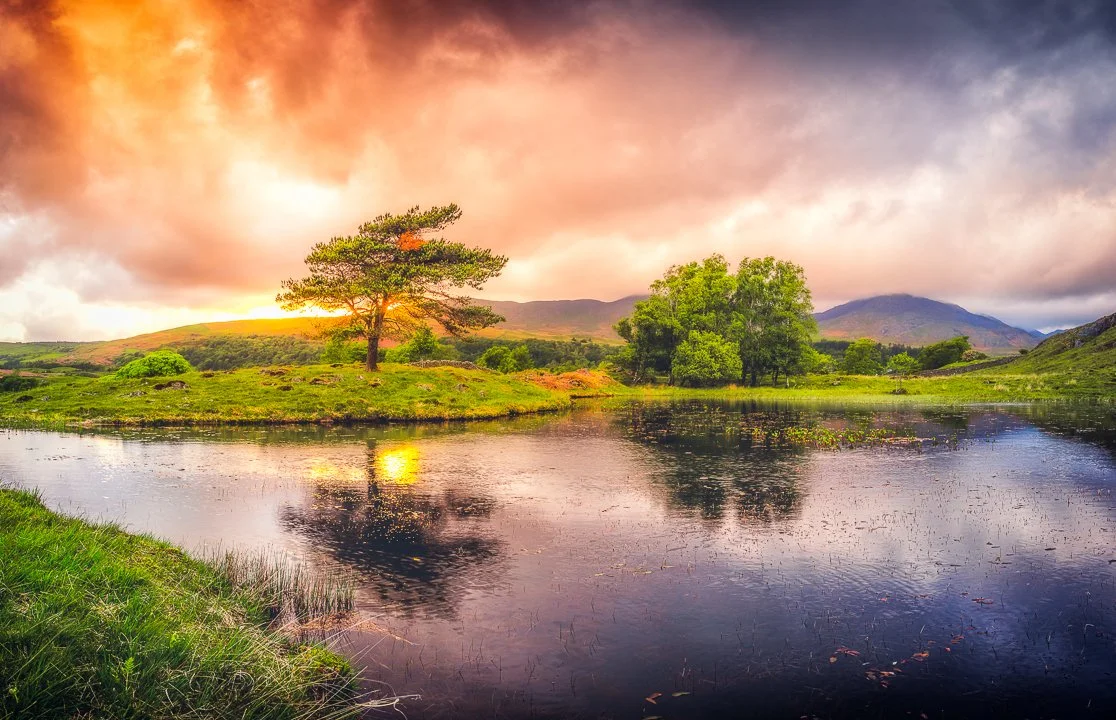
The beautiful Kelly Hall Tarn in the Lake District National Park. I almost missed this shot completely as I didn't think the cloud would break
The main reason for my lack of activity in the Lake District in the second half of the year was very simple. The cost of living crisis in the UK. What had always been a fuel bill of around £22-£25 to do the return trip to Cumbria was now well over £40. And it wasn't just the cost of fuel. Everything had gone up in price. As a professional photographer I was feeling the pinch. Clients began to cut back on shoots and there was no real opportunity for me to up my prices. This meant having to take on more clients (and being able to do that is something I’m very grateful for) and do more work.
The four hour round trip to the Lake District was not only costly in monetary terms, but costly on time, of which I now had less spare. It was an easy decision to make. The second half of the year would see more Landscape Photography for me in The Peak District. Quite simply, from my home in South Manchester, the Peak District is half the travelling time and a third of the distance. A literal saving of time and money vs trips to the Lake District.

The Millennium Stone at Derwentwater which celebrates 100 years of the National Trust. This was one of my spring shoots in the Lake District in 2022
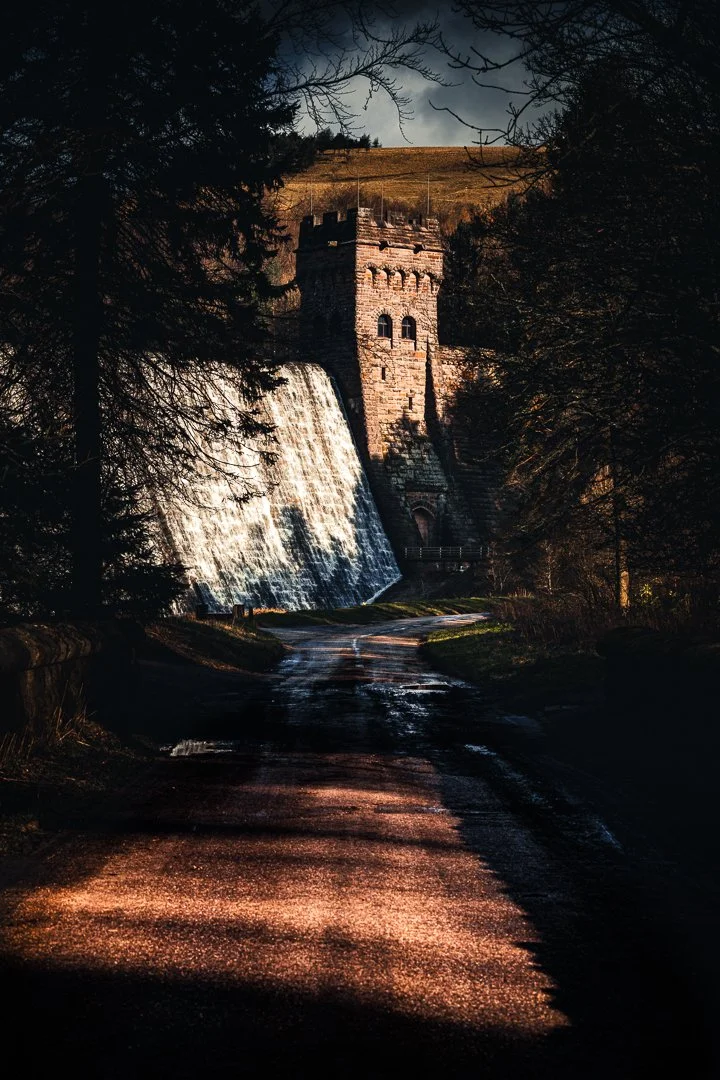
It’s still Derwent, but it’s a Dam site closer! Derwent Dam in the Peak District
Not that the Peak District was ever second choice. The Peak District National Park is awe inspiring for a Landscape Photographer and has absolutely loads to offer in terms of subject matter. I do like my seclusion though and, whilst I love the Peak District, I have always felt a little more ‘away from it all’ in the Lake District. I’ll be back there in 2023 for sure, although I’m getting ahead of myself there.
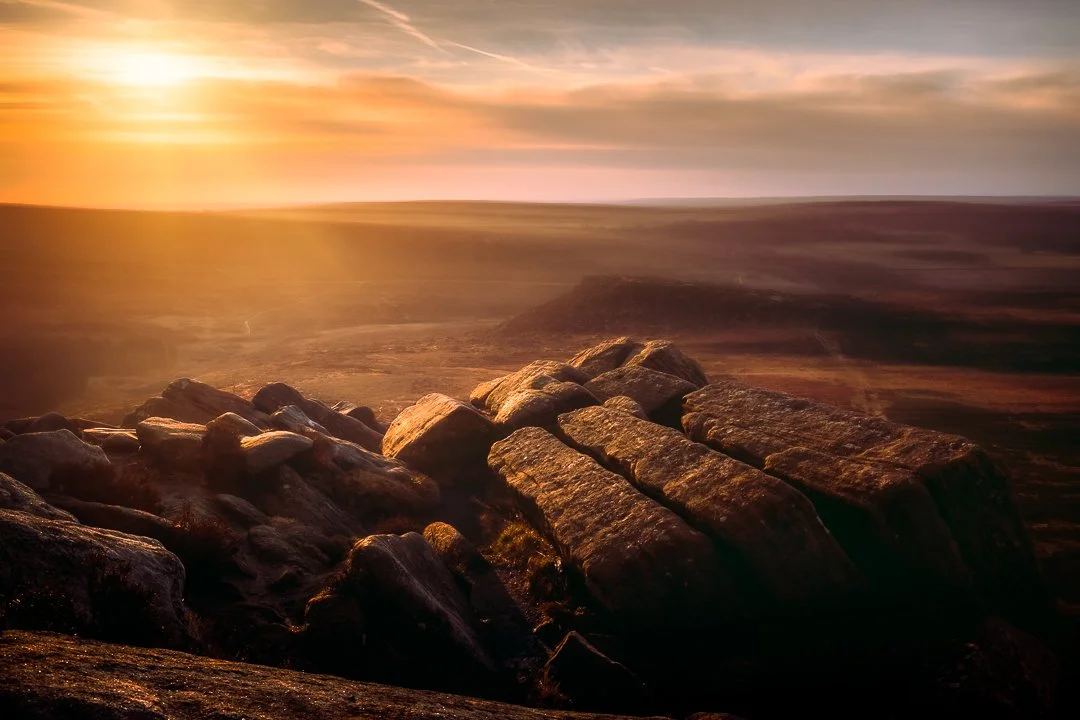
A very windy and cold sunrise on Higger Tor in the Peak District National Park. This formation of rocks overlooking Carl Warks is nicknamed the Kit Kat stones
The truth of the matter is that I did far less landscape photography in the second half of the year than the first. There is no doubt that I lost some of my mojo for it. I love the adventure of landscape photography as much as the actual photography itself. Going somewhere I’ve never been before. Exploring and finding a view point that makes me go wow! That’s the part I love, far more so than pressing the shutter on my camera.
But, with all of the extra workload I was carrying; commercial shoots, family photography, wedding photography, brand shoots etc, it was all beginning to weigh me down. I didn’t feel like I had time to do landscape photography the way I like to. And so each shoot became a time saving exercise. Planned out locations, shots picked before I got there. Working late into the evening the night before and getting up for sunrise, surviving on a few hours sleep. None of it was motivating me to get out. And I wasn’t getting out. Not as much as I had been anyway.

The Roaches in the Peak District National Park. Truly one of my favourite landscape photography locations. I saw it an awful lot though in the second half of 2022
Of course, these are not real problems in the real world. Poor photographer, having to chose one national park over the other. It’s a non-problem. And, with all the above being said, I did have some fabulous moments out and about in the second half of the year. Plus, I ticked off a location, and a shot, that had been a couple of years in the mind. So it wasn’t all that bad, just perhaps not what I had planned in my head as 2022 started. First world problems indeed!
In early Autumn I finally caught a cloud inversion up on Mam Tor over the Hope Valley. Whilst I didn’t actually got any great shots, the experience of seeing it happen first hand was more than fantastic and that in itself was enough. Of course, I created some images, but upon review, they didn't really do justice to the magnificence of the view.
One of my better shots from the morning on Mam Tor. I blame the cloud inversion for being too distracting!
A couple of weeks later and a shot that I had been wanting to take for a long time. I had seen a stretch of woodland way back around the end of 2020/start of 2021 on a walking group. Nothing particularly special. But it had stuck with me and I was determined to go there and try to capture the shot I could imagine.
So, on one of my more motivated mornings. I headed to the location, in a part of the Peak District that I had never been before. A location that isn’t/wasn’t (I had barely seen anything about it until I went, now everybody seems to be going there….coincidence?!?!) too well known and not overly publicised, researching it had been tricky.
Driving up I had that real feel of adventure and was really excited to get out of the car, strap on my pack, stock up on water and start the trek through what I imagined to be overgrown woods, in search of a hidden stretch of woodland path. The reality was a little different. Out of the car, I headed to the little gate at the side of the road, and found it within about two minutes. So no real adventure, but the shot I had in my minds eye for well over a year was finally in front of me. Fantasy Forest.
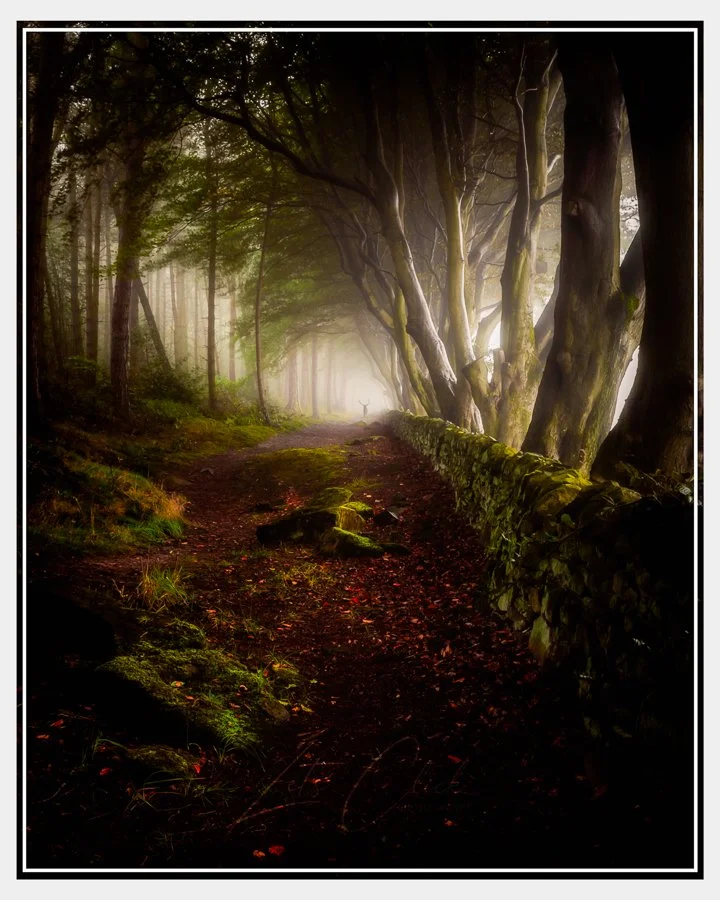
‘Fantasy Forest’. Upper Moor near Matlock
It is through this kind of retrospective view that I start to realise that it wasn’t a bad year for my landscape photography after all. Sure, it wasn't how I thought it was going to be, I definitely missed my monthly adventures in the Lake District. But I am looking now at some of these shots and thinking, yeah, you did alright. And the year wasn’t quite over yet, there were still a couple more shoots to get out and do. And it was about time I revisited a certain North Wales lighthouse.

Talacre Beach is home to the Point of Ayr Lighthouse or simply Talacre Lighthouse. Decommissioned but still looking over the bay.
So what are my plans for 2023. Well it’s my aim to hit the Lake District a few times this year. We’ll see how things pan out with that. But I am approaching the new year with a new vigour. I am excited to start to do some different things. I have been interested for some time in exposure manipulation in camera and spent a lot of time in the later part of 2022 practicing this technique. Finally I managed to create something worth sharing whilst visiting the above lighthouse for a second time in December. It’s a work in progress but I’m really excited by it and think it will form a couple of projects to work on for the coming year. The below images should give you an idea - although neither of them are fully formed yet. Still a lot of work to be done on my technique for both.
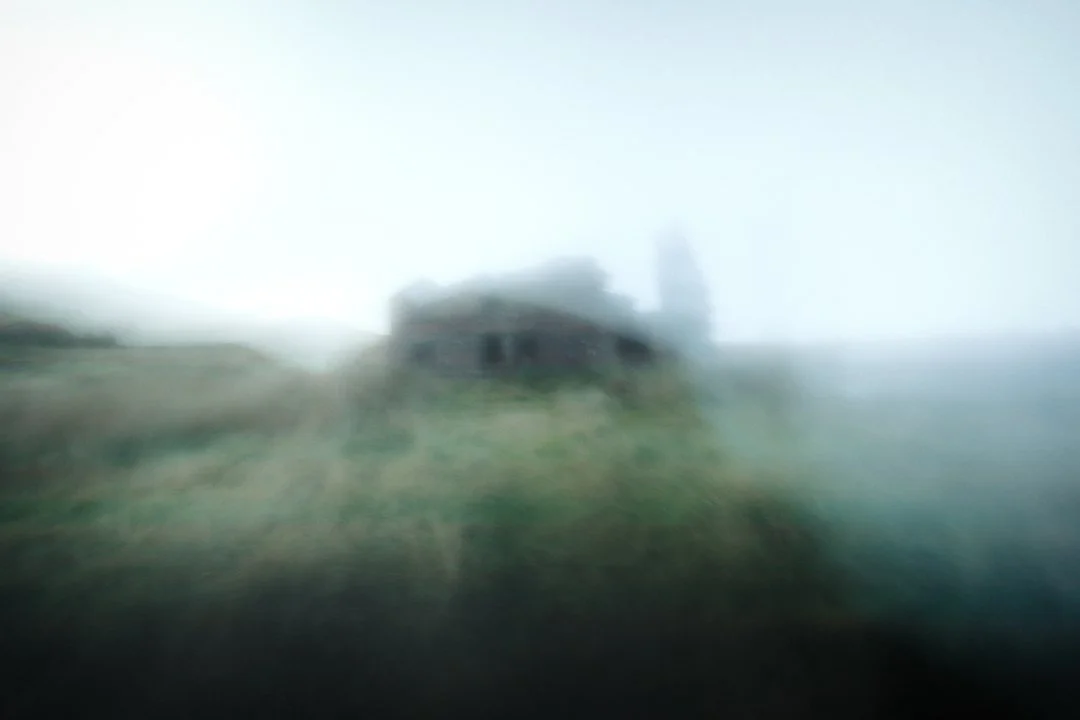
An image that was inspired by being uninspired. Location boredom can sometimes produce something a little different. The Barn on The Roaches
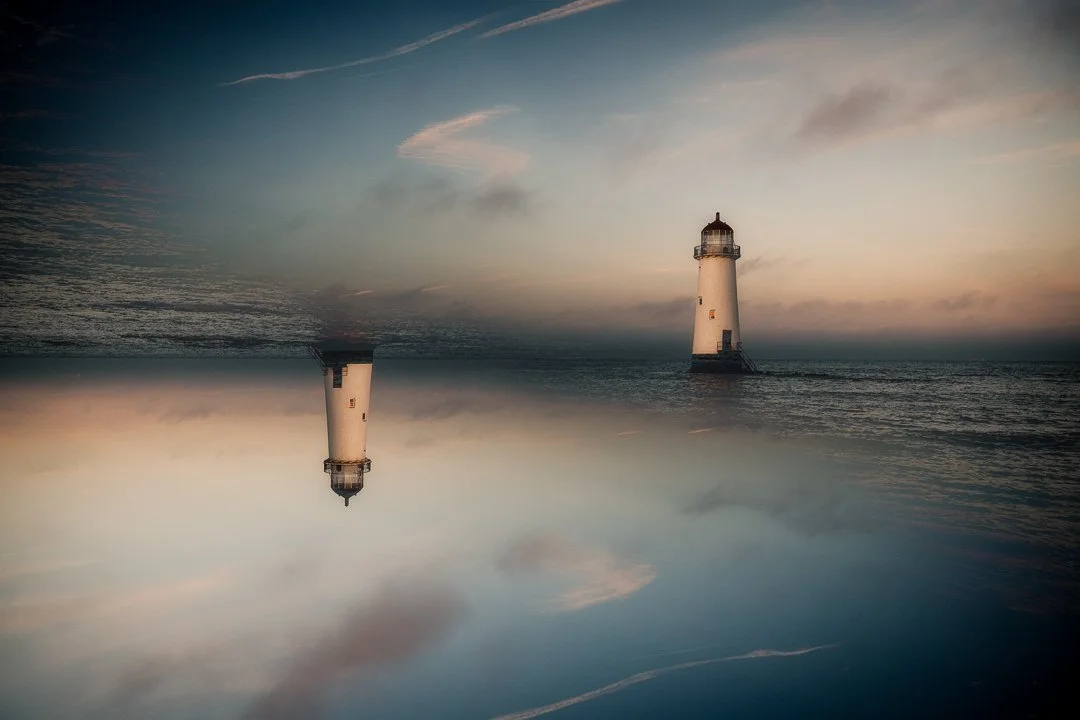
In camera exposure manipulation is a genre of photography I want to explore further in 2023
Plus, I’m becoming really interested in photography at night. Not of the skies above, but of the landscape under the cover of darkness, so I’m hoping to do a few shoots in the landscape under nothing but the light of the moon.
As I review 2022, I hit upon the realisation that I should not be waiting for the landscape to inspire my photography. Rather that I need to be capturing the landscape in a more inspired and unique way. There is beauty where you find it. And, for me, I think I will start to look rather differently at each landscape in 2023. It’s time to let my creative spirit out. To stop being safe with my photography. It is time for my landscape photography to have something to say.
Wishing you a very happy and prosperous New Year - here’s to all the photography adventures we will each experience in 2023.
Dave

Photographing a Peak District Cloud Inversion
This week I finally managed to photograph a Cloud Inversion. A Landscape Photography aim of mine for quite some time, and I thought I'd share some tips so you could have the best chance of forecasting one for yourself

A beautiful cloud inversion over Castleton and the Hope Valley in the Peak District National Park
This week I finally managed to photograph a Cloud Inversion. A Landscape Photography aim of mine for quite some time, and I thought I'd share some tips so you could have the best chance of forecasting one for yourself
The night prior was a really clear night - moon was clear in the sky and was brisk but not freezing.
Checking the weather app (I used the 'Clear Outside' app) I looked for a few things on there:
1. The Dew Point and Temperature - both need to be the same, or the temperature needs to be lower than the dew point.
2. The wind - a fairly still morning is needed. If it's windy, any mist/clouds will dissipate too quickly to form an inversion.
3. Humidity - this is all to do with moisture in the air, needed to form those clouds, so humidity above 90% is what to look out for.
4. Otherwise clear skies
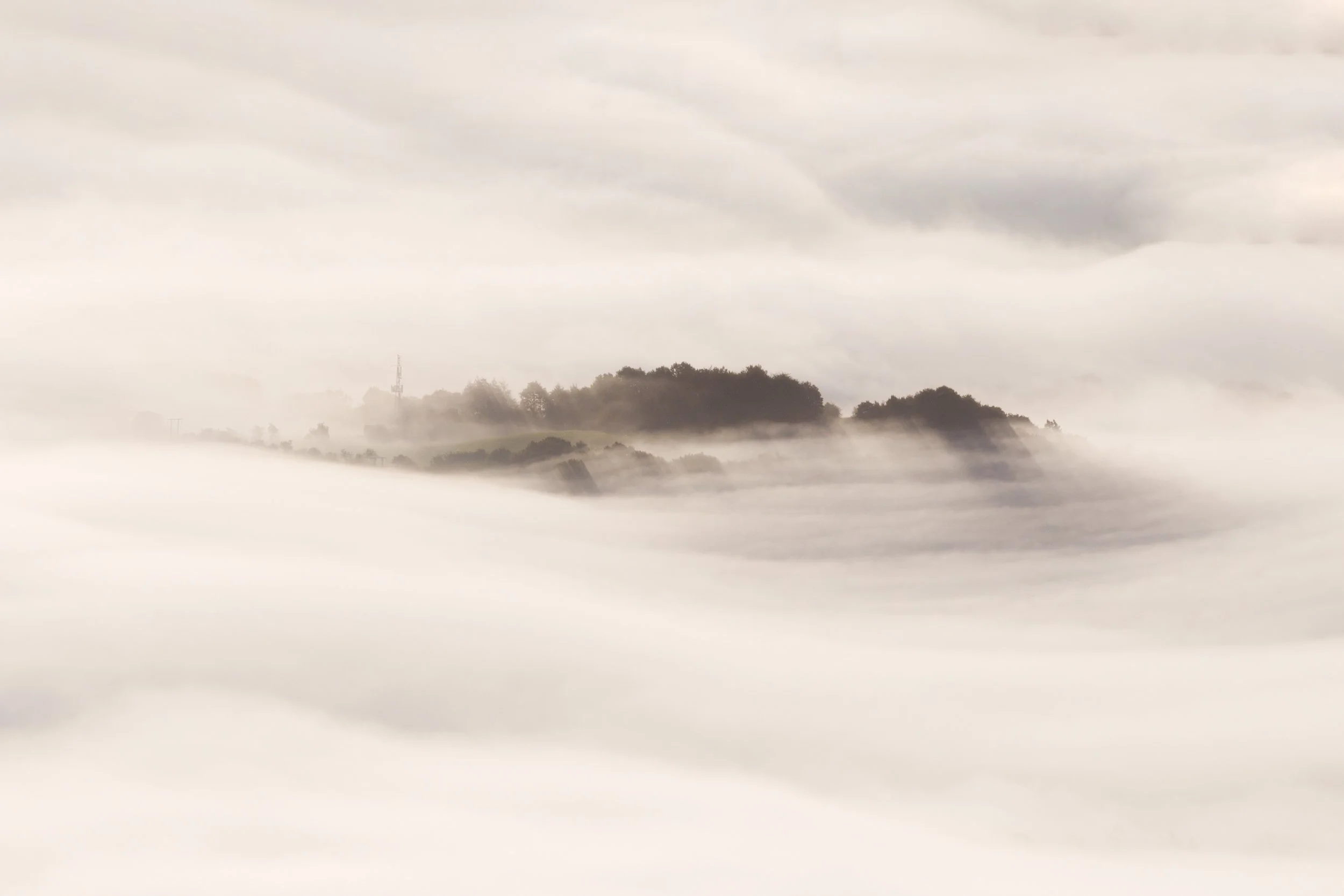
Strapping on the 70-200mm lens, I could get a unique viewpoint into the clouds
On the morning itself, as I was driving along through the Peak District, I found myself heading in and out of fog banks whenever the road dropped into a dip by fields. A sure sign of the dew point and temperature intermingling. I could also see some mist forming over Black Brook river, pools, lakes and rivers, are sure first indicators as there is lots of moisture in those areas.
Something I've been told to look out for in the past is any smoke that may be rising from factories or chimneys. The smoke will rise normally a certain amount and then seem to stop as if hitting a piece of glass in mid air - a sure sign of a temperature 'inversion'. In the video I recorded on the morning I was up on Mam Tor photographing the cloud inversion in Hope Valley below, I could see the Hope Valley Slate Mine chimneys pumping out smoke and was sure I could see this effect happening there…..anyway another good indicator to look out for.

So if you spot a few of those signs one morning this autumn, there's a good chance of mist and fog......and if you can get yourself above a valley with a camera in time, then you might just get the chance to get above a cloud inversion and photograph this spectacular event for yourself.
You can check out my view over a Peak District cloud inversion here: https://www.youtube.com/watch?v=YfjzsuMPdEg
Dave

Lake District Landscape Photography Locations - My Top 5
Yep, that’s correct. the Lake District National Park only has one official lake; Bassenthwaite Lake. the rest are all tarns, meres or waters by name…..there’s one for your pub quiz bank!
In reality of course, there are many more, with sixteen large bodies of water and seventy six smaller ones that could still typically be classed as a lake.
And so let’s take a look at a few that, as a photographer, you should not miss.
The Lake District National Park here in the UK is famed worldwide for it’s epic vistas and areas of natural beauty alongside, of course, it’s landscape photography offering. And for good reason. It is simply stunning!
England’s largest national park, situated in the county of Cumbria, the Lake District has it all. Breathtaking mountainous landscapes, dramatic coastlines and beautiful waters.
Attracting over 19 million visitors annually (STEAM 2018: Cumbria tourism) it is home to circa 2,000 miles (3,000km) of public access walkways. For its size, it doesn’t house too many people (around 45,000 residents) but it is the natural habitat for an abundance of wildlife and fauna, many being rare species.
There is a lot to love about England’s Lake District.

Beautiful Blea Tarn, not a lake!
But…..there are not many actual lakes to love! Only one in fact. Yep, that’s correct. the Lake District National Park only has one official lake; Bassenthwaite Lake. the rest are all tarns, meres or waters by name…..there’s one for your pub quiz bank!
In reality of course, there are many more, with sixteen large bodies of water and seventy six smaller ones that could still typically be classed as a lake.
And so let’s take a look at a few that, as a photographer, you should not miss. I’ve created this list with accessibility in mind, but some will still require some level of mobility. But I’ve noted where in the descriptions. One thing is for certain, visit any of these spots and fabulous landscape photography will be at your fingertips…..oh and it should be said that these are in no particular order - this isn’t a chart show!
Derwentwater

The famous view from Crows Park, albeit with very high water levels
Derwentwater lies towards the north of the Lake District, just south of the town of Keswick and under the shadow of the Barrowdale Fells and Skiddaw. This is a very accesible area, with fantastic routes around much of the water, offering great opportunity no matter your fitness or ability.

Ashness Bridge itself is rather picturesque too.
There are several parking locations around but I have found parking at the Lakeside car park, adjacent to the theatre, to be a great starting point. This parking location is a pay and display and is privately owned but has lots of spaces. Within a minutes walk of the car park, you’ll find access to Crows Park, from which the header picture was taken, or you can head to the numerous docking points and further along to Friars Crag which is a beautiful location to photograph from. If you fancy a bit of a hike, head up to Ashness Bridge from here and get some spectacular views from over the water. Or, if you don’t quite fancy the walk, you can drive up in 15 minutes or so and there is a National Trust car park (free for members) within a few minutes walk of Surprise View, from where you’ll have a birds eye view of the water below.
A fantastic spot for a days photography.
You can also take a look around this location with me and see these photographs being captured by clicking one of the following links:
Ashness Bridge and Surprise View
Rydal Water

The boathouse at Rydal Water
Rydal Water is located centrally in the Lake District, north of Windermere. Formally known as Routhmere, Rydal Water is a fairly small body of water but has lots to offer. Being a roadside location, it is fairly accessible to reach, but some of the paths are less than smooth and there is the occasional fallen tree to clamber past.

The RAF regularly startle you by flying overhead
Personally I have found parking by St. Mary’s Church to be the best place to start your day’s photography. This is on-road parking and can get very busy, certainly during peak season. A small donation to the church is required and there is an honesty box in place for your coins.
From here you are a short walk from the gateway through to Rydal Water, which is just a short walk along the main road. Or you can take a trip past the church and up to to Rydal Falls, a lovely waterfall which is near Rydal Mount (the once home of Wordsworth).
Not only are the waterside views picturesque, but you can almost be certain that at some point during your visit you will encounter a sonic boom as the RAF fly through the valleys, so have those long lenses prepared for that!
All in all this is a fabulous location and is great for a mornings photography which can be extended to a full day if you fancy capturing both the waters edge compositions and Rydal Mount and Falls.
You can catch me walking around Rydal Water on a misty day by clicking the link:
Rydal Water - Everything Changes
Grasmere

Grasmere - the view from half way up Loughrigg Fell
Grasmere is a beautiful location situated just north of Rydal Water, in fact it feeds into Rydal via the River Rothay. It was from a viewpoint of Grasmere that William Wordsworth once declared ‘the most loveliest spot that man hath found’.
And if it is William Wordsworth connections you are after, then they can be found in abundance in the village of Grasmere situated on the shores of the water.

The mountainous ranges to be photographed from Loughrigg Fell are spectacular
The land surrounding Grasmere is privately owned. And whilst a lot of this is loaned to the National Trust for public access, there are private areas, meaning that you have to venture out onto the roadside pathways to navigate all the way around.
And Grasmere has great significance for the National Trust. The trust was formed as a direct response to ‘The Island’ being privately sold in 1893. Over one hundred years later, The Island finally became National Trust owned.
Photography wise, there are lots of compositions to be had from the shoreline. But if you want the truly spectacular shots, then you’ll be wanting to head up Loughrigg Fell over Grasmere. It is fairly accessible, with the route up to Loughrigg Terrace suitable for most and opening up some spectacular views.
Taking the steps from the Terrace onto the Fell can be hard on your lungs! You need a moderate level of fitness and a good supply of water. But if you can manage it then it is so worth it. The views of mountainous ranges and the viewpoints into the valleys below rank high on this photographers list of amazing locations.
White Moss car park gives good access to Grasmere (and Rydal above too) but is a good 15 minute walk to the shore and it doesn’t come cheap. This is by far the most expensive car park I have had the pleasure of in the Lake District and, if I remember correctly, 6 hours or so was somewhere in the £20 range…..not cheap!
Follow me up Loughrigg Fell and see some more shots here:
Wastwater
I have a particular fondness for Wastwater, not only is it absolutely stunning, was once voted Britains favourite view and seems to have its own mini climate!…but it is also where I got engaged to my now wife, on one knee, along the shoreline.
And so it had to feature in my top five. But all personal affection aside, it is breathtaking. It almost feels like another world. Like you have stumbled across a long lost island. Whenever I have ventured to Wastwater, the air has been still, the silence deafening and the water crystal.

This is the deepest water in the Lake District National Park, and indeed England. It’s surface lies 200ft above sea level, whilst the floor is 50ft below sea level. It is a glacial lake and is reputedly crystal clear at the bottom….Sadly it has cost several divers their lives as they tested out that factoid for themselves.
The water itself is roadside and the views from there are just magnificent from so many differing angles along the shoreline. There are several places to park and several lay-bys along the road too. And of course there are some truly splendid walks and hikes to be had, some of which are extremely difficult and shouldn’t be attempted without the right gear.
The other difficulty with Wastwater is getting there. It is a long drive from the M6 and there are not many amenities along the way so ensure a good supply of fuel and supplies if you are heading there. It is secluded and it is unlikely you will get any phone signal either. But wow, it is truly magnificent. Just grab your tripod and your camera and enjoy.
Tarn Hows
If you have ever watched any of my videos over on You Tube, or regularly visit this site, then you’ll know of my love with Tarn Hows. For me this has everything. Fabulous vistas, great waterfalls, wonderful wildlife, unique woodland and lots of cows!
The memorial stone over Tarn Hows.

Trees unique to this part of the world - imported by a former owner of the estate
But as it offers so much, it attracts many. If you have any plans to photograph here then steer clear of the weekends (or any day during high summer) as it gets so busy and there are lots of people, dogs…..and photographers!
Perhaps only Derwentwater rivals it on this list with the amount of visitors it attracts. Partially, I imagine, due to its links with Beatrix Potter (she of Peter Rabbit fame) who bought the estate here with the profits from her first book. She later bequeathed half of the estate to the National Trust, the rest followed in her will.
And, as it is a National Trust, there is a decent sized car park here (free for members) with good facilities and usually a National Trust member on hand in the car park to offer guides and advice. During summer you can usually find an ice cream van parked up and on occasion other vendors too.

Part of the lower Tom Gill falls
And once you have parked and got yourself ready, there is so much to explore. No matter your fitness levels or ability, you won’t be disappointed. There is a good, well kept walkway around the tarn and plenty of walks venturing off it up into the surrounding fells with views over many mountains in the central Lake District.
And of course the waterfalls. Some splendid waterfalls drop down the Tom Gill hill on the Mary Glen stream, well worth checking out for some great photography. You’ll want your nd filters if you go in the middle of the day.
Tarn Hows is North East of Windermere, about 20 minutes drive from Windermere town and is well worth a visit if you are in the area. You could easily spend a full day exploring and photographing.
And if you want some more information on Tarn Hows (and a couple more tarns in the area too), then click this link to go to my full guide to photography at Tarn Hows - apologies for the audio, it isn’t the best, but worth a watch if you are planning to go:
I hope this article has been of use to you, let me know if you plan on visiting any of these areas via the comments, I’d love to hear from you.
Dave
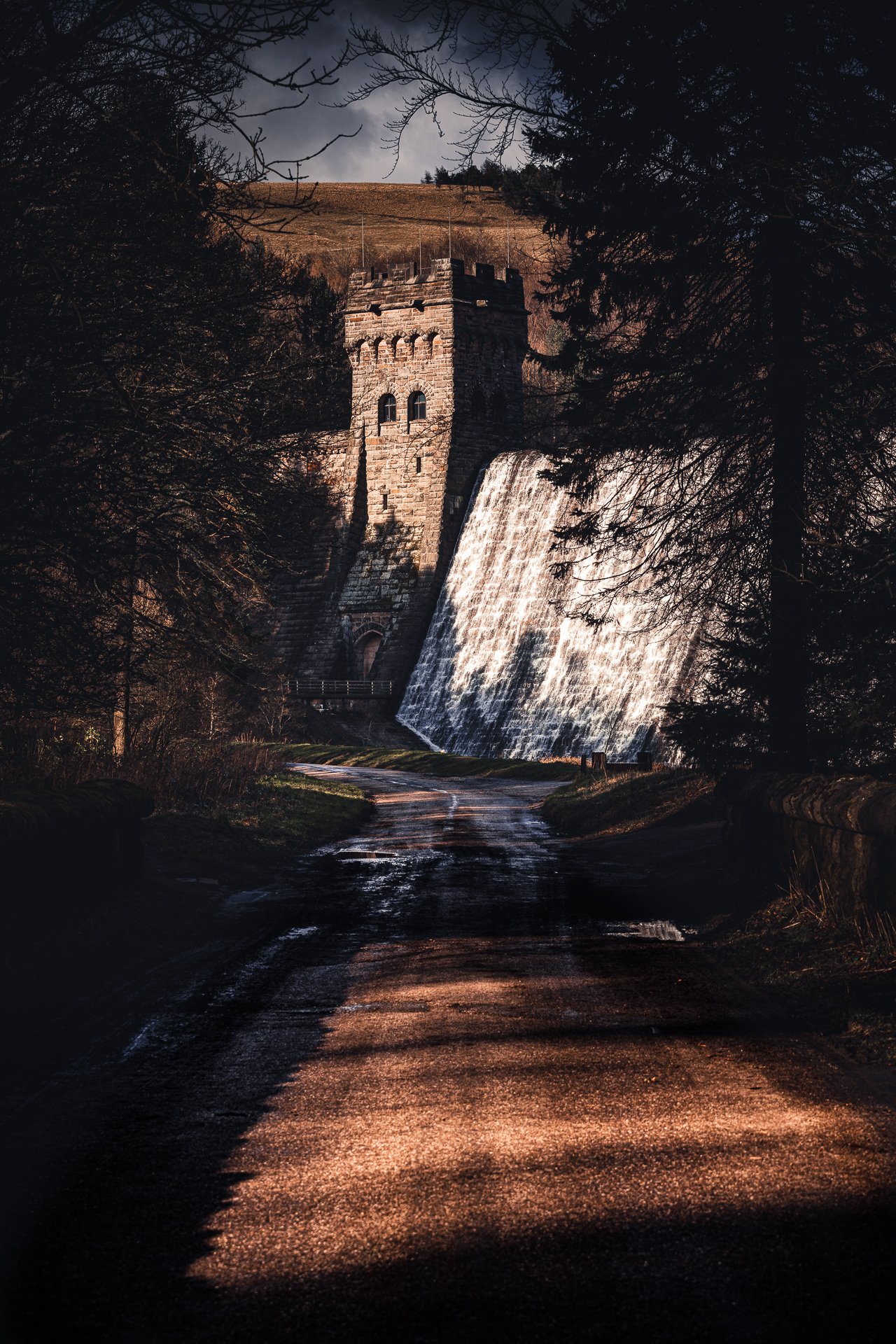
Can I Ask A Stupid Question? Learning Landscape Photography - Be Nice!
‘Can I ask a stupid question’?…….But it rarely is a stupid question.
Something that I’ve come to understand over the last couple of years is that if you don’t know, you don’t know. And that actually makes the question itself really difficult to even ask. Why would you ask how, for example, you would set up a tripod, if you don’t know that you are setting it up incorrectly in the first place?……….
This week, over on my You Tube channel, I’m going to be sharing some of the questions that are asked by my Landscape Photography workshop clients, alongside the answers of course.
And there is one thing that ties all these questions together. Even though they were asked by different people, around different parts of the country……
‘Can I ask a stupid question?’

The video was filmed on location at Derwent Dam.
It struck me back in November that I heard this a lot, and not just on workshops either, but across social media pages and over in the comments section on You Tube. Whenever someone would ask what they had pre-determined to be a basic question, it seemed that this question preceded the actual question.
But it rarely is a stupid question.
Something that I’ve come to understand over the last couple of years is that if you don’t know, you don’t know.
And sometimes that actually makes the question itself really difficult to even ask. Why would you ask how, for example, you would set up a tripod, if you don’t know that you are setting it up incorrectly in the first place?

Some beautiful light hitting the pathway through the trees….Foreground interest doesn’t always need to be an object jutting into your frame.
I’ve had many a student who was setting up their tripod incorrectly, but only one who ever asked me how it should be set up……and that was preceded by ‘can I ask a stupid question….’ Of course, where I do see bad tripod use, we will correct it during the day. But, despite encountering this scenario many times, only once have I ever been asked about it.
And then there are the questions we want to ask but are afraid to appear foolish. But these themselves are always really relevant questions….
‘Why would I use a two second timer?’
‘What do you mean by focal length?’
‘What’s bracketing?’
‘What’s foreground interest?’
‘Why do I get blurry photos at night?’……….
The thing is, none of these questions or any of the other questions I’ve made a note of, are stupid. If you don’t know, you don’t know. But unfortunately other photographers can sometimes have a bit of a smarmy ‘you should know everything’ way about them and that makes it so that people don’t feel comfortable asking.
That was certainly my experience many years ago and I do still see this a lot today. In fact it is probably even more prevalent now, in the days of social media, than it was back in my early stages of learning.

So, over the course of a couple of months, I’m collating these questions and answering them over on You Tube (link is down below). And I think that we should all keep in mind that there aren’t really any stupid questions. If you don’t know, you don’t know. So don’t be afraid to ask. And if you are asked a question, don’t be one of those smarmy know it alls, be nice and answer the question as best you can. We all have had ‘stupid’ questions in our time.
Learning photography is hard. Landscape photography is hard. Be Nice!
Dave
The photographs in this read were taken on location at Derwent Dam in the Peak District National Park during the course of filming the video.
Landscape Photography: Graft For Your Craft
However, despite checking the weather forecast thoroughly the night before, I arrived to find nothing but grey low cloud blocking any light and reducing visibility down to not much. So another bust…..all part of the landscape photography deal here in the UK.
And so to the third visit. We had almost clear skies. There was a bank of cloud low on the horizon, but this would just serve to diffuse some of the light and create haze rather than block the light completely.

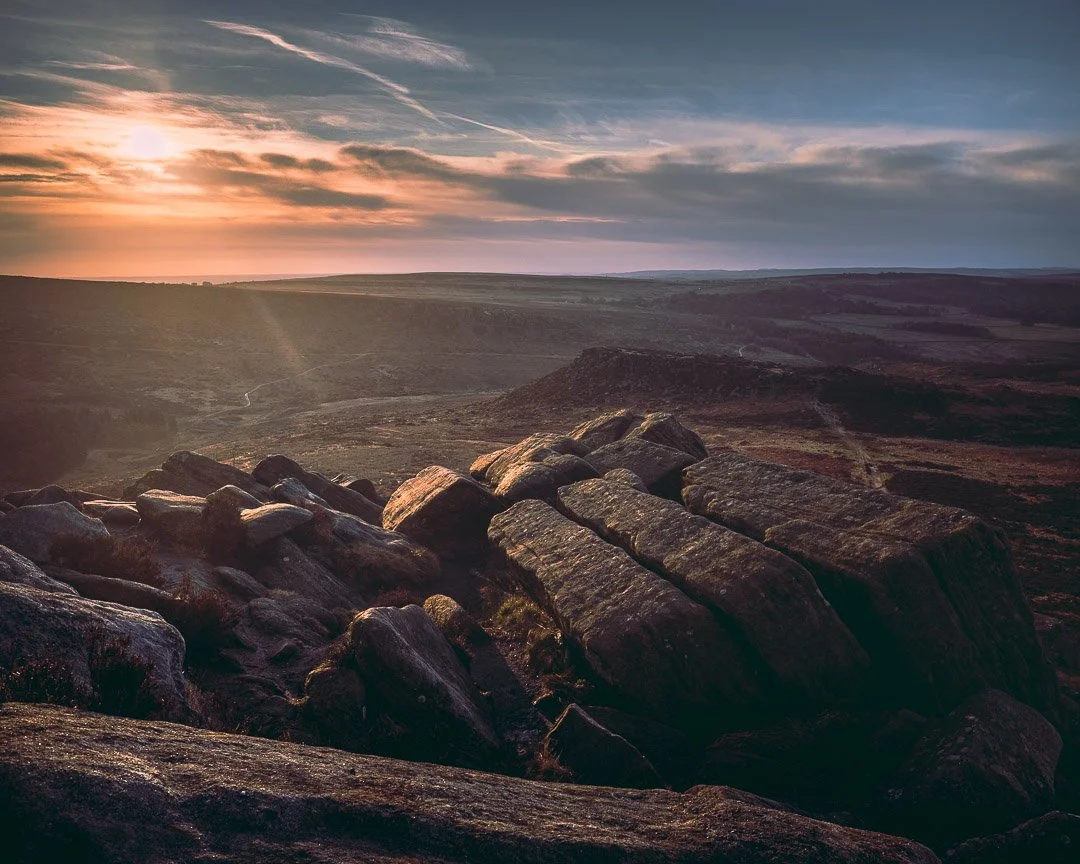
The view from Higger Tor across Hope Valley. Mam Tor, The Great Ridge, Win Hill and Lose Hill all visible rising up over Castleton and it’s Slate Mine
This week I’ve been up into the Peak District not once, not twice, but thrice, chasing some landscape photography. Higger Tor was my destination on each of these occasions and 7am was my time of arrival each day.
The first occasion was a recce. I didn't even take my camera gear. I wanted to see how the light fell throughout the morning. Plus, having never been up Higger Tor before, I wanted to see the lay of the land. It is so much easier to have an idea prior to the shoot rather than trying to find a shot on the day. Especially for landscape photography at sunrise!

Another view from Higger Tor, those beautiful hues given by the sun just risen over the hills to the left of shot
The second visit was for the shoot. However, despite checking the weather forecast thoroughly the night before, I arrived to find nothing but grey low cloud blocking any light and reducing visibility down to not much. So another bust…..all part of the landscape photography deal here in the UK.
And so to the third visit. We had almost clear skies. There was a bank of cloud low on the horizon, but this would just serve to diffuse some of the light and create haze rather than block the light completely.
The battle was very much on though because, whilst the light was playing ball, the other elements were not. It was freezing. Literally. The ground was frozen, there were pockets of hail fall, and the wind! Well the wind was hard. Driving wind which was blowing the camera all over the place, and not just the camera….I was taking a beating. It was tough. And in those conditions, really difficult to keep motivated whilst I waited for the sunrise.
If you want to experience just how windy it was then check out the video I will be uploading to You Tube this weekend, just click here - Let's Click Photography
I got the shot I wanted, well close enough considering the conditions, but the day itself had only been half the battle. Each of the days I visited meant a 4.45am alarm call; getting up on that third day was tough. Honestly, I almost didn't. I knew what I was in for and another potential disappointment was not that alluring. The 65 minute drive to location, and even worse the 90-100 minute drive back (there’s not much traffic at 5.45 in the morning, but there’s a heck of a lot by mid morning). The lack of sleep. The hike in the dark. The cost of fuel. The freezing conditions! There was a lot to put me off.
But I have learnt over the years that you have to graft for your craft (a saying I heard recently on a podcast - I’m having that!!) and this is all part of that graft. Even on the days when I don’t get a shot I still feel come back feeling good about it……and then I remember I have to work!
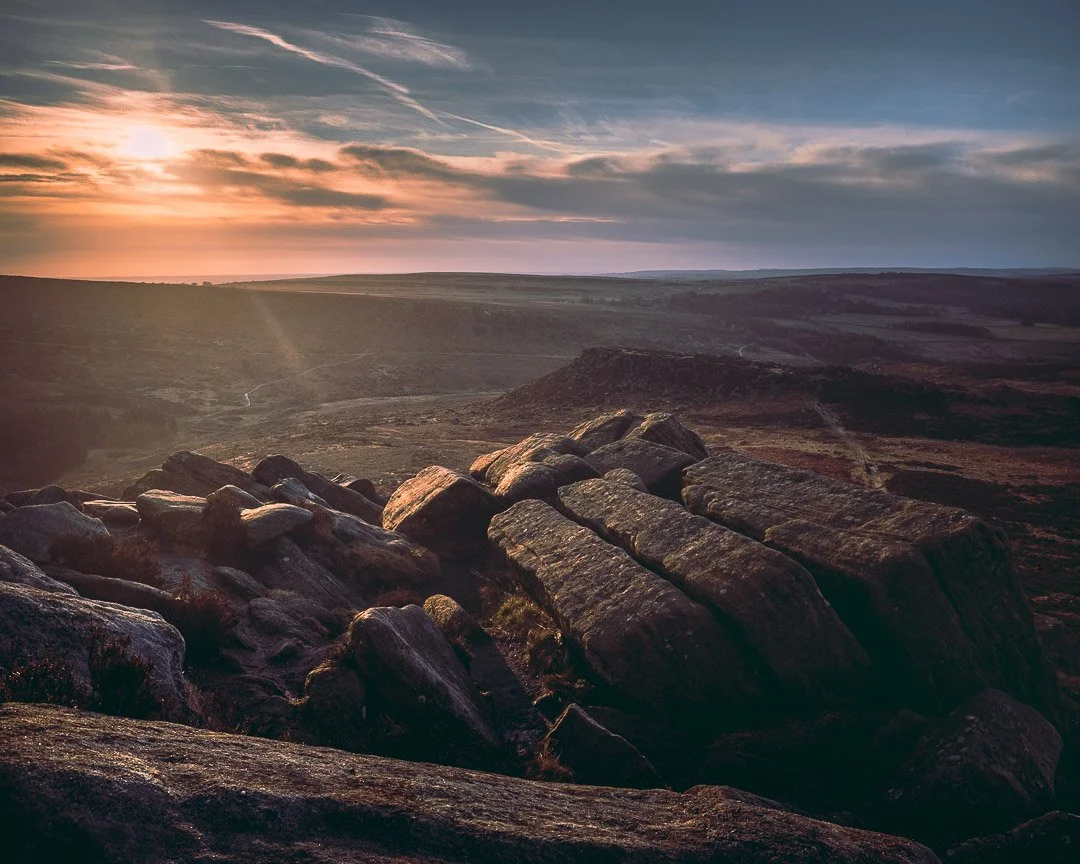
View from Higger Tor at Sunrise. Surprise View is on the right hand side and, lurking in the shadows beyond, is the top end of Padley Gorge
And yes, believe it or not, I actually do work haha! Much as I’d love it to, this landscape bit does not pay the bills. So photography for me is all about the work (honestly, I work more now than I ever did before starting this…easy 60-70 hour per week).
And sadly there aren’t really any short cuts in photography. All the gear in the world cannot get you a sunrise shot if you aren’t out before sunrise. The true photography hack is will power and hard work. And so it is that at 4.45am three times this week, I have been up. I’ve been out the door for 5.30am. I’ve been climbing the ascent at 7am. And I have battled the elements. And it was not easy.
…..But if you want the shot in landscape photography, you have to do it; you have to ‘graft for your craft’
Dave
If you are interested in seeing some of the ‘work’ that I get up to, you can click and check out: Bamber Photography & Film
Great Family Days Out And Stunning Photography Locations - Part 2
Great family days out plus stunning photography: Part 2 of 2 - So onto part two of our location guide for some great photography, where the family will also have plenty to keep them occupied. Just as in part 1, these are in no particular order, and the parking places are named as they are listed in Google Maps, to make it easier to search for your destination. As you may have guessed by the title, this is the second of this two part feature, but there may be a BONUS article with a couple more suggestions before the summer is over…..
Great family days out plus stunning photography: Part 2 of 2
So onto part two of our location guide for some great photography, where the family will also have plenty to keep them occupied. If you missed part one you can catch up here:
Just as in part 1, these are in no particular order, and the parking places are named as they are listed in Google Maps, to make it easier to search for your destination. As you may have guessed by the title, this is the second of this two part feature, but there may be a BONUS article with a couple more suggestions before the summer is over so subscribe below to be notified when that comes out, or alternatively head to our Facebook Page and Like - we put notifications out on there when we publish new articles. You can click through to all of our social media channels through the icons here:
Right, so on to our next recommendation…….
Stanage Edge, Hathersage, Peak District National Park
Suitable for: Anyone with average fitness; 8-10 years+, However it is not suitable for anyone with walking difficulties. Some moderate terrain
Parking: I recommend parking at the ‘Hooks Carr’ car park if you don’t mind a steeper walk; or the roadside parking on ‘The Dale’ road, for an easier ascent.
The Peak District has an abundance of ‘edges’ with fantastic views and Stanage Edge is a really easy way to experience one of them. With great vistas across Leam, Abney, Hope Valley, Castleton and a different view of Mam Tor, Lose Hill and more, it is easy to see why it is a popular spot for families and photographers alike. Plus it is one of the easier edges to reach. From the car parking spots mentioned above, you can reach the Trig Point within 15-20 minutes dependant on your ascent route (and general fitness of course), although it may take you longer as you take in those wonderful views.
Of course, as the name suggests, it is an edge and has a quite steep drop on one side, so do keep an eye on the young ‘uns and keep them away, but other than that, this is a great place for young and old legs to have an explore and there are lots of rocks to climb over. Be sure to check out Robin Hoods cave hidden away just under the walk - it is easy to miss and will require a bit of careful clambering as it is right on the edge, but otherwise is easy enough to reach….tales of Robin Hood and his merry men can be told from within.
There is lots to photograph including millstones, rock faces and great vistas over Hope Valley and the edge can be walked along for a good while so it really is up to you how long or short your walk is.
On weekends and especially bank holidays, this spot can become very popular so be prepared for a few fellow walkers, rock climbers, mountain bikers and photographers.

The Millstones that are synonymous with the Peak District National Park, sat just below the top of Stanage Edge.

A lovely walk but a steep drop. Stanage Edge is very popular for rock climbers and climbing classes
It is important to stress that whilst this is a very accessible and enjoyable walk, it can become dangerous if you don’t show it respect. The right type of footwear and outerwear is highly recommended. During a dry spell, this could be sturdy trainers, but please don’t attempt in open-toe shoes (or worse….flip-flops!).
It can get quite breezy on the top open edge. On the day I last did this walk (start of Aug 2020) the wind at the bottom was barely noticeable, however once I got up onto the Edge, it was fiercely strong. So a jumper in a bag may be useful even on a hot day.
The common heather that is in abundance is popular with honey bees so try to keep to the rocky paths, we do need to look after our bee population. Plus on hot days adders have been known to sunbath on the rock tops so keep a look out. And speaking about the rocks, there are gaps that nobody would want to fall into, so take care when clambering.
But…..if that passage didn’t put you off ever leaving the house again….if you take the right precautions, remain attentive and give the rough landscape your respect, it really can be quite fun and there were several youngsters up there having great fun on each occasion I have visited.
There is a good route you can follow here which will take about 2 hours: https://letsgopeakdistrict.co.uk/kids-walk-stanage-edge/
You can purchase fine art prints of many of the images from this article right here:
Talacre Beach, Holywell, North Wales
Suitable for: Everyone, although some routes cannot be accessed by wheelchair/buggy
Parking: There are a couple of car parks, I would recommend ‘Gamfa Wen’ car park but ‘Talacre Beach’ car park is closer to the beach shops, amusements and eateries. Both car parks do charge and require correct change.

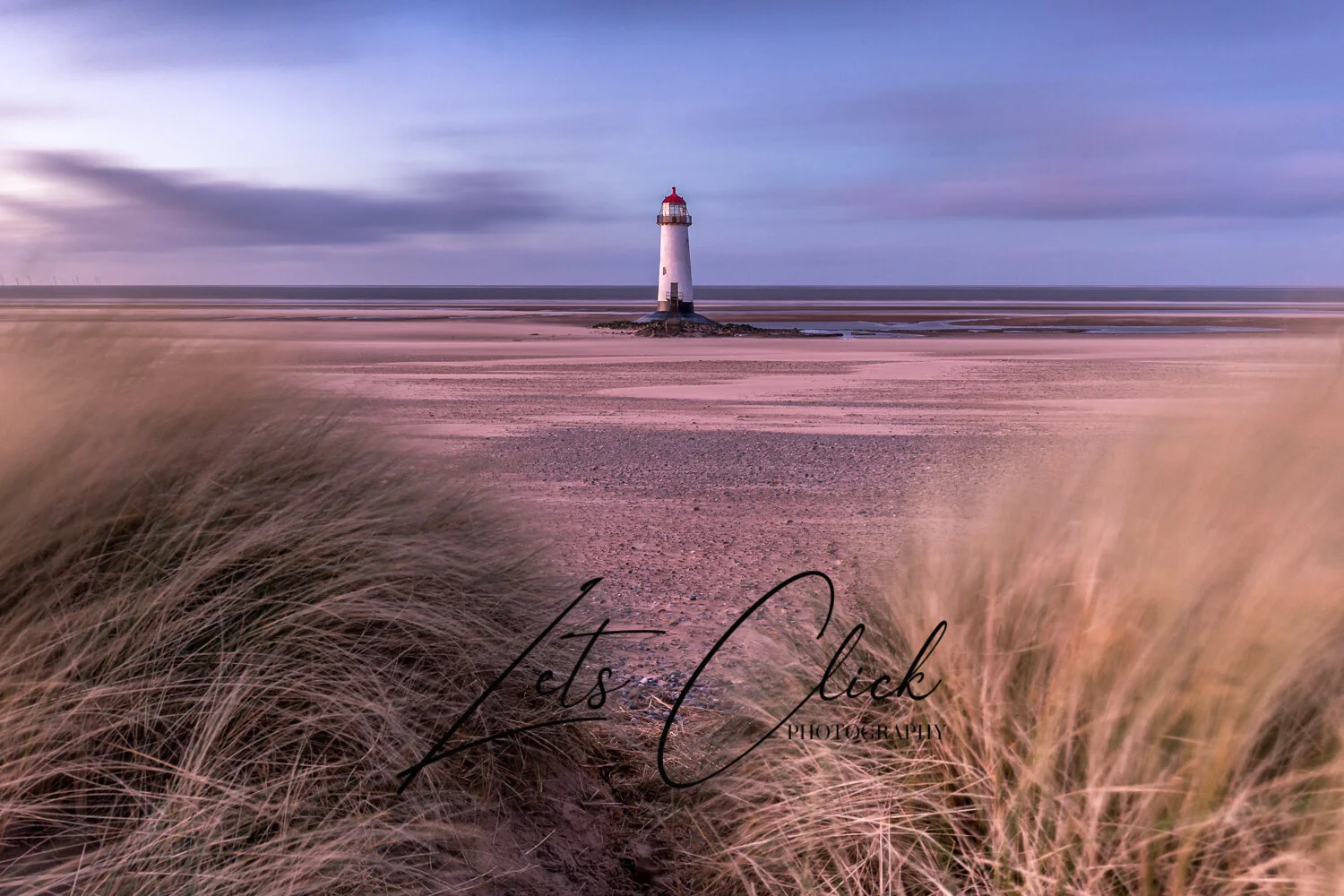
The famous Talacre Lighthouse, also known as the Point of Ayr Lighthouse
The second of our beach recommendations (see part 1 for our first) and this is one that really is family friendly. A great expanse of a beach, lots of tourist type trappings such as amusements, cafes and beach shops, plus some great hideaway routes to explore amongst reeds along the beach front. Talacre itself is a village consisting of a few residents and a couple of large holiday resorts, and a full day, or even two, could easily be spent here. Of course though, once you have a break from the trappings of a beachside summer in the UK, it is time to get your camera out and snap away at Talacre’s most famous resident.
Standing tall at 18 meters (59 feet or so) and donning a red hat is the grade II listed Talacre Lighthouse, or to give it it’s real name, The Point of Ayr Lighthouse.
Built in 1776 to warn ships entering between the Dee and Mersey Estuary, and rebuilt in 1844, the lighthouse has been decommissioned since 1883 and is now a private residential property.
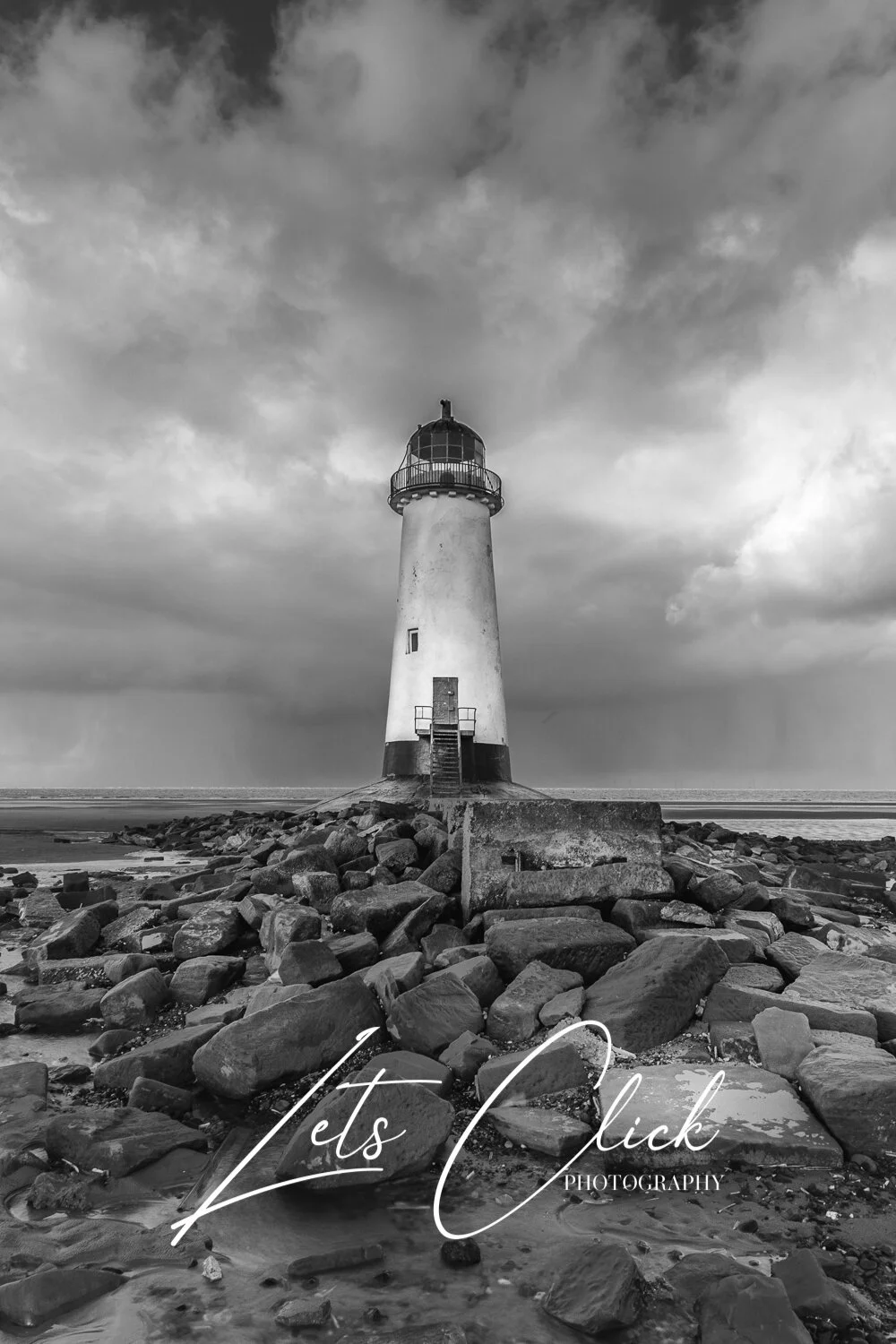
The lighthouse stands at almost 60 feet (18 mtrs) tall
If the beach and lighthouse look familiar then it is likely you saw the starring role this location had in a 2011 TV advert for a paint company and it’s 50 year anniversary. That’s right, the one with an Old English Sheepdog running past it at the end.
But that isn’t all it is famous for. Noted for a history of paranormal activity, including several reports of a spirit called Raymond who appeared stood on the balcony of the lighthouse itself. Mediums who attempted to make contact reported back that Raymond was once a lighthouse master who died of a severe fever.
These paranormal stories inspired a human sculpture to be installed circa 2009, which stood in the position on the balcony for three years. After new owners acquired the lighthouse the sculptures planning permission was not renewed and eventually the sculpture was removed.
Tide in, or tide out, there are great photographic opportunities with the lighthouse providing a perfect focal point, all the while the family can build their own lighthouses, castles and forts safely in the sand nearby.
You can have a quick look around the lighthouse and surrounding areas in our vlog right from the location right here: https://youtu.be/PUA0k2ZdrZU
Did you know we run workshops in many of these locations, guiding you around and teaching you how to master your camera to achieve spectacular Landscape Photography. For more info, click this banner:

Sale & Chorlton Water Parks, Greater Manchester
Suitable for: Everyone
Parking: Either ‘Sale Water Park Main’ car park or ‘Chorlton Water Park’ - Sale is the larger of the two, both are free of charge.
Just inside the M60 Manchester ring road and along the River Mersey from each other sits these two ‘sister’ water parks and nature reserves. And the M60 motorway is an important factor, as both of these water parks were created during the building of one of the busiest motorways in the UK.
Both artificial lakes were created from gravel pits, excavated for gravel to create embankments for the M60 to sit upon. Sale Water Park was previously the site of Sale Old Hall, the remnants of which now house Sale Golf Club; whilst Chorlton Water Parks land was the site of Barlow Hall Farm.
Sale is the larger of the two sites and also houses a restaurant and the fabulous Jacksons Boat pub, perfect for a mid-walk cool beverage or light lunch, plus bike rental and a Manchester Metrolink Tram stop.
Chorlton water park has more accessible pathways, a play area and activity space for under 10’s. Plus has an RSPB site office. Both are home to various wildlife and Sale Water Park has a hide for bird spotting….or photographing.

Sale Water Park at Sunrise

Chorlton Water Park on a winters day
Whichever site you mark as your destination, the other is only a 20-30 minute walk away. Even quicker if you are on your bicycle. And for the more active of you, a walk around both on an afternoon is easily accomplished.
There are some great photographic opportunities, both around the water parks, in the Ees and woodland that surround them, or along the River Mersey, plus the Bridgewater Canal is only a stones throw from the west shore of Sale Water Park, a great place on a calm summers day to get some tranquil shots of the many canal boats and barges that travel up and down.
You can see Sale Water Park and how I took the shot above in one of our vlogs here: https://youtu.be/09an2IJ84DQ
Many of the images featured in this article are available to purchase as prints via our online shop here:
So that’s our second three recommendations, hopefully you get chance to visit. As mentioned at the beginning of this article, I may pop up a bonus piece later on in August so feel free to sign up to our alerts or add our blog page to your RSS feed.
And you can check out many other great locations plus tips and tricks to help your photography to the next level on our You Tube channel which can be found here: https://www.youtube.com/channel/UC4fUWd5TtD4YvjVbeDaAQeA
Dave
August 2020
Great Family Days Out And Stunning Photography Locations - Part 1
Summer is in full bloom, although looking out the window at the pouring rain and dark grey skies as I write this, you wouldn’t quite believe it. Another thing now in full bloom is the school summer holidays, this year though, you’d be forgiven for not noticing them even start. However now that we are officially in the summer holidays, and 2020 having being what it has been, it is likely that many of us will be taking day trips out, or shorter trips within the UK. So with that in mind, I’ve put together a few locations around the North West of England and North Wales which not only make for fantastic landscape photography locations, but double up as great adventures for the family.
Great family days out plus stunning photography: Part 1 of 2
Summer is in full bloom, although looking out the window at the pouring rain and dark grey skies as I write this, you wouldn’t quite believe it. Another thing now in full bloom is the school summer holidays, this year though, you’d be forgiven for not noticing them even start.
However now that we are officially in the summer holidays, and 2020 having being what it has been, it is likely that many of us will be taking day trips out, or shorter trips within the UK. So with that in mind, I’ve put together a few locations around the North West of England and North Wales which not only make for fantastic landscape photography locations, but double up as great adventures for the family.
They are in no particular order, and the parking places are named as they are listed in Google Maps, to make it easier to search for your destination. As you may have guessed by the title, I am not covering them all in this post as it would be far too long, so keep your eyes out, or subscribe below to be notified, for when part two is published next week.
Mam Tor & The Great Ridge, Hope Valley, Peak District National Park
Suitable for: Anyone with average or above average fitness; 7 years+, Not suitable for anyone with walking or breathing difficulties.
Parking: I recommend parking at the ‘Mam Tor National Trust Car Park’ - just off the A623 - there is a small charge or free for all National Trust Members.
One of the most popular photography spots and one of the most popular walks in the Peak District. And it is easy to see why. The views over Hope Valley are spectacular.
If you park at the National Trust car park, then the ascent up Mam Tor is right at the start of your trek. The route up is well signposted and there are paths and steps up to the summit from the car park. The initial climb is fairly taxing and very young legs will probably not enjoy this one, but there are spots you can stop to catch your breath as you head up…Be sure to check out the winding road that journeys into the village of Edale, best viewed from about half way up on your left hand side.
However long it takes you, once you hit the summit, you are rewarded immediately with fabulous 360 degree view and this may well be where you first crack your camera out, whilst the rest of the family explore.
On weekends and especially bank holidays, this spot can become very popular so be prepared for a few fellow walkers and photographers…and even the occasional paraglider. This is a popular take off spot for paragliders, and you are quite likely to spot one or two in an evening or at weekend.

The view over Hope valley towards the slate mine from Back Tor, on the Great Ridge route.

THAT GATE!….One of the most iconic gates around. Back Tor and Lose Hill visible down The Great Ridge
Once you have finished exploring and photographing the sprawling valleys from the summit of Mam Tor, The Great Ridge now lies ahead. This makes for a more relaxing walk after that climb and the first half is on a gentle downward slope, although do be careful with your footing as some of the steps are a little steep.
About a third of the way along the Great Ridge, you will find one of the Peak Districts most photographed locations. The Mam Tor Gate. Best shot at sunrise, but stunning throughout the day, this iconic photography location is not one to be passed by.
Once you have your fill of shots from this prime location, keep along the Great Ridge and you head towards a second gate, from here you can venture right and down towards the Blue John Mines if you wish. Or continue along the Great Ridge up towards Back Tor and Lose Hill.
You can venture back from wherever you make it to via the same route on return or go down into the village of Castleton and return across the ‘broken road’ and cross field. I’ve linked a route planner below.
You can take a look at some of the area in the intro and outro of this video: https://youtu.be/cJdzgASJpNY
Everywhere is well signposted, but you can find a good route guide here: https://www.nationaltrust.org.uk/kinder-edale-and-the-dark-peak/trails/mam-tor-circular-walk
Wizard Walk, Nether Alderley, North West Cheshire
Suitable for: Everyone, although some routes cannot be accessed by wheelchair/buggy
Parking: I recommend parking at the ‘National Trust - Alderley Edge Car Park’ by The Wizard Tearoom - small charge or free for National Trust members

One of the views from The Edge
‘There was once a farmer who had a milk-white mare. He decided to sell it; so one day, he set off to Macclesfield Fair. As he reached Alderley Edge the horse stopped and refused to move, no matter what the farmer did. He saw an old man standing by the side of the road, holding a staff in his hand.. .. ..’
The Legend of Alderley Edge provided inspiration to author Alan Garner as he wrote ‘The Weirdstone of Brisingamen’. Some of the location focal points, including the Druids Circle and Engine Vein, are still visible for visitors to see and form part of the Wizard Walk. One of several walks well signposted in the woodland, the wizard walk is fairly easy and surrounds the folklore of wizardry, that the local area is well known for (throughout Alderley there are several nods to the wizarding world).
Sticking to the route though is only half the fun. The different walking routes all cross each other throughout the woodland and a real explore will see you taking more than just one route.

Stunning views await along the many walks of the Nether Alderley woodlands. Some stunning photography can be had alongside a great family adventure
Some photographic spots not to miss include The Edge itself, which overlooks Greater Manchester and, depending on wind direction, either the landing or take off path for runway one at Manchester Airport - spotting the planes is great entertainment for the youngsters.
The ‘Hearth of Albion’ also provides great views across North Cheshire and the Peak District and is worth having your camera on hand for.
A word of warning though whilst taking shots, don’t take your eyes off youngsters as both of these spots are on cliff edges which, whilst very secure and roomy with lots of space away from the edge, would be very dangerous for inquisitive infants if they get too close to the edges.
Back to the car park and there are the Wizard Tearooms and (usually) an ice cream van selling traditional ices - you can check the National Trust website for opening times but, of course, in 2020, these may have been altered somewhat - the walking route link below can be explored to access opening times for the car park and facilities.
Have a quick look around the place and get some photography tips here: https://youtu.be/5Rn74mfVL-g
You can find out more about the Wizard walking route here: https://www.nationaltrust.org.uk/alderley-edge-and-cheshire-countryside/trails/wizard-walk-at-alderley-edge
Mary’s Shell, Thornton-Cleveleys, Fylde
Suitable for: Everyone
Parking: Head for ‘Jubilee Gardens Car Park’ which is a pay and display just across the road from the beach. There is a small lay by car park on the promenade itself opposite the jubilee entrance if you can grab a space, this is also pay and display.
It wouldn’t be summer without a trip to the beach and so here is the first of two recommendations. And not only is it a beach perfect for the kids, but it is an iconic location for photographers.
This really is a perfect family & photography mix. Spend the day on the beach soaking up the sun, grab a fish and chips supper, enjoy all the local entertainment and then head to the shore for sunset. And you will certainly want your camera on hand for this one.
Known as the ‘Mythical Coast’ because, well….Mary’s Shell is magical, and it has a story to tell…….
That story starts in Singleton Thorpe, which was a village off the coast of Cleveleys in the mid 1500’s.
Swallowed by a tsunami in 1554/55, only three people survived and local legend states that they went on to become founders of the village now known as Singleton in Fylde, near Blackpool (speaking of which, you can clearly see Blackpool Tower from the beach at Cleveleys - another shot worth taking)

The stunning view of the sunsetting over the west coast beyond Mary’s Shell - a perfect location to marry a family day out with some stunning photography

It doesn’t finish with sunset though - watch the colours of the sky change once the sun dips below the horizon.
And that folklore is responsible for inspiring ‘The Sea Swallows’ tale, a short story based on that sunken village. In the story, the heroine is Mary, who attempts to save the village from a Sea Ogre....armed only with her magical golden shell.
The story itself is inscribed on the inside of the shell, so at low tide take a visit inside for story time……but beware, you are being watched. The Sea Ogre also occupies the same beach. See if you can spot him - he’s certainly fairly large, if well disguised (quick tip - low tide is the best time to search for him).
You can read more about the area and photographing it in one of my earlier blogs here: https://www.letsclickphotography.co.uk/blog/revisiting-a-location-marys-shell-lancashire
Plan your trip here: https://www.visitcleveleys.co.uk/about/seafront/marys-shell-on-cleveleys-beach/
All images featured in this article are available to purchase as prints via our online shop here:
So that’s our first three recommendations, hopefully you get chance to visit at least one, if not all three. Part 2 of this Blog will follow next week, you can subscribe below to make sure you don’t miss it.
Check out many other great locations as I travel around photographing the beautiful landscapes of the UK via our You Tube channel which can be found here: https://www.youtube.com/channel/UC4fUWd5TtD4YvjVbeDaAQeA
Dave
July 2020
Let There Be Light
It’s summer in the UK - hooray!! We can finally leave the house without our rain jacket, well on some days at least. The temperature is up, the natural world is buzzing with activity, the nights are short and the days are long. What a great time to be a landscape photographer. And it is…..well kinda!
You see, it’s that ‘the days are long’ bit, that can cause some issues for landscape photographers…..

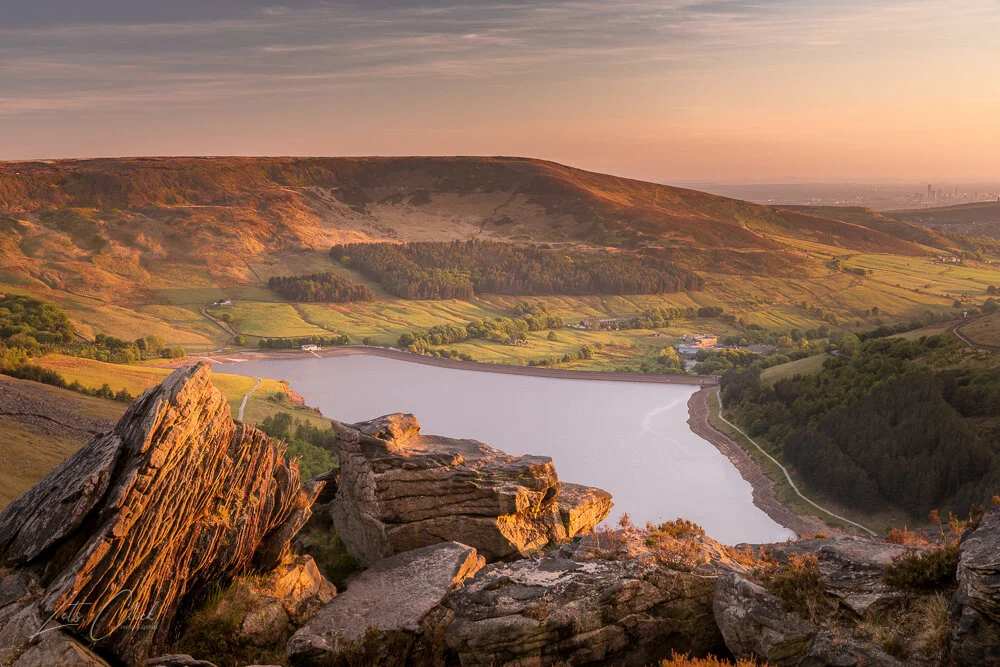
Dovestone Reservoir in the Peak District, Greater Manchester during Golden Hour - the warmth in the image down to the time of day
It’s summer in the UK - hooray!! We can finally leave the house without our rain jacket, well on some days at least. The temperature is up, the natural world is buzzing with activity, the nights are short and the days are long. What a great time to be a landscape photographer. And it is…..well kinda!
You see, it’s that ‘the days are long’ bit, that can cause some issues for landscape photographers.
During the summer months, the earth has us tilted closer to the sun and because of this our star hangs higher in the sky, leading to the longer daylight hours and warmer temperatures. But it is exactly this that poses landscape photographers challenges.
How so? You may ask. Surely, with photography being the capturing of light, longer days and more light means it should be easier to get great photos?
Well in theory, it sounds great, but not all light is the right light.
In landscape photography there are many different types of light which affect your photographs in many different ways. Flat Light, Direct Light, Blue Light, Golden Light, Diffuse Light….these are just some of the terms most landscape photographers know well. All will affect the landscape, and therefor your photograph, in different ways. Affecting colours, tones, saturation, contrast, as well as shadow length, depth, and position.

Direct Light - Whilst the day was somewhat overcast, the light high in the sky still created harsh contrasty shadows in this image. A later or earlier time of the day would have allowed the light to fall off more gradually
Unlike other types of photography, where you maintain some control over your light by utilising flash, reflectors or movement of your subject; landscape photography relies on one light source….that big ball of fire in the sky.
And when it is summer, it sits higher and longer in the sky. And there are fewer clouds. Whilst this makes for great sunbathing weather (sunscreen protection applied of course!), it can be a bad mix for landscape photographers. With the sun high in the sky casting harsh, direct light down, a level of cloud cover would provide diffusion which is a very handy way to take some of the harshness out of the suns rays.
Want to see for yourself? Grab a torch, the one on your phone will do, and shine it onto a surface in shadow. Now grab a piece of tissue and place it a couple of centimetres in front of you torch, shining the light through it. The torch still lights the surface but it’s…..well….less direct. It’s diffuse.
So how do we get around this? Well, there are certain types of shots that will lend themselves to direct light. Reflection shots being one of the first to mind. A high sun in the sky can create superb reflections in water. Taking a shot which uses the shadows to your advantage is another option; being aware of where a shadow falls may lend itself to becoming a leading line or natural frame to your subject.
There are also different ways in which to take a shot. Bracketing (or HDR as it is sometimes referred) is a method of photography whereby three + images are taken of the same composition, usually on a tripod, and then blended together. This technique ensures the range of light captured, from deep shadow to bright sky, is at a maximum, however this technique can very easily be done badly and lead to a final image that does not look real, subtilty when using this technique is a must. Using filters, adjusting settings and manipulating white balance are also useful to produce more usable images during the peak daylight hours.
But mostly, patience; patience is the key.

Lytham Windmill at dawn - the rising sun helping to create the ‘sky on fire’ look that only dawn will really gift you.
Waiting for the right light to fall upon you scene takes patience…..and time. But you can save time and get better odds of good light by going to shoot at the right time. Photographers will often refer to a time frame called Golden Hour. This is the hour or so right after sunrise, or right before sunset. It is a time when the sun is low on the horizon and light rays, specifically blue rays, are scattered coming through the earths atmosphere. This is what often gives the sun it’s orange or reddish tinge at sunset and it is the natural reason why everything looks warmer during that time. And whilst shadows become longer, they are less ‘contrasty’ right before sunset. As the name suggests, it doesn’t last long, on many days even less than an hour, but that is the light landscape photographers crave.
And so that is when photographers head out - for sunrise or sunset. And for me, in the summer, it is mostly for sunset….I enjoy my sleep!…the idea of getting up for a 4am sunrise doesn’t always appeal to me. But if that is the right time to get the shot, then that is the time I will head out.
And, like many of my photography peers on their way to location, when I set off in the middle of the night, or during late afternoon, I’m hoping for many things. For the weather elements to come together, to be able to find a composition, for there to be nothing in the way of the shot…..But most of all there is one big hope…..
Let there be light
Dave
July 2020
Whatever The Weather
…..Throughout the journey there the conditions looked perfectly set for such a shot. Wave clouds were high in the sky, the horizon was hazy but clear of low cloud formations and it was fairly still. We hit a bit of a delay as a coach had come off the road near Devoke Water and whilst waiting to get moving again, a weather front moved in from the west coast. Upon arriving at Wastwater, the sky had completely covered……
As much as photography is my hobby, it is also my full time job, through which I cover many genres of both photography and film. I thoroughly enjoy my work and all of the shoots I get to do, but there’s no doubt that my landscape photography days sit as the highlight of my working week.
Quite early on, after making the move from my corporate career to full time photographer, I decided that I would incorporate a day each week to be designated my ‘Landscape’ day. It isn’t a specific day. It is determined by the way my bookings fall. But 1 of 5 days is always left free.
Having the freedom to do that is absolutely magnificent, but has one downside. Because my landscape day is usually set weeks in advance due to the bookings in the diary, it is never planned around the weather. Whether glorious sunshine; grey and windy; or full blown storm; that is the day I will go out to shoot in the landscape, and I do, whatever the weather.

Wastwater, Lake District National Park, UK. I bet the sunset was beautiful behind those clouds
But, as I talked about in last weeks blog, the weather is your friend. It can give you that beautiful awe inspiring sunrise or pelt you with hail, but it will always be unique to that moment. It offers a challenge and changes the way in which a scene will look, and can completely change how it might be captured for a photograph.
Take the above shot of Wastwater as an example. I had ventured there hoping to capture the sunset with an idea of a long exposure shot, enhancing the glorious colours of the suns rays filtering through the earths atmosphere. Hoping for great reflections in the still, mirror like water.
Throughout the journey there the conditions looked perfectly set for such a shot. Wave clouds were high in the sky, the horizon was hazy but clear of low cloud formations and it was fairly still. We hit a bit of a delay as a coach had come off the road near Devoke Water and whilst waiting to get moving again, a weather front moved in from the west coast. Upon arriving at Wastwater, the sky had completely covered with low cloud. the shot which I had planned from the southern end of the water was now pointless. The cloud would cover most of the water up to the peaks. A change of plan and a drive north, up the western edge, to around half way up the water found a slightly clearer view and the moody image you see above was born. A polariser helped cut through the remaining haze above the water, the square crop reflected how I felt under the grey sky; a little hemmed in.
The weather forecast the evening before had predicted that this would happen, but I was hoping that it may hit a little later, forecast are never truly accurate until a short while beforehand. However, even though the weather did go that way, I’m still pleased with the shot. It tells a story. And each time I look at it I’m reminded that whatever the weather, it is always worth going out to shoot.

Another Place in Crosby on a very overcast dull day
The two photographs (above and below) of Anthony Gormley’s Another Place in Crosby, Merseyside, show another example of just how different a shot might be dependant on the weather. In the first shot, taken at sunset in October, 2019. The weather was grey and cloudy with only hints of sunlight breaking through the clouds for brief moments. The sun wasn’t visible and it had been raining on and off throughout the afternoon. A long exposure became the order of the day as there was little detail in the sky. In May 2020, the shot became something else entirely as this time the sky was hazy with infrequent clouds, the sun setting right behind the scene into which I was shooting. No long exposure here, I would not have wanted to have the sun become a blurred line down to the horizon. The feel of the two shots is very different.

The same scene (albeit a slightly different composition and exposure) with a hazy sunset months later
Whatever the weather, there is always something to shoot, there is always a way to capture that moment in time. But it will certainly help if you have the right equipment for the weather. And I’m not talking camera gear or lenses etc. Comfort in terrible weather will play a huge part in your time in the landscape. I have been caught in some awful weather, and early on in my landscape photography journey, I did not have the right footwear, clothing, bags or jacket. I was cold, wet and miserable and the majority of the time completely unmotivated to even contemplate taking my camera out of the bag.
Investing, even a little, into outerwear and footwear has helped me out no end. You still end up wet, cold and miserable….but it takes a lot longer to get to that point.
And so, my ‘Landscape Day’ is a day on which I head out regardless, each week, ready to take on the Landscape and all of its challenges…...
Whatever The Weather
Dave
June, 2020

If you can get through the rain, you might just spot the rainbow
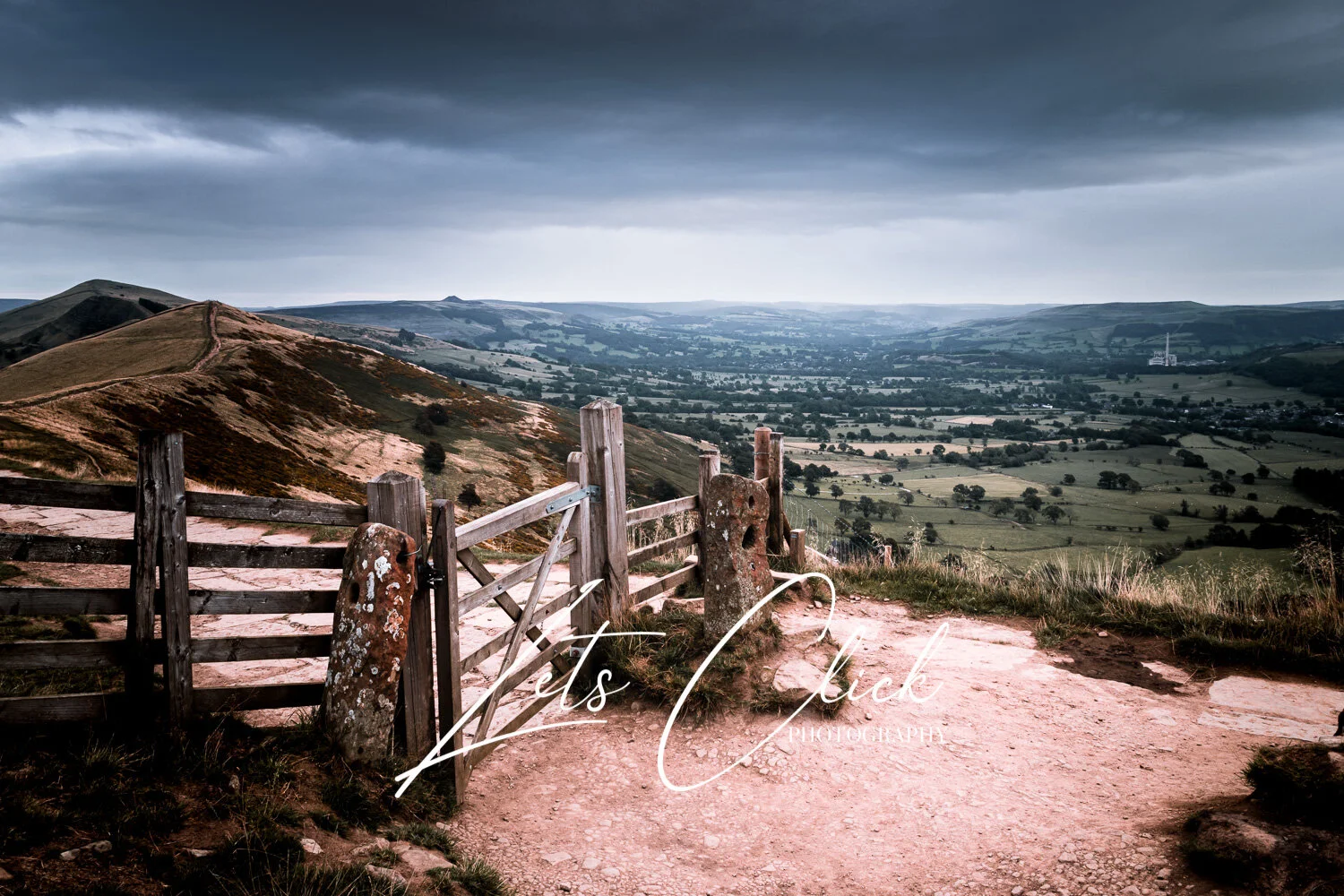
The Obvious Shot
…….So do photographers just going around plagiarising each others shots? Or is it just that the shot is so obvious, every photographer who walks that walk stops to take that shot?
In truth, in the age of the internet, it is likely that it is a bit of both………..
A couple of days ago I responded to a question which asked ‘how do you see compositions outside of the obvious shot? Everyone seems to take The Obvious Shot!’ This was in response to a shot I had taken on a trip to Mary’s Shell; a location well known for its long exposure eye level shots, where I had shot from a different perspective and included some pebbles in the foreground (another response told me that it must be fake as he had photographed there several times and never noticed pebbles…..which the beach is littered with! ‘Viewfinder Eye Syndrome’ I call that!).
My response to the question was simple ‘I shoot, shoot, and shoot some more, and I’m not afraid of getting bad shots - trial and error is the key.’
I then added a further comment. ‘And don’t be afraid of capturing ‘The Obvious Shot’, being obvious doesn’t make it bad.’
There are various locations out there that have been photographed thousands of times, many of which have an ‘obvious shot’. And chances are, if it is a well known, easily accessible location, that obvious shot has been photographed much more than just thousands of times.
A great example of just such a shot is on The Great Ridge from Mam Tor overlooking Hope Valley in the Peak District National Park, UK.

That ‘Bloody’ Gate! Great Ridge overlooking Hope Valley, Peak District National Park
Type ‘Mam Tor Gate’ into any search engine and look at the image results. You’ll see literally hundreds of shots of the scene above. Some slightly wider, some from a slightly different angle, some with a slightly different perspective. But all of a not too dissimilar composition and framing.
And there is a good reason for that. There is great foreground interest in the gate and fence, adding much sought-after depth, there are great leading lines (which I may have slightly cropped out!) leading towards Back Tor and Lose Hill. Hope Valley looks spectacular. The Slate Mine adds interest in the mid-ground and across the valley are great hills including Win Hill. All in all, an easy to capture image, brimming with all of the elements that Landscape Photographers crave. Which is exactly why there are so many photographers who head there to capture the scene……many of whom will have seen a version of the shot already.
So do photographers just go around plagiarising each others shots? Or is it just that the shot is so obvious, every photographer who walks that walk stops to take that shot?
In truth, in the age of the internet, it is likely that it is a bit of both. The majority of landscape photographers will do some research on a location before heading there, and be highly likely to see a shot a number of times whilst doing that research. And that isn’t restricted to the internet. As a member of the National Trust, each year, I receive a guide book to all the NT properties and locations in the UK, many of which are accompanied by a photograph, commissioned to be taken by hugely respected photographers such as Joe Cornish and Ross Hoddinott (have a search and check out some of their work - remarkable photographers) amongst others. When you come across a shot that makes you go ‘WOW!’ and you head to that location, chances are you want to try and capture that shot yourself.
Plagiarising? Or Inspired?
Gateway to the future. Trying a different angle can completely change the way you view the location.
Personally, I would go with inspired. And each shot becomes its own shot each time it is taken anyway. With ever changing weather conditions, changes in light and the direction it falls across a scene. With each changing season, and the changes in colour of the landscape that accompany seasonal change. And never forgetting man made changes - one such example being that the last time I ventured up Mam Tor and across the Great Ridge, ‘That Gate’ wasn’t there, It had been removed. I presume in light of the Covid 19 pandemic. So a scene is ever changing, with unlimited photography possibilities.
So take ‘The Obvious Shot’ because it will become your shot with all of the uniqueness of that precise moment in time. And then once you have it, try looking from a different perspective, change your angle, change your composition, see what else the location has to offer. Venture further and you may just capture something that hasn’t been shot a thousand times before. Perhaps your shot may become the inspiration for many more to come, even becoming ‘The Obvious Shot’ in itself.
‘Shoot, shoot and shoot some more…’
Dave
June 2020

Venture further and explore, you may just find something you’ve not seen before.