
What is Photography?
every image ever captured by way of a camera did the first part of photography really well: it captured light and produced an image of that moment in time. And, without understanding, you may think that that’s it, nothing more…..your work here is done!
But it is in the second half of the word photograph that the key is held, certainly if you are looking create more than just a ‘photo!’…..
What is photography? It’s a big question, and one that you will likely have your own personal thoughts about. In the literal sense though, it’s a relatively straight forward answer:
A Photograph is a ‘Light Drawing’; and the word Photography means ‘to draw with light’.
This isn’t opinion, it is the literal translation of the original word. The word first coined by Sir John Hershal circa 1839 which was derived from the Greek words ‘Phos’, which means light, and ‘Graphé’, which translates as drawing. So a photograph is a light drawing. And thinking about how a camera works, it makes complete sense really. The film/sensor is the canvas and the light is the ink. But does knowing this really matter?
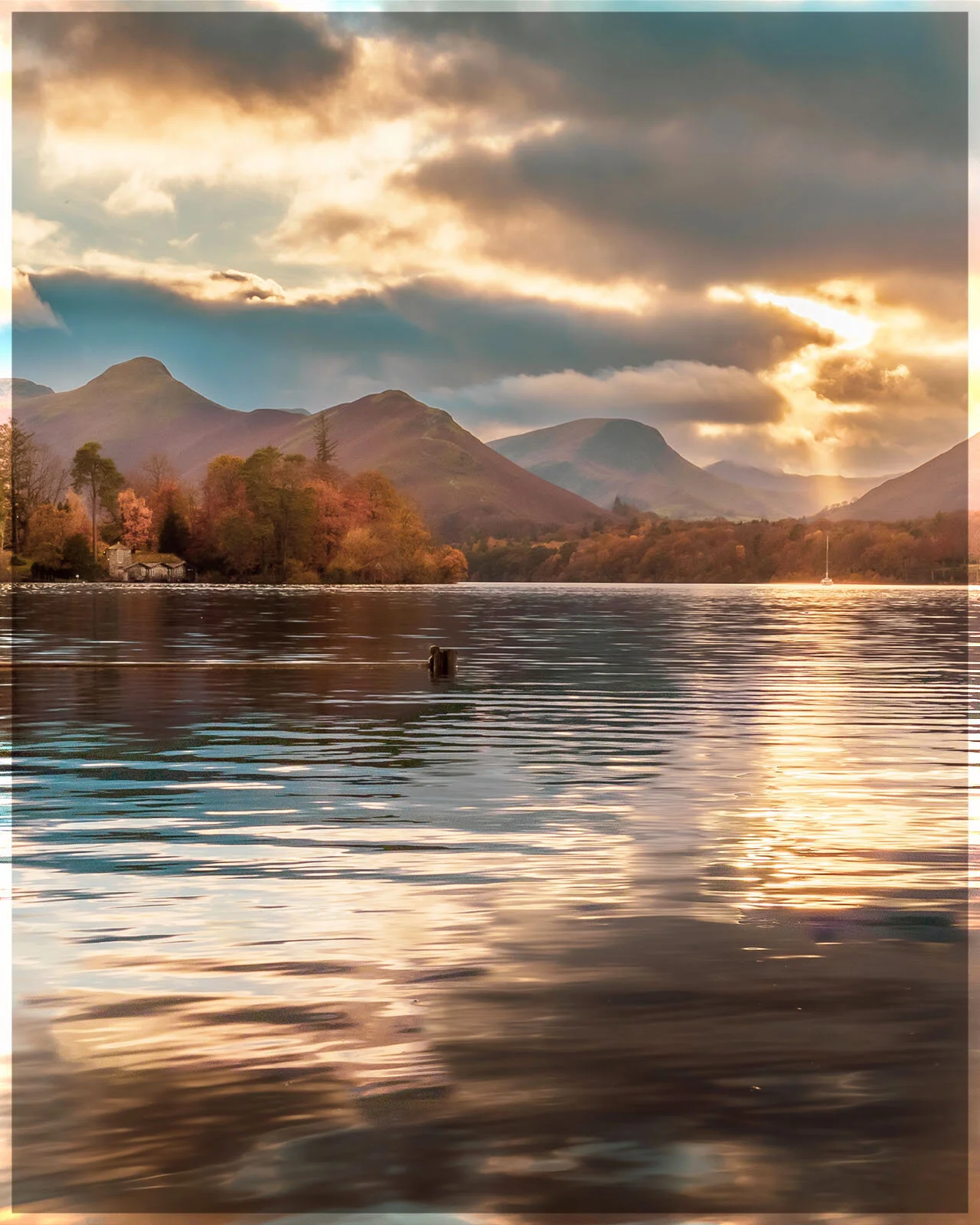
Drawing with light
Well I think it does. So much so that, now I have started to offer photography workshops again (YEY!!), I have incorporated this translation into the first module of all of the beginner-novice group workshops we offer (on sale now here). In fact, I think it is so important that it will likely also feature in the (soon to be announced) novice-hobbyist workshops too.
Why? Because it is my belief that understanding this basic fundamental of photography can immediately make you a better photographer.
How so?
Well, every image ever captured by way of a camera did the first part of photography really well: it captured light and produced an image of that moment in time. And, without understanding, you may think that that’s it, nothing more…..your work here is done!
But it is in the second half of the word photograph that the key is held, if you are looking create more than just a ‘photo!’…..
And I purposely use the term ‘photo’ here. You see, in the era of digital photography (and certainly now that high quality mobile phone cameras are carried everywhere, ready to snap at a seconds notice), there has been a rise in photographers using different terms to describe photography. You’ll no doubt have heard someone using the term ‘snapshot’ or possibly using the phrase ‘it’s just a photo/snapshot’.
Well, whilst these slang terms for photography have been around for a long time, over the last 20 years they have started to become a description of the image itself. ‘Snapshot’ or ‘photo’ are now commonly used to describe images with no (or minimal) artistic intent*. Shots taken without real purpose.
Back in the days of film, there was less inclination to take a shot without purpose. It was so darn expensive, each exposure cost money. But of course now, once we have our initial equipment, there is no added (immediate) cost to any of us. Whether we take one shot or one hundred. And this has brought rise to millions, if not billions of images being captured each day (over 1000 uploads to Instagram per second - 86 million per day!…..and that’s just Instagram).
And so, pretentiousness aside, there probably is a need to have some differentials. Surely not all of those images could possibly have had artistic intent in the truest sense of the word photography?
Let’s face it, we can all pick up a pencil, grab a piece of paper and draw something. But would we then consider ourselves artists? Would we consider that drawing a ‘work of art’? Probably not. It’s a drawing, and there may well have been some artistic intent in it, but is it art? Or is it a sketch…possibly a doodle?
Unless we are serious about our drawings we are unlikely to call them art. But everybody who can point a digital camera at something gets to refer to the ensuing image as photography!

The Paper and The Pencil
So, we go back to that literal translation in order to start to understand one of the key fundamentals of photography as more than just a ‘snapshot’.
If all you are doing is capturing light with your camera sensor, and negating the ‘drawing’ or art part of the medium, then there is no reason for adding the ‘graph’. The art of photography is contained within the second half of the word. Graph: The drawing. The choosing of how you want the light that you are capturing to look. How you want it to be captured on your camera sensor/film. How you present it through the medium of your image.
So we cover it in our workshops as this fundamental idea can make you think about how you wield your camera rather differently. You can start to look at the light differently. And by doing so, you can then start to choose how the camera sees the light; you can start to choose how you will translate that light from the 3d world onto your 2D canvas; you can sculpt with it.
So this immediately helps you become a better photographer. By taking that translation, by considering it, and by applying it, you have immediately added some artistry, you have added intent, you have begun your drawing.
Your journey from capturing snaps to creating art has begun.
You can book your workshop with us by clicking here
Dave Laffan
Let’s Click Photography.
*It is important to note that journalists and documentarians have been capturing images in this way since the very first camera, and rightly so too. Art is not a requirement for the capturing of a fleeting moment in time or historical event. For example, the journalists that documented the storming of the Capitol building in Washington (U.S.A.) in 2020, did not have time (or reason) to wait for the right light to pass overhead…..the angry mob were not waiting for photographers to find a nice leading line or to study the shadows falling over the ground. There is nothing wrong in documenting a moment in time without artist concern, if that is the requirement of that moment. Although in choosing to put aside the artistic intent, one could argue that it becomes artistic through that choice ;)
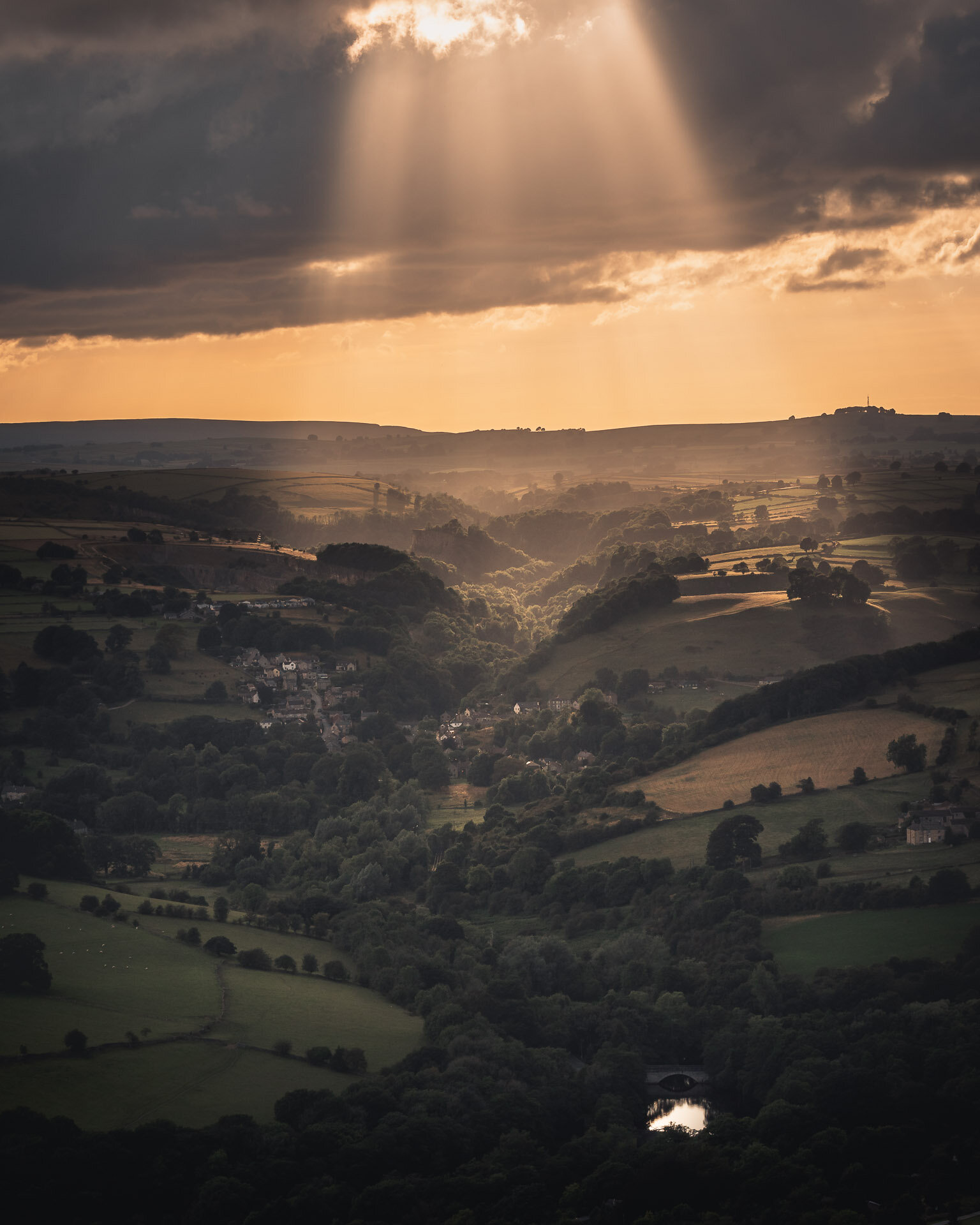
Let There Be Light
It’s summer in the UK - hooray!! We can finally leave the house without our rain jacket, well on some days at least. The temperature is up, the natural world is buzzing with activity, the nights are short and the days are long. What a great time to be a landscape photographer. And it is…..well kinda!
You see, it’s that ‘the days are long’ bit, that can cause some issues for landscape photographers…..

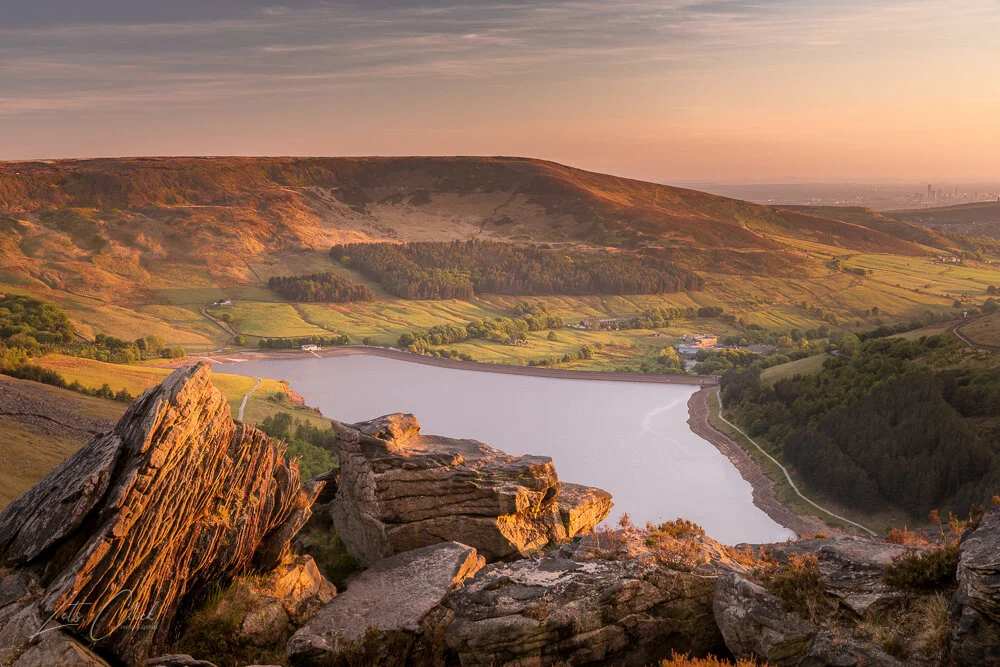
Dovestone Reservoir in the Peak District, Greater Manchester during Golden Hour - the warmth in the image down to the time of day
It’s summer in the UK - hooray!! We can finally leave the house without our rain jacket, well on some days at least. The temperature is up, the natural world is buzzing with activity, the nights are short and the days are long. What a great time to be a landscape photographer. And it is…..well kinda!
You see, it’s that ‘the days are long’ bit, that can cause some issues for landscape photographers.
During the summer months, the earth has us tilted closer to the sun and because of this our star hangs higher in the sky, leading to the longer daylight hours and warmer temperatures. But it is exactly this that poses landscape photographers challenges.
How so? You may ask. Surely, with photography being the capturing of light, longer days and more light means it should be easier to get great photos?
Well in theory, it sounds great, but not all light is the right light.
In landscape photography there are many different types of light which affect your photographs in many different ways. Flat Light, Direct Light, Blue Light, Golden Light, Diffuse Light….these are just some of the terms most landscape photographers know well. All will affect the landscape, and therefor your photograph, in different ways. Affecting colours, tones, saturation, contrast, as well as shadow length, depth, and position.

Direct Light - Whilst the day was somewhat overcast, the light high in the sky still created harsh contrasty shadows in this image. A later or earlier time of the day would have allowed the light to fall off more gradually
Unlike other types of photography, where you maintain some control over your light by utilising flash, reflectors or movement of your subject; landscape photography relies on one light source….that big ball of fire in the sky.
And when it is summer, it sits higher and longer in the sky. And there are fewer clouds. Whilst this makes for great sunbathing weather (sunscreen protection applied of course!), it can be a bad mix for landscape photographers. With the sun high in the sky casting harsh, direct light down, a level of cloud cover would provide diffusion which is a very handy way to take some of the harshness out of the suns rays.
Want to see for yourself? Grab a torch, the one on your phone will do, and shine it onto a surface in shadow. Now grab a piece of tissue and place it a couple of centimetres in front of you torch, shining the light through it. The torch still lights the surface but it’s…..well….less direct. It’s diffuse.
So how do we get around this? Well, there are certain types of shots that will lend themselves to direct light. Reflection shots being one of the first to mind. A high sun in the sky can create superb reflections in water. Taking a shot which uses the shadows to your advantage is another option; being aware of where a shadow falls may lend itself to becoming a leading line or natural frame to your subject.
There are also different ways in which to take a shot. Bracketing (or HDR as it is sometimes referred) is a method of photography whereby three + images are taken of the same composition, usually on a tripod, and then blended together. This technique ensures the range of light captured, from deep shadow to bright sky, is at a maximum, however this technique can very easily be done badly and lead to a final image that does not look real, subtilty when using this technique is a must. Using filters, adjusting settings and manipulating white balance are also useful to produce more usable images during the peak daylight hours.
But mostly, patience; patience is the key.

Lytham Windmill at dawn - the rising sun helping to create the ‘sky on fire’ look that only dawn will really gift you.
Waiting for the right light to fall upon you scene takes patience…..and time. But you can save time and get better odds of good light by going to shoot at the right time. Photographers will often refer to a time frame called Golden Hour. This is the hour or so right after sunrise, or right before sunset. It is a time when the sun is low on the horizon and light rays, specifically blue rays, are scattered coming through the earths atmosphere. This is what often gives the sun it’s orange or reddish tinge at sunset and it is the natural reason why everything looks warmer during that time. And whilst shadows become longer, they are less ‘contrasty’ right before sunset. As the name suggests, it doesn’t last long, on many days even less than an hour, but that is the light landscape photographers crave.
And so that is when photographers head out - for sunrise or sunset. And for me, in the summer, it is mostly for sunset….I enjoy my sleep!…the idea of getting up for a 4am sunrise doesn’t always appeal to me. But if that is the right time to get the shot, then that is the time I will head out.
And, like many of my photography peers on their way to location, when I set off in the middle of the night, or during late afternoon, I’m hoping for many things. For the weather elements to come together, to be able to find a composition, for there to be nothing in the way of the shot…..But most of all there is one big hope…..
Let there be light
Dave
July 2020
The Obvious Shot
…….So do photographers just going around plagiarising each others shots? Or is it just that the shot is so obvious, every photographer who walks that walk stops to take that shot?
In truth, in the age of the internet, it is likely that it is a bit of both………..
A couple of days ago I responded to a question which asked ‘how do you see compositions outside of the obvious shot? Everyone seems to take The Obvious Shot!’ This was in response to a shot I had taken on a trip to Mary’s Shell; a location well known for its long exposure eye level shots, where I had shot from a different perspective and included some pebbles in the foreground (another response told me that it must be fake as he had photographed there several times and never noticed pebbles…..which the beach is littered with! ‘Viewfinder Eye Syndrome’ I call that!).
My response to the question was simple ‘I shoot, shoot, and shoot some more, and I’m not afraid of getting bad shots - trial and error is the key.’
I then added a further comment. ‘And don’t be afraid of capturing ‘The Obvious Shot’, being obvious doesn’t make it bad.’
There are various locations out there that have been photographed thousands of times, many of which have an ‘obvious shot’. And chances are, if it is a well known, easily accessible location, that obvious shot has been photographed much more than just thousands of times.
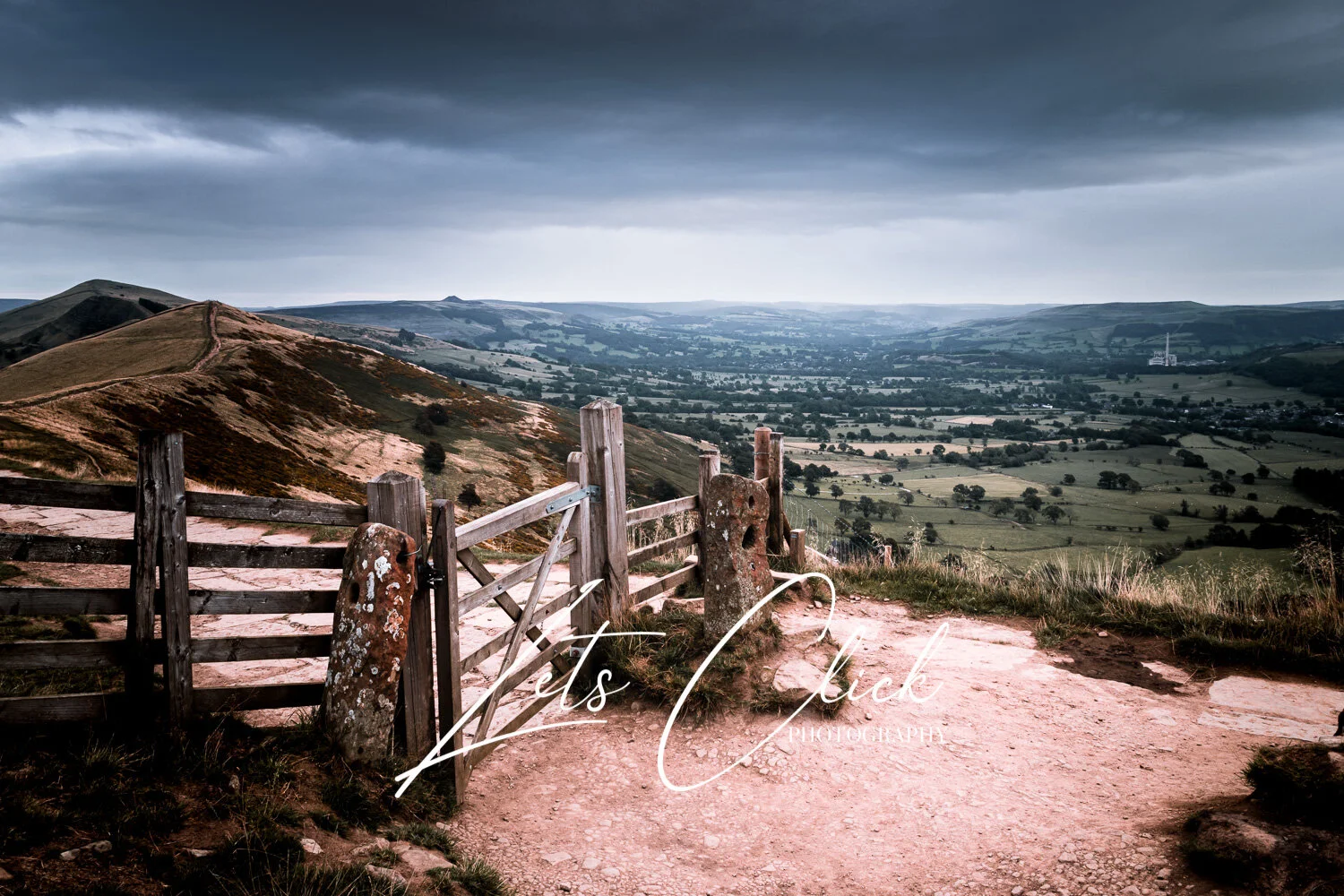
A great example of just such a shot is on The Great Ridge from Mam Tor overlooking Hope Valley in the Peak District National Park, UK.

That ‘Bloody’ Gate! Great Ridge overlooking Hope Valley, Peak District National Park
Type ‘Mam Tor Gate’ into any search engine and look at the image results. You’ll see literally hundreds of shots of the scene above. Some slightly wider, some from a slightly different angle, some with a slightly different perspective. But all of a not too dissimilar composition and framing.
And there is a good reason for that. There is great foreground interest in the gate and fence, adding much sought-after depth, there are great leading lines (which I may have slightly cropped out!) leading towards Back Tor and Lose Hill. Hope Valley looks spectacular. The Slate Mine adds interest in the mid-ground and across the valley are great hills including Win Hill. All in all, an easy to capture image, brimming with all of the elements that Landscape Photographers crave. Which is exactly why there are so many photographers who head there to capture the scene……many of whom will have seen a version of the shot already.
So do photographers just go around plagiarising each others shots? Or is it just that the shot is so obvious, every photographer who walks that walk stops to take that shot?
In truth, in the age of the internet, it is likely that it is a bit of both. The majority of landscape photographers will do some research on a location before heading there, and be highly likely to see a shot a number of times whilst doing that research. And that isn’t restricted to the internet. As a member of the National Trust, each year, I receive a guide book to all the NT properties and locations in the UK, many of which are accompanied by a photograph, commissioned to be taken by hugely respected photographers such as Joe Cornish and Ross Hoddinott (have a search and check out some of their work - remarkable photographers) amongst others. When you come across a shot that makes you go ‘WOW!’ and you head to that location, chances are you want to try and capture that shot yourself.
Plagiarising? Or Inspired?

Gateway to the future. Trying a different angle can completely change the way you view the location.
Personally, I would go with inspired. And each shot becomes its own shot each time it is taken anyway. With ever changing weather conditions, changes in light and the direction it falls across a scene. With each changing season, and the changes in colour of the landscape that accompany seasonal change. And never forgetting man made changes - one such example being that the last time I ventured up Mam Tor and across the Great Ridge, ‘That Gate’ wasn’t there, It had been removed. I presume in light of the Covid 19 pandemic. So a scene is ever changing, with unlimited photography possibilities.
So take ‘The Obvious Shot’ because it will become your shot with all of the uniqueness of that precise moment in time. And then once you have it, try looking from a different perspective, change your angle, change your composition, see what else the location has to offer. Venture further and you may just capture something that hasn’t been shot a thousand times before. Perhaps your shot may become the inspiration for many more to come, even becoming ‘The Obvious Shot’ in itself.
‘Shoot, shoot and shoot some more…’
Dave
June 2020

Venture further and explore, you may just find something you’ve not seen before.