
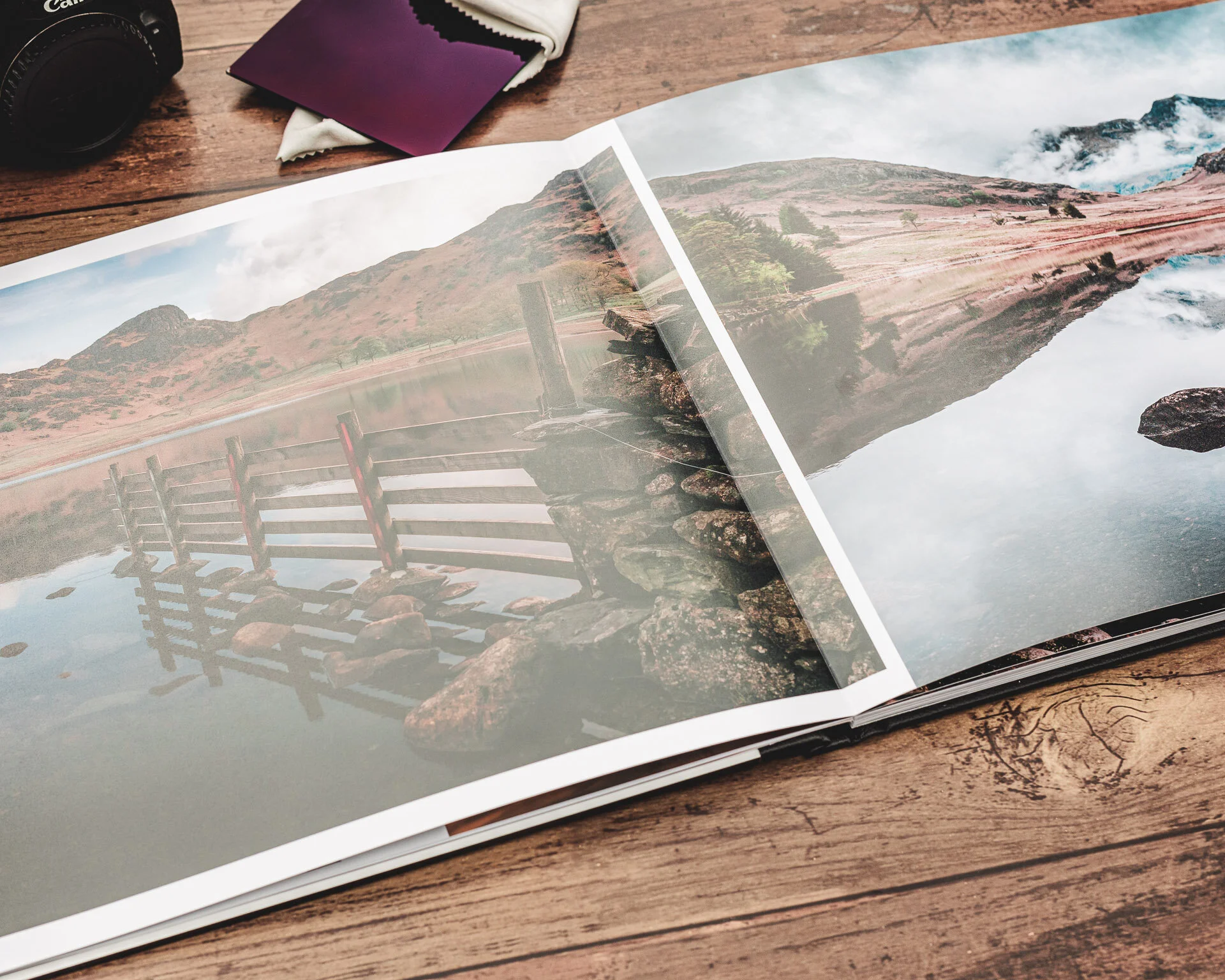
Printing a Photobook
Printing a Photobook: ‘In the era of digital photography and social media, it’s so easy for an image to just become data on a forgotten file hidden on a hard drive. Or to be viewed for a fleeting moment as we share on various social media sites, becoming almost disposable and forgotten the second the viewer scrolls to the next image. For those reasons, for me, printing my images has always been a big part of my workflow. But, even then, it’s difficult to curate into a meaningful viewing experience….short of having a gallery’

I was super excited last week to receive my second annual photobook . This isn’t something that is for sale, it’s simply a great way for me to compile my year of photography in the landscape (if you wonder why September, the end of August is the yearly anniversary of me becoming a full time photographer) and to put together a portfolio of my landscape work from the last 12 months.
In the era of digital photography and social media, it’s so easy for an image to just become data on a forgotten file hidden on a hard drive. Or to be viewed for a fleeting moment as we share on various social media sites, becoming almost disposable and forgotten the second the viewer scrolls to the next image. For those reasons, for me, printing my images has always been a big part of my workflow. But, even then, it’s difficult to curate into a meaningful viewing experience….short of having a gallery.

And so it was that I decided a photobook would be a great solution. A great way to display my work as a collection. A place that clients could view my portfolio. A place for me to document my journey in yearly volumes. And a place for my family to browse and see what I have photographed on all those days I was off into the landscape.
The most challenging part of the process was, undoubtably, choosing which images would make it into the book. Time and emotion definitely play their part. As this was my second time of doing this, I had gained that experience from the last time. More recent images tended to have more emotional attachment, that being enough to convince me the photograph was, perhaps, better than it actually was. This time around I had been making sure to file potential contenders throughout the 12 months. Having a good starting point from which to start the cull, I chose my photobook and decided on the number of pages it should have, thus informing my decision on how many images it would hold. Then the cull began.
If you are serious about your photography and really want to learn something about your development, this is certainly a great way to do so. The sifting process began with 46 images and, after some harsh self-critique, finished with 12. I added a few of my second choice images, to help tell the story of my year, and then it was finally time to design my photobook.
Once again this year, for the task, I turned to Saal Digital and their excellent Professional Line Photobook. My previous book was their XT Line with gloss finish. This year I decided that my work would be better suited to a more matte finish and so chose the standard Professional Line with Matte paper.

One of the reasons why I had gone with Saal Digital last time around was because their software just works. It is pretty darn intuitive and gives you lots of templates to choose from, loads of options around design alongside the ability to do everything from scratch if you prefer. I wanted that complete control over the design so opted to load everything in manually. This year, I designed my Professional Line Photobook with more flow and story that the last time around, when I went purely for a chronological order. Because of the software from Saal Digital, this was a really easy process to complete and my first draft was complete within a few hours.
Another great feature in the Saal Digital design software, is the ability to proof your photobook using a PDF export. This does put watermarks all over your images (otherwise I suppose, many would just use this feature and run) but is a great way to see how your product will look and how it works in relation to telling the story you want to tell. After doing this, I changed some images around, resized one or two and was ready to order.
The ordering process was simple (and I should add, your price is always displayed as you build your book so you can see changes as you add/decrease pages) and done within the Saal Digital software.
It’s nice to be kept informed when you order anything online. And that is exactly what I found with Saal Digital. Emails were received to inform me of the order status, workflow and shipments. My invoice was promptly emailed out and a schedule of delivery followed.
Plus delivery was scheduled with an actual time slot (not one of those wait in all day and hope jobs) which was really efficient.
Only six days on from placing my order, my 2020-2021 photobook was delivered. As I opened the very well packaged book, I was excited to see the results. And, as I already expected, the quality was immediate to see.

Wonderfully bound, beautifully covered, faithfully printed, and with a lovely, almost lustre, finish over the matte paper. The Professional Line Photobook is a thing of beauty. And you can really feel where your investment has gone…..into the crafting of a beautiful book, worthy of your art.
If I had one small niggle, it would be that the paper has a slight bowing in it, perhaps suggesting that it hadn’t quite dried thoroughly before being bound. But overall it is a fantastic product.
And so as another 12 months of Landscape Photography concludes for me, it is time to look to the future. To head back out into the landscape and start all over again. To learn from what has gone and put it to work for what is now to start. Of course, you can follow that journey over on You Tube, just search ‘Let’s Click Photography’ or follow the links from the top of this page.
See you out there
Dave
A big thank you to Saal Digital for their help and assistance in producing my photobook this year. Whilst they have gone above and beyond assisting with the cost towards my book, the thoughts and opinions expressed in this post are not influenced by them whatsoever, and are an honest assessment of my experience using their products and services. #saaldigital
You can find Saal Digital by clicking here: https://www.saal-digital.com

Look back, but don't stare.
….There is a photography show on which I am set to guest soon as a ‘feature’ interview. The show, which will air in a couple of weeks is recording in a few days and I am currently sat here looking through the questions that will be used to help the show flow (I will link through to the channel at the bottom of this blog where you can watch previous episodes and subscribe).
One of the questions is which two landscape shots of mine are my favourites…….
How does a photographer choose their own favourite photographs? I’m not sure how to even go about starting the process. Should I choose based on technical details, composition, lighting, one-off’ness’, location…….
The list of criteria could go on and on!

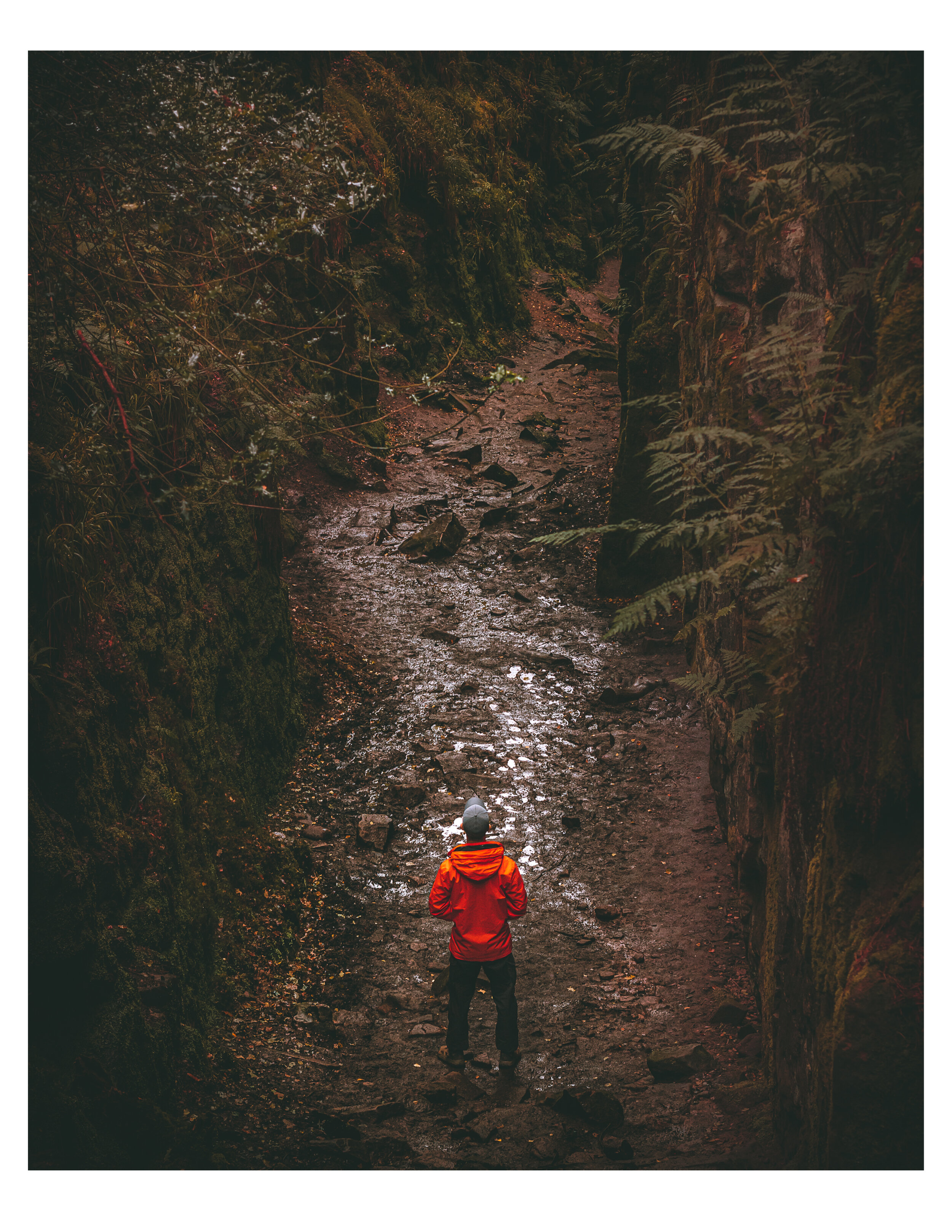
Looking to the future? I’m always drawn to this type of image as I imagine what the individual must be pondering.
Stanage Edge, Peak District National Park
But, hang on! Let’s rewind a little……
There is a photography show on which I am set to guest soon as a ‘feature’ interview. The show, which will air in a couple of weeks, is recording in a few days and I am currently sat here looking through the questions that will be used to help the show flow (I will link through to the channel at the bottom of this blog where you can watch previous episodes and subscribe).
One of the questions is which two landscape shots of mine are my favourites…….
I’ve never even considered this before. It’s probably too extreme to liken it to choosing a favourite child……maybe a favourite toe - yes a toe is a great analogy.
Toes???
You see, I like all my toes. Not a single toe has any preferential treatment from me. They all do their job and on occasion I may look at them and think ‘great job toes - you’re all right by me’ and then I move to the floor ahead and know that those toes will help me move across it (I may have gone off on a tangent!!! But on the plus side, if anyone ever searches for favourite toes and photography on Google, this blog is right up there.).
And that is kind of how I have always viewed my photography. ‘Great job photos, you’re all right…..but what’s next?’.
I am very much a shoot and move on kind of guy. Not at a location of course, but once I have finished processing and publishing etc I move on. ‘You’re never happy to sit still, you’re always chasing what’s next!’ my father used to say to me as a kid, and as I reflect (seemingly) that is still fairly relevant. Now that I think of it, my teachers used to mention it in school too ‘pay attention to what’s happening now Laffan! not later’ But that was always me. ‘What’s Next'?’.

The path ahead. I wonder whether this guy was thinking about his toes?
Luds Church, Peak District National Park
Artist or Creator
In 2020 the term ‘artist’, seems to have been replaced by ‘creator’, whatever the genre. And that sits fine with me. In fact, it probably defines me a little better. I seek to create. That is when I am happiest. Over the years it has been music, photography, stories, films, songs, poems; my wife pointed out to me just last week that I make up a new pet name for my children almost daily. Creating is what I do.
The fact then, that I have chosen to write this blog rather than actually look at some shots and choose my favourites should be of no surprise. The choice of looking at the creation, or creating something new, was an easy decision for me to make.
Upon Review
A few years back I heard a sentence that resonated with me and whenever I am faced with the thought of review, it immediately springs to mind
‘…..you can look back, but don’t stare….’
It was actually a line from a song. But it sums up how I tend to view my work as a photographer. Even with the six or seven pieces of my own that hang around my office, I don’t look at them longingly thinking about what a wonderful shot it was. More that they serve as a reminder as to what was learnt by taking them. How they moved me forward as a photographer, how I can use that as inspiration to create again, improve again, move forward, must keep moving forward.
In fact as I look at them now, I can honestly say that each piece is up on the wall for that reason alone. I’m never truly happy with my shots, there is always something I find to make me think ‘next time I will….’
Because if I was to be happy with all that I have done, why keep on doing it? Why keep moving forward if I am content with where I am? And that can only be the ‘create’ influence coming from my brain (is it left brained?….maybe); that constant nudge of ‘keep moving forward’….’keep finding improvement’. And on the very rare occasion that the kind of decision that requires reviewing previous work comes up I
‘Look Back…But Don’t Stare’
Dave Laffan
November, 2020
Link to PC3Photos You Tube Channel - ‘Behind The Lens’: https://www.youtube.com/c/pc3photos/videos
Now Is The Time
…..It’s been a busy time in the world of Landscape Photography. The end of summer into Autumn always is. As the light begins to draw in a little and the colours of the land start to turn from vibrant greens to rustic oranges, it is a beautiful time of year to get out and photograph…..
It’s been a while since my last blog post. So I’m going to restart with a short one and a quick catch up.
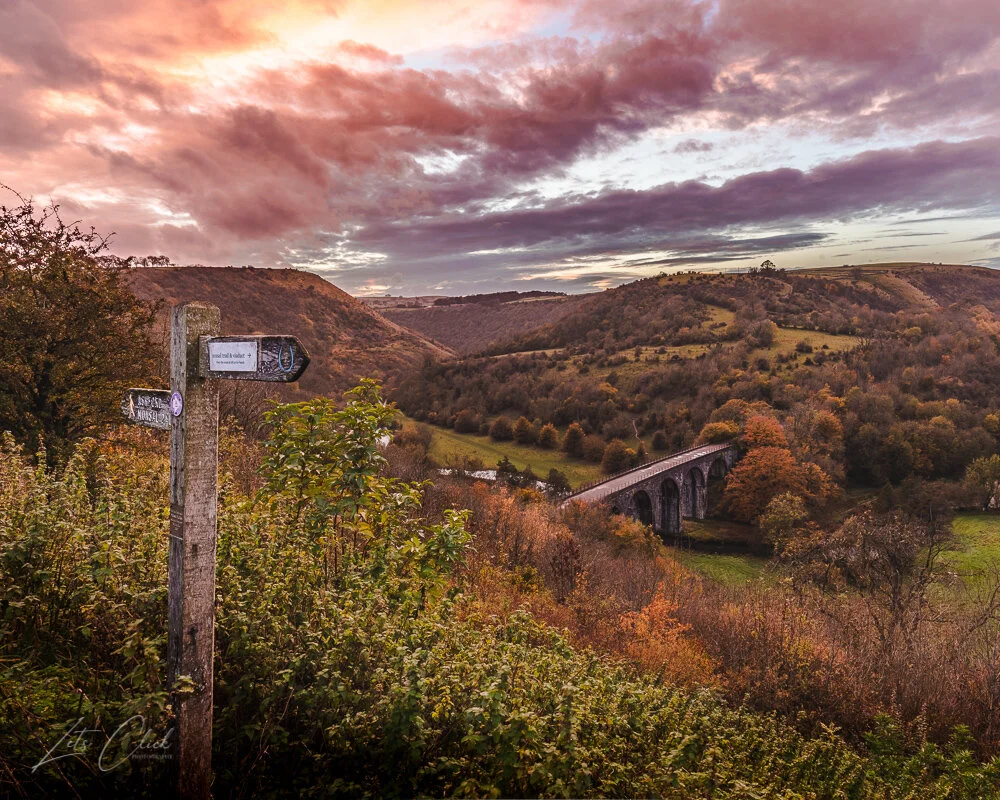
It’s been a busy time in the world of Landscape Photography. The end of summer into Autumn always is. As the light begins to draw in a little and the colours of the land start to turn from vibrant greens to rustic oranges, it is a beautiful time of year to get out and photograph. And here in the UK, we have no shortage of expansive fields, woodlands and hills to capture those magical moments with our cameras. And that is where I have been, busy out and about taking images and film to capture this unique time of year.

Ashness Bridge, overlooking Derwent Water in the Lake District National Park
…..And so you can expect an update to this website fairly soon. There’s lots of fabulous landscape images ready to go up and hopefully you will be whisked away to a far off landscape whilst viewing them.
Whilst writing this we are in the midst of the second national lockdown here in England. However this time around the restrictions do allow for photographers to go out and continue to follow their passion. For me, this allows me time away from the pressures of this moment and a couple of hours out in the landscape with my camera does help maintain some mental stability, much needed as 2020 grinds towards its conclusion.
It’s a year that will not be forgotten for a long time and I imagine, sadly, they will be memories without many positives for a lot of people.
However, for all that has gone on this year, for all the pressures and the stresses of this long and arduous year, I shall look back on 2020 as the year that I REALLY discovered the landscapes of Northern England. The Peak District National Park and The Lake District National Park in particular have been places that I feel I have truly found this year. And, for that, I am grateful to 2020.
So I hope that this lockdown does not leave you feeling despair. If, like me, you have a passion for photography than I would wholeheartedly say that NOW IS THE TIME. Now is the time to follow your passion. To see the world, even if that world is just the local fields around the corner. Because to my eye the world is full of natural beauty. It is just that we seldom have time to see it. But in the midst of a lockdown, perhaps….
NOW IS THE TIME?
Dave
November 2020
The Monsal Head viaduct in the Peak District National Park
Great Family Days Out And Stunning Photography Locations - Part 2
Great family days out plus stunning photography: Part 2 of 2 - So onto part two of our location guide for some great photography, where the family will also have plenty to keep them occupied. Just as in part 1, these are in no particular order, and the parking places are named as they are listed in Google Maps, to make it easier to search for your destination. As you may have guessed by the title, this is the second of this two part feature, but there may be a BONUS article with a couple more suggestions before the summer is over…..
Great family days out plus stunning photography: Part 2 of 2
So onto part two of our location guide for some great photography, where the family will also have plenty to keep them occupied. If you missed part one you can catch up here:
Just as in part 1, these are in no particular order, and the parking places are named as they are listed in Google Maps, to make it easier to search for your destination. As you may have guessed by the title, this is the second of this two part feature, but there may be a BONUS article with a couple more suggestions before the summer is over so subscribe below to be notified when that comes out, or alternatively head to our Facebook Page and Like - we put notifications out on there when we publish new articles. You can click through to all of our social media channels through the icons here:
Right, so on to our next recommendation…….
Stanage Edge, Hathersage, Peak District National Park
Suitable for: Anyone with average fitness; 8-10 years+, However it is not suitable for anyone with walking difficulties. Some moderate terrain
Parking: I recommend parking at the ‘Hooks Carr’ car park if you don’t mind a steeper walk; or the roadside parking on ‘The Dale’ road, for an easier ascent.
The Peak District has an abundance of ‘edges’ with fantastic views and Stanage Edge is a really easy way to experience one of them. With great vistas across Leam, Abney, Hope Valley, Castleton and a different view of Mam Tor, Lose Hill and more, it is easy to see why it is a popular spot for families and photographers alike. Plus it is one of the easier edges to reach. From the car parking spots mentioned above, you can reach the Trig Point within 15-20 minutes dependant on your ascent route (and general fitness of course), although it may take you longer as you take in those wonderful views.
Of course, as the name suggests, it is an edge and has a quite steep drop on one side, so do keep an eye on the young ‘uns and keep them away, but other than that, this is a great place for young and old legs to have an explore and there are lots of rocks to climb over. Be sure to check out Robin Hoods cave hidden away just under the walk - it is easy to miss and will require a bit of careful clambering as it is right on the edge, but otherwise is easy enough to reach….tales of Robin Hood and his merry men can be told from within.
There is lots to photograph including millstones, rock faces and great vistas over Hope Valley and the edge can be walked along for a good while so it really is up to you how long or short your walk is.
On weekends and especially bank holidays, this spot can become very popular so be prepared for a few fellow walkers, rock climbers, mountain bikers and photographers.

The Millstones that are synonymous with the Peak District National Park, sat just below the top of Stanage Edge.

A lovely walk but a steep drop. Stanage Edge is very popular for rock climbers and climbing classes
It is important to stress that whilst this is a very accessible and enjoyable walk, it can become dangerous if you don’t show it respect. The right type of footwear and outerwear is highly recommended. During a dry spell, this could be sturdy trainers, but please don’t attempt in open-toe shoes (or worse….flip-flops!).
It can get quite breezy on the top open edge. On the day I last did this walk (start of Aug 2020) the wind at the bottom was barely noticeable, however once I got up onto the Edge, it was fiercely strong. So a jumper in a bag may be useful even on a hot day.
The common heather that is in abundance is popular with honey bees so try to keep to the rocky paths, we do need to look after our bee population. Plus on hot days adders have been known to sunbath on the rock tops so keep a look out. And speaking about the rocks, there are gaps that nobody would want to fall into, so take care when clambering.
But…..if that passage didn’t put you off ever leaving the house again….if you take the right precautions, remain attentive and give the rough landscape your respect, it really can be quite fun and there were several youngsters up there having great fun on each occasion I have visited.
There is a good route you can follow here which will take about 2 hours: https://letsgopeakdistrict.co.uk/kids-walk-stanage-edge/
You can purchase fine art prints of many of the images from this article right here:
Talacre Beach, Holywell, North Wales
Suitable for: Everyone, although some routes cannot be accessed by wheelchair/buggy
Parking: There are a couple of car parks, I would recommend ‘Gamfa Wen’ car park but ‘Talacre Beach’ car park is closer to the beach shops, amusements and eateries. Both car parks do charge and require correct change.

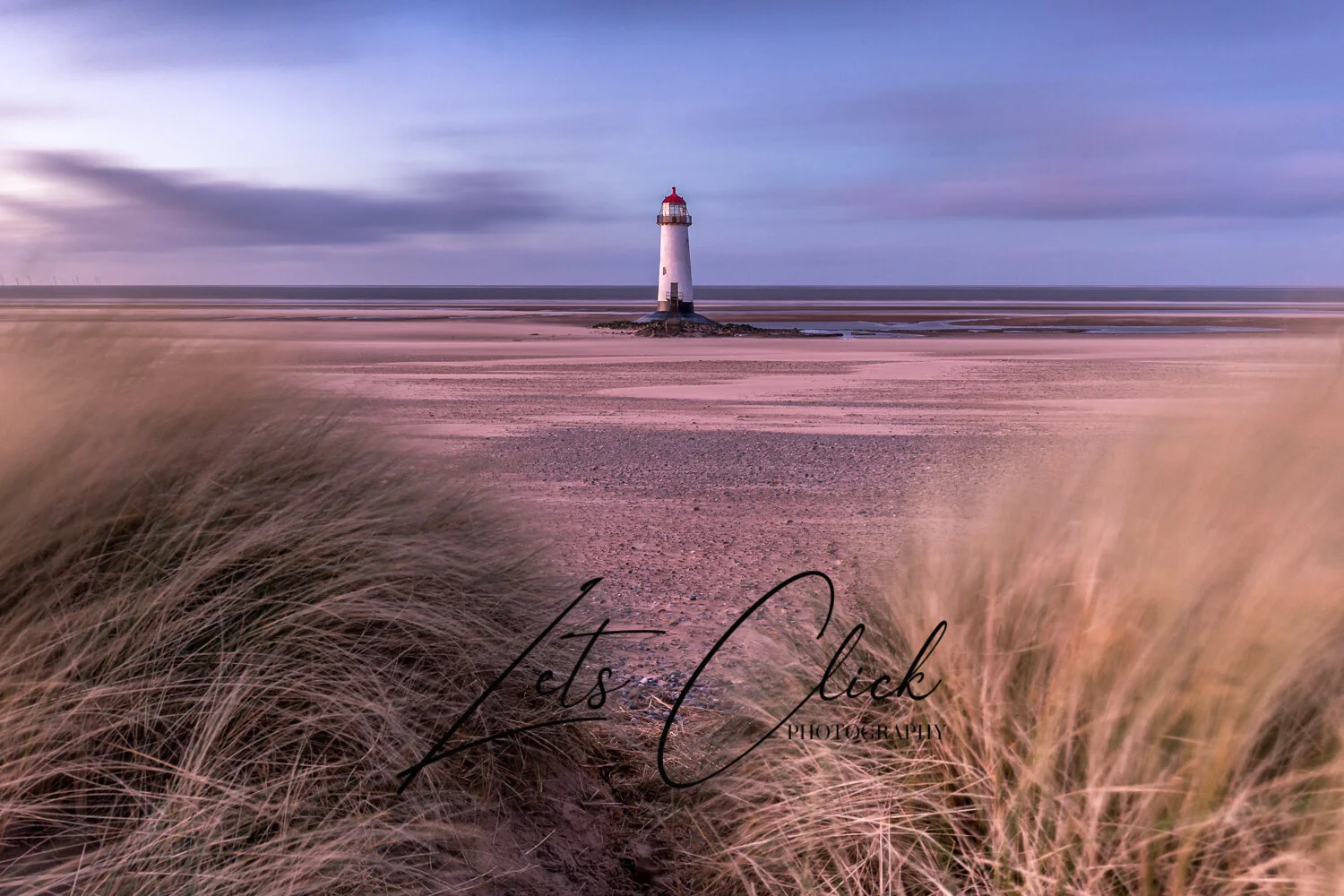
The famous Talacre Lighthouse, also known as the Point of Ayr Lighthouse
The second of our beach recommendations (see part 1 for our first) and this is one that really is family friendly. A great expanse of a beach, lots of tourist type trappings such as amusements, cafes and beach shops, plus some great hideaway routes to explore amongst reeds along the beach front. Talacre itself is a village consisting of a few residents and a couple of large holiday resorts, and a full day, or even two, could easily be spent here. Of course though, once you have a break from the trappings of a beachside summer in the UK, it is time to get your camera out and snap away at Talacre’s most famous resident.
Standing tall at 18 meters (59 feet or so) and donning a red hat is the grade II listed Talacre Lighthouse, or to give it it’s real name, The Point of Ayr Lighthouse.
Built in 1776 to warn ships entering between the Dee and Mersey Estuary, and rebuilt in 1844, the lighthouse has been decommissioned since 1883 and is now a private residential property.
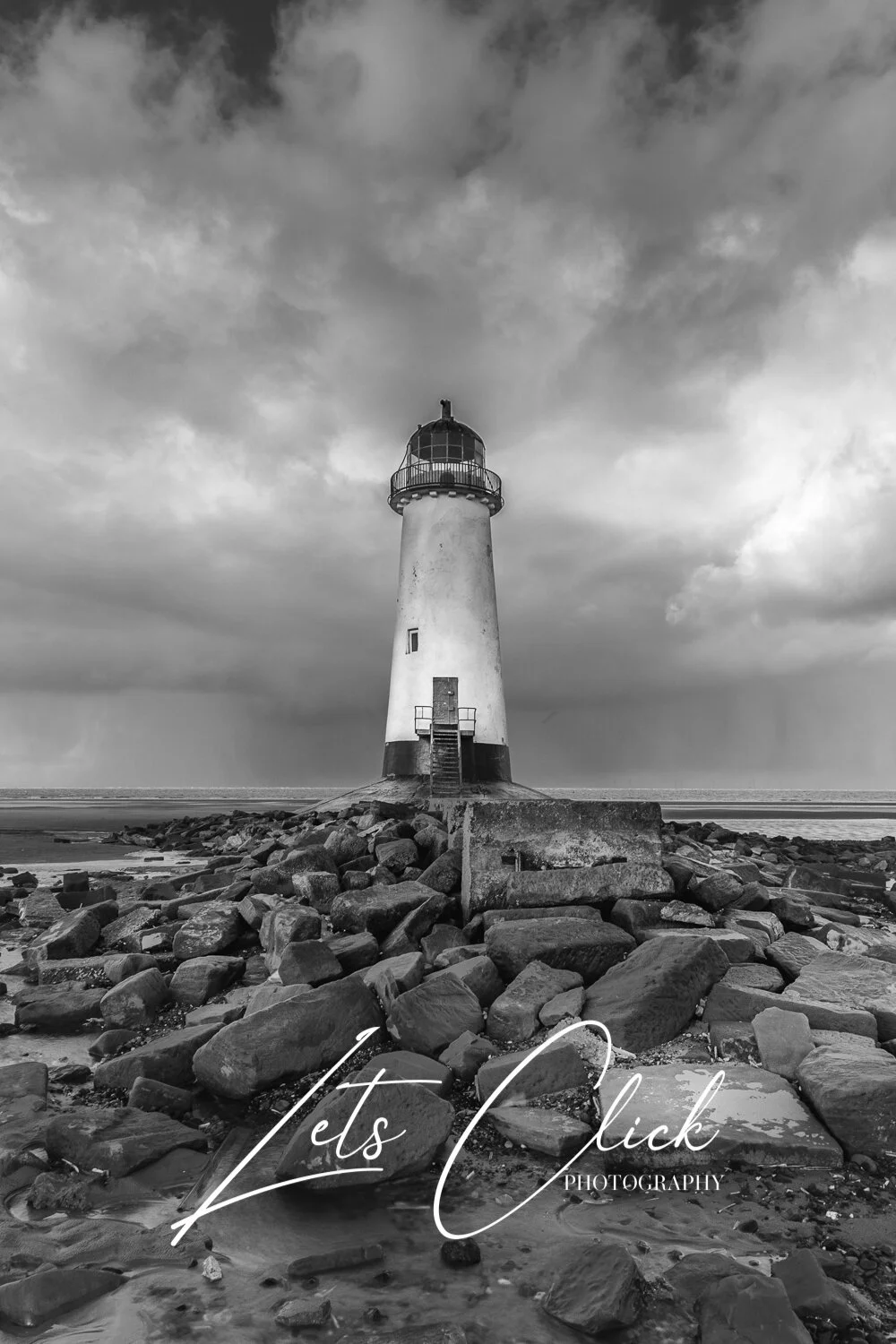
The lighthouse stands at almost 60 feet (18 mtrs) tall
If the beach and lighthouse look familiar then it is likely you saw the starring role this location had in a 2011 TV advert for a paint company and it’s 50 year anniversary. That’s right, the one with an Old English Sheepdog running past it at the end.
But that isn’t all it is famous for. Noted for a history of paranormal activity, including several reports of a spirit called Raymond who appeared stood on the balcony of the lighthouse itself. Mediums who attempted to make contact reported back that Raymond was once a lighthouse master who died of a severe fever.
These paranormal stories inspired a human sculpture to be installed circa 2009, which stood in the position on the balcony for three years. After new owners acquired the lighthouse the sculptures planning permission was not renewed and eventually the sculpture was removed.
Tide in, or tide out, there are great photographic opportunities with the lighthouse providing a perfect focal point, all the while the family can build their own lighthouses, castles and forts safely in the sand nearby.
You can have a quick look around the lighthouse and surrounding areas in our vlog right from the location right here: https://youtu.be/PUA0k2ZdrZU
Did you know we run workshops in many of these locations, guiding you around and teaching you how to master your camera to achieve spectacular Landscape Photography. For more info, click this banner:

Sale & Chorlton Water Parks, Greater Manchester
Suitable for: Everyone
Parking: Either ‘Sale Water Park Main’ car park or ‘Chorlton Water Park’ - Sale is the larger of the two, both are free of charge.
Just inside the M60 Manchester ring road and along the River Mersey from each other sits these two ‘sister’ water parks and nature reserves. And the M60 motorway is an important factor, as both of these water parks were created during the building of one of the busiest motorways in the UK.
Both artificial lakes were created from gravel pits, excavated for gravel to create embankments for the M60 to sit upon. Sale Water Park was previously the site of Sale Old Hall, the remnants of which now house Sale Golf Club; whilst Chorlton Water Parks land was the site of Barlow Hall Farm.
Sale is the larger of the two sites and also houses a restaurant and the fabulous Jacksons Boat pub, perfect for a mid-walk cool beverage or light lunch, plus bike rental and a Manchester Metrolink Tram stop.
Chorlton water park has more accessible pathways, a play area and activity space for under 10’s. Plus has an RSPB site office. Both are home to various wildlife and Sale Water Park has a hide for bird spotting….or photographing.

Sale Water Park at Sunrise

Chorlton Water Park on a winters day
Whichever site you mark as your destination, the other is only a 20-30 minute walk away. Even quicker if you are on your bicycle. And for the more active of you, a walk around both on an afternoon is easily accomplished.
There are some great photographic opportunities, both around the water parks, in the Ees and woodland that surround them, or along the River Mersey, plus the Bridgewater Canal is only a stones throw from the west shore of Sale Water Park, a great place on a calm summers day to get some tranquil shots of the many canal boats and barges that travel up and down.
You can see Sale Water Park and how I took the shot above in one of our vlogs here: https://youtu.be/09an2IJ84DQ
Many of the images featured in this article are available to purchase as prints via our online shop here:
So that’s our second three recommendations, hopefully you get chance to visit. As mentioned at the beginning of this article, I may pop up a bonus piece later on in August so feel free to sign up to our alerts or add our blog page to your RSS feed.
And you can check out many other great locations plus tips and tricks to help your photography to the next level on our You Tube channel which can be found here: https://www.youtube.com/channel/UC4fUWd5TtD4YvjVbeDaAQeA
Dave
August 2020
Great Family Days Out And Stunning Photography Locations - Part 1
Summer is in full bloom, although looking out the window at the pouring rain and dark grey skies as I write this, you wouldn’t quite believe it. Another thing now in full bloom is the school summer holidays, this year though, you’d be forgiven for not noticing them even start. However now that we are officially in the summer holidays, and 2020 having being what it has been, it is likely that many of us will be taking day trips out, or shorter trips within the UK. So with that in mind, I’ve put together a few locations around the North West of England and North Wales which not only make for fantastic landscape photography locations, but double up as great adventures for the family.
Great family days out plus stunning photography: Part 1 of 2
Summer is in full bloom, although looking out the window at the pouring rain and dark grey skies as I write this, you wouldn’t quite believe it. Another thing now in full bloom is the school summer holidays, this year though, you’d be forgiven for not noticing them even start.
However now that we are officially in the summer holidays, and 2020 having being what it has been, it is likely that many of us will be taking day trips out, or shorter trips within the UK. So with that in mind, I’ve put together a few locations around the North West of England and North Wales which not only make for fantastic landscape photography locations, but double up as great adventures for the family.
They are in no particular order, and the parking places are named as they are listed in Google Maps, to make it easier to search for your destination. As you may have guessed by the title, I am not covering them all in this post as it would be far too long, so keep your eyes out, or subscribe below to be notified, for when part two is published next week.
Mam Tor & The Great Ridge, Hope Valley, Peak District National Park
Suitable for: Anyone with average or above average fitness; 7 years+, Not suitable for anyone with walking or breathing difficulties.
Parking: I recommend parking at the ‘Mam Tor National Trust Car Park’ - just off the A623 - there is a small charge or free for all National Trust Members.
One of the most popular photography spots and one of the most popular walks in the Peak District. And it is easy to see why. The views over Hope Valley are spectacular.
If you park at the National Trust car park, then the ascent up Mam Tor is right at the start of your trek. The route up is well signposted and there are paths and steps up to the summit from the car park. The initial climb is fairly taxing and very young legs will probably not enjoy this one, but there are spots you can stop to catch your breath as you head up…Be sure to check out the winding road that journeys into the village of Edale, best viewed from about half way up on your left hand side.
However long it takes you, once you hit the summit, you are rewarded immediately with fabulous 360 degree view and this may well be where you first crack your camera out, whilst the rest of the family explore.
On weekends and especially bank holidays, this spot can become very popular so be prepared for a few fellow walkers and photographers…and even the occasional paraglider. This is a popular take off spot for paragliders, and you are quite likely to spot one or two in an evening or at weekend.

The view over Hope valley towards the slate mine from Back Tor, on the Great Ridge route.

THAT GATE!….One of the most iconic gates around. Back Tor and Lose Hill visible down The Great Ridge
Once you have finished exploring and photographing the sprawling valleys from the summit of Mam Tor, The Great Ridge now lies ahead. This makes for a more relaxing walk after that climb and the first half is on a gentle downward slope, although do be careful with your footing as some of the steps are a little steep.
About a third of the way along the Great Ridge, you will find one of the Peak Districts most photographed locations. The Mam Tor Gate. Best shot at sunrise, but stunning throughout the day, this iconic photography location is not one to be passed by.
Once you have your fill of shots from this prime location, keep along the Great Ridge and you head towards a second gate, from here you can venture right and down towards the Blue John Mines if you wish. Or continue along the Great Ridge up towards Back Tor and Lose Hill.
You can venture back from wherever you make it to via the same route on return or go down into the village of Castleton and return across the ‘broken road’ and cross field. I’ve linked a route planner below.
You can take a look at some of the area in the intro and outro of this video: https://youtu.be/cJdzgASJpNY
Everywhere is well signposted, but you can find a good route guide here: https://www.nationaltrust.org.uk/kinder-edale-and-the-dark-peak/trails/mam-tor-circular-walk
Wizard Walk, Nether Alderley, North West Cheshire
Suitable for: Everyone, although some routes cannot be accessed by wheelchair/buggy
Parking: I recommend parking at the ‘National Trust - Alderley Edge Car Park’ by The Wizard Tearoom - small charge or free for National Trust members

One of the views from The Edge
‘There was once a farmer who had a milk-white mare. He decided to sell it; so one day, he set off to Macclesfield Fair. As he reached Alderley Edge the horse stopped and refused to move, no matter what the farmer did. He saw an old man standing by the side of the road, holding a staff in his hand.. .. ..’
The Legend of Alderley Edge provided inspiration to author Alan Garner as he wrote ‘The Weirdstone of Brisingamen’. Some of the location focal points, including the Druids Circle and Engine Vein, are still visible for visitors to see and form part of the Wizard Walk. One of several walks well signposted in the woodland, the wizard walk is fairly easy and surrounds the folklore of wizardry, that the local area is well known for (throughout Alderley there are several nods to the wizarding world).
Sticking to the route though is only half the fun. The different walking routes all cross each other throughout the woodland and a real explore will see you taking more than just one route.

Stunning views await along the many walks of the Nether Alderley woodlands. Some stunning photography can be had alongside a great family adventure
Some photographic spots not to miss include The Edge itself, which overlooks Greater Manchester and, depending on wind direction, either the landing or take off path for runway one at Manchester Airport - spotting the planes is great entertainment for the youngsters.
The ‘Hearth of Albion’ also provides great views across North Cheshire and the Peak District and is worth having your camera on hand for.
A word of warning though whilst taking shots, don’t take your eyes off youngsters as both of these spots are on cliff edges which, whilst very secure and roomy with lots of space away from the edge, would be very dangerous for inquisitive infants if they get too close to the edges.
Back to the car park and there are the Wizard Tearooms and (usually) an ice cream van selling traditional ices - you can check the National Trust website for opening times but, of course, in 2020, these may have been altered somewhat - the walking route link below can be explored to access opening times for the car park and facilities.
Have a quick look around the place and get some photography tips here: https://youtu.be/5Rn74mfVL-g
You can find out more about the Wizard walking route here: https://www.nationaltrust.org.uk/alderley-edge-and-cheshire-countryside/trails/wizard-walk-at-alderley-edge
Mary’s Shell, Thornton-Cleveleys, Fylde
Suitable for: Everyone
Parking: Head for ‘Jubilee Gardens Car Park’ which is a pay and display just across the road from the beach. There is a small lay by car park on the promenade itself opposite the jubilee entrance if you can grab a space, this is also pay and display.
It wouldn’t be summer without a trip to the beach and so here is the first of two recommendations. And not only is it a beach perfect for the kids, but it is an iconic location for photographers.
This really is a perfect family & photography mix. Spend the day on the beach soaking up the sun, grab a fish and chips supper, enjoy all the local entertainment and then head to the shore for sunset. And you will certainly want your camera on hand for this one.
Known as the ‘Mythical Coast’ because, well….Mary’s Shell is magical, and it has a story to tell…….
That story starts in Singleton Thorpe, which was a village off the coast of Cleveleys in the mid 1500’s.
Swallowed by a tsunami in 1554/55, only three people survived and local legend states that they went on to become founders of the village now known as Singleton in Fylde, near Blackpool (speaking of which, you can clearly see Blackpool Tower from the beach at Cleveleys - another shot worth taking)

The stunning view of the sunsetting over the west coast beyond Mary’s Shell - a perfect location to marry a family day out with some stunning photography

It doesn’t finish with sunset though - watch the colours of the sky change once the sun dips below the horizon.
And that folklore is responsible for inspiring ‘The Sea Swallows’ tale, a short story based on that sunken village. In the story, the heroine is Mary, who attempts to save the village from a Sea Ogre....armed only with her magical golden shell.
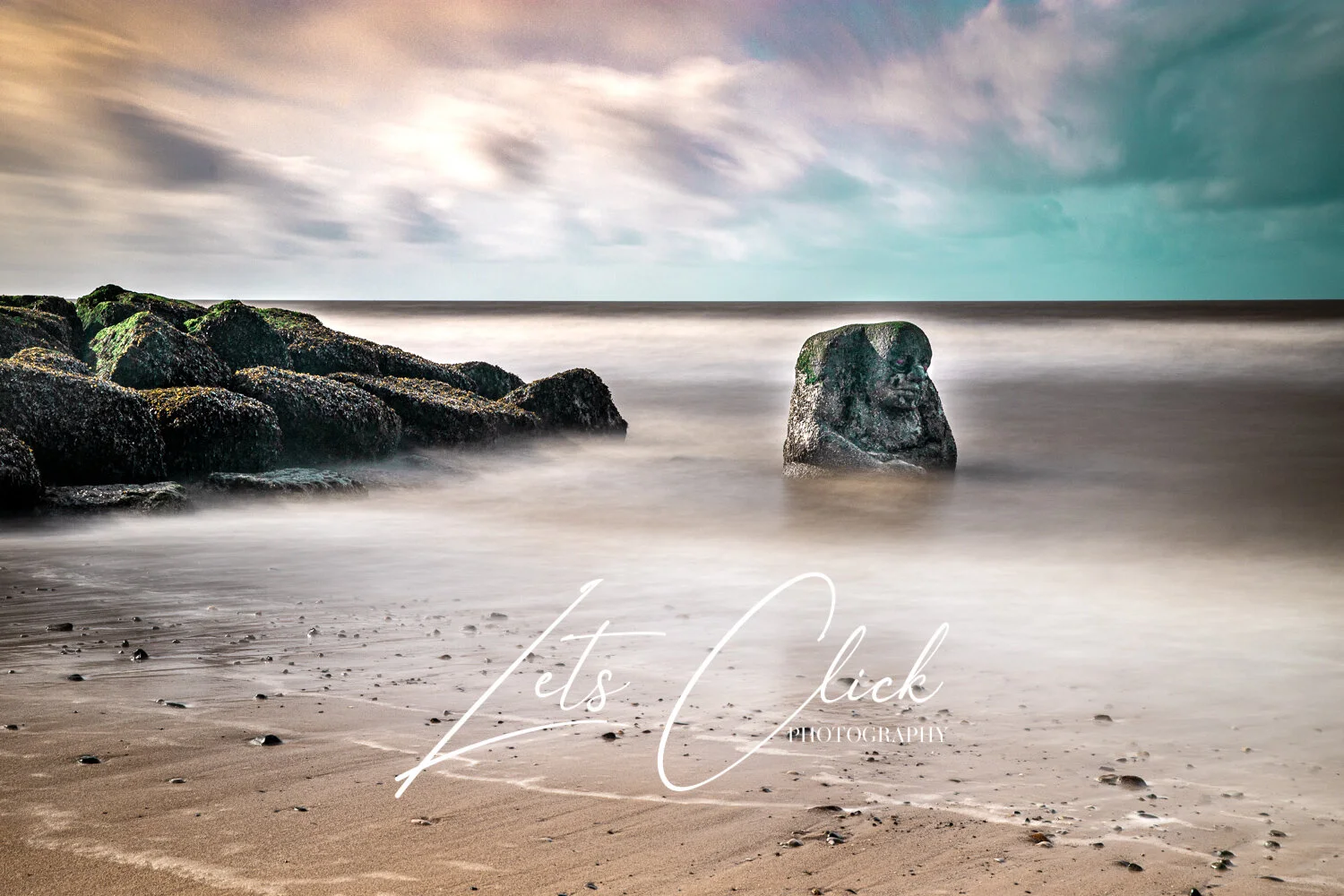
The story itself is inscribed on the inside of the shell, so at low tide take a visit inside for story time……but beware, you are being watched. The Sea Ogre also occupies the same beach. See if you can spot him - he’s certainly fairly large, if well disguised (quick tip - low tide is the best time to search for him).
You can read more about the area and photographing it in one of my earlier blogs here: https://www.letsclickphotography.co.uk/blog/revisiting-a-location-marys-shell-lancashire
Plan your trip here: https://www.visitcleveleys.co.uk/about/seafront/marys-shell-on-cleveleys-beach/
All images featured in this article are available to purchase as prints via our online shop here:
So that’s our first three recommendations, hopefully you get chance to visit at least one, if not all three. Part 2 of this Blog will follow next week, you can subscribe below to make sure you don’t miss it.
Check out many other great locations as I travel around photographing the beautiful landscapes of the UK via our You Tube channel which can be found here: https://www.youtube.com/channel/UC4fUWd5TtD4YvjVbeDaAQeA
Dave
July 2020
Let There Be Light
It’s summer in the UK - hooray!! We can finally leave the house without our rain jacket, well on some days at least. The temperature is up, the natural world is buzzing with activity, the nights are short and the days are long. What a great time to be a landscape photographer. And it is…..well kinda!
You see, it’s that ‘the days are long’ bit, that can cause some issues for landscape photographers…..

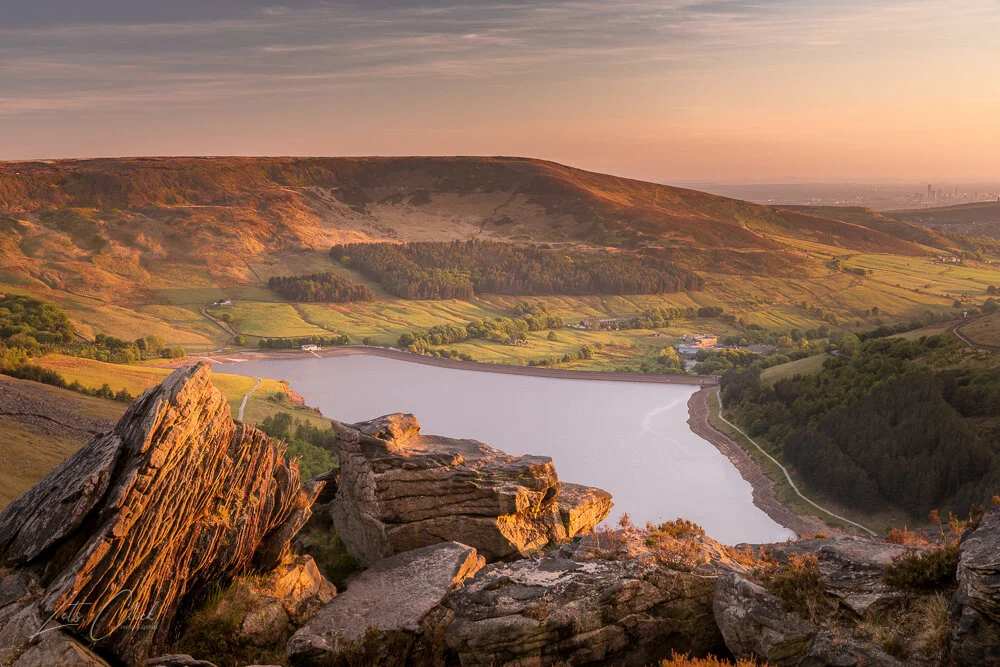
Dovestone Reservoir in the Peak District, Greater Manchester during Golden Hour - the warmth in the image down to the time of day
It’s summer in the UK - hooray!! We can finally leave the house without our rain jacket, well on some days at least. The temperature is up, the natural world is buzzing with activity, the nights are short and the days are long. What a great time to be a landscape photographer. And it is…..well kinda!
You see, it’s that ‘the days are long’ bit, that can cause some issues for landscape photographers.
During the summer months, the earth has us tilted closer to the sun and because of this our star hangs higher in the sky, leading to the longer daylight hours and warmer temperatures. But it is exactly this that poses landscape photographers challenges.
How so? You may ask. Surely, with photography being the capturing of light, longer days and more light means it should be easier to get great photos?
Well in theory, it sounds great, but not all light is the right light.
In landscape photography there are many different types of light which affect your photographs in many different ways. Flat Light, Direct Light, Blue Light, Golden Light, Diffuse Light….these are just some of the terms most landscape photographers know well. All will affect the landscape, and therefor your photograph, in different ways. Affecting colours, tones, saturation, contrast, as well as shadow length, depth, and position.

Direct Light - Whilst the day was somewhat overcast, the light high in the sky still created harsh contrasty shadows in this image. A later or earlier time of the day would have allowed the light to fall off more gradually
Unlike other types of photography, where you maintain some control over your light by utilising flash, reflectors or movement of your subject; landscape photography relies on one light source….that big ball of fire in the sky.
And when it is summer, it sits higher and longer in the sky. And there are fewer clouds. Whilst this makes for great sunbathing weather (sunscreen protection applied of course!), it can be a bad mix for landscape photographers. With the sun high in the sky casting harsh, direct light down, a level of cloud cover would provide diffusion which is a very handy way to take some of the harshness out of the suns rays.
Want to see for yourself? Grab a torch, the one on your phone will do, and shine it onto a surface in shadow. Now grab a piece of tissue and place it a couple of centimetres in front of you torch, shining the light through it. The torch still lights the surface but it’s…..well….less direct. It’s diffuse.
So how do we get around this? Well, there are certain types of shots that will lend themselves to direct light. Reflection shots being one of the first to mind. A high sun in the sky can create superb reflections in water. Taking a shot which uses the shadows to your advantage is another option; being aware of where a shadow falls may lend itself to becoming a leading line or natural frame to your subject.
There are also different ways in which to take a shot. Bracketing (or HDR as it is sometimes referred) is a method of photography whereby three + images are taken of the same composition, usually on a tripod, and then blended together. This technique ensures the range of light captured, from deep shadow to bright sky, is at a maximum, however this technique can very easily be done badly and lead to a final image that does not look real, subtilty when using this technique is a must. Using filters, adjusting settings and manipulating white balance are also useful to produce more usable images during the peak daylight hours.
But mostly, patience; patience is the key.

Lytham Windmill at dawn - the rising sun helping to create the ‘sky on fire’ look that only dawn will really gift you.
Waiting for the right light to fall upon you scene takes patience…..and time. But you can save time and get better odds of good light by going to shoot at the right time. Photographers will often refer to a time frame called Golden Hour. This is the hour or so right after sunrise, or right before sunset. It is a time when the sun is low on the horizon and light rays, specifically blue rays, are scattered coming through the earths atmosphere. This is what often gives the sun it’s orange or reddish tinge at sunset and it is the natural reason why everything looks warmer during that time. And whilst shadows become longer, they are less ‘contrasty’ right before sunset. As the name suggests, it doesn’t last long, on many days even less than an hour, but that is the light landscape photographers crave.
And so that is when photographers head out - for sunrise or sunset. And for me, in the summer, it is mostly for sunset….I enjoy my sleep!…the idea of getting up for a 4am sunrise doesn’t always appeal to me. But if that is the right time to get the shot, then that is the time I will head out.
And, like many of my photography peers on their way to location, when I set off in the middle of the night, or during late afternoon, I’m hoping for many things. For the weather elements to come together, to be able to find a composition, for there to be nothing in the way of the shot…..But most of all there is one big hope…..
Let there be light
Dave
July 2020
Disconnect To Connect
For about 90 minutes, I didn’t have a screen to look at, just the vastness of the landscape, the wonder of nature. It was blissful; and I walked far more than I had anticipated doing, barely noticing the rain. Clambering over streams, rocks, wall ladders. Climbing hills and jumping felled trees. It was a feeling of connection with the landscape that I rarely feel. Free of distraction, I experienced the wonder and excitement of
In a world that seems to be ruled by technology, where we spend vast quantities of time looking at screens, we could say that we are more ‘connected’ than ever. But has that connection come at a cost? Has the connection we have to our immediate surroundings been diminished in an endless world of email, social media, vlogs, blogs, texts, websites etc.
In 2020 it is rare, certainly in the UK, to go somewhere that has a complete lack of connectivity. No Wi-Fi, no 5G, 4G or any type of mobile signal, nothing…zero. To start out, it can be quite scary. ‘What if something happens?’; ‘What if I’m needed?’, ‘Am I missing something important?’…..In a world where we have become so dependant on those connections, them suddenly being stripped away is a shock.
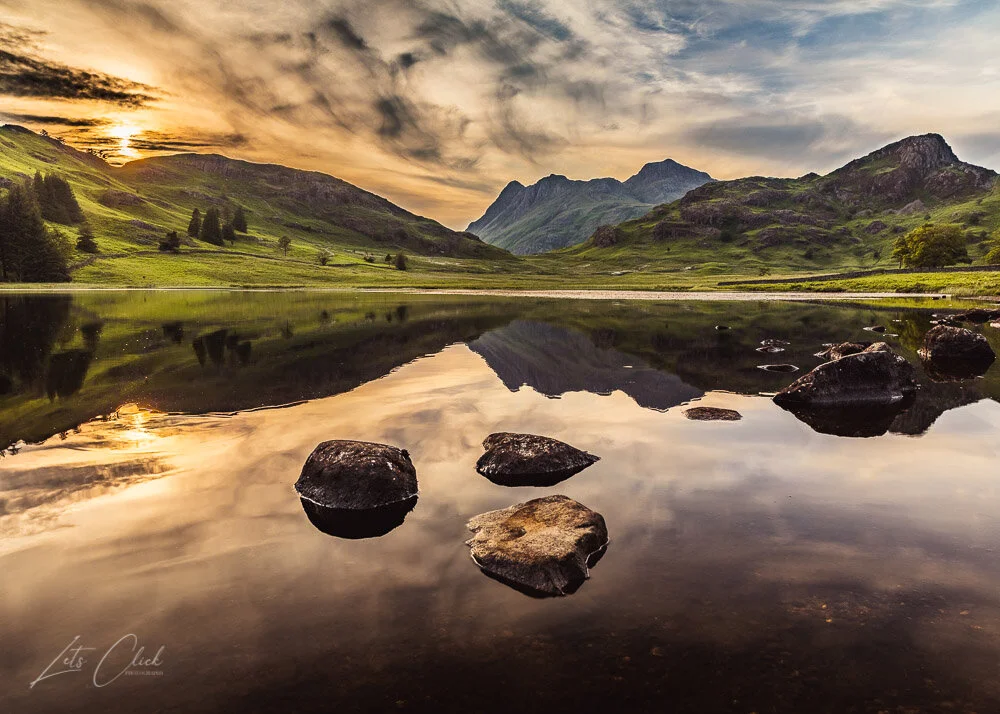
But that is exactly the situation I found myself in when I visited Blea Tarn in the Lake District National Park, UK. No outside communication, no signal, no Wi-Fi……no distractions.

You can’t fail to be inspired by the view that greets your arrival at Blea Tarn
Upon arriving and realising how close to the car park the tarn was, I further removed distractions by deciding to initially leave my camera in the car. To just go for a walk through the countryside and explore the location. Taking in the amazing vistas, waterfalls, woodland and, of course, the tarn itself. Just me and the landscape, the sounds of sheep bleating, birds singing, and the occasional thunder clap….yes, I got drenched.
For about 90 minutes, I didn’t have a screen to look at, just the vastness of the landscape, the wonder of nature. It was blissful; and I walked far more than I had anticipated doing, barely noticing the rain. Clambering over streams, rocks, wall ladders. Climbing hills and jumping felled trees. It was a feeling of connection with the landscape that I rarely feel. Free of distraction, I experienced the wonder and excitement of exploring a location for the first time, without being glued to a map or staring through a viewfinder looking for compositions. No ping of an incoming email or stopping to share a ‘story’ on social media. A connection born from being disconnected.

A morning of rain only added to the dream like view, as seen here from the woodland path
That being said, I am of course a photographer. So whilst I was exploring, I was doing so with an eye for a shot, scouting for a composition. And this is indeed a location where there are many…..oh but only if you can make it past the first one!
And what a composition it is. Amongst UK landscape photographers, it is iconic. Leading lines, foreground interest, beautiful midground, all backed by an amazing vista. I must admit that when I finally did get my camera out, it took a while to move past it.
And it is even more of a photographers dream when you take into account that this amazing viewpoint is quite accessible and less than a quarter of a mile from the small National Trust car park (so small that it is easy to miss) which sits on the Little Langdale to Great Langdale road….the road itself being quite an adventure to navigate!

Trying to get a ‘less taken’ shot of the tarn
A bit of exploration though uncovers much more besides that first shot. Whether in the woods, along the many streams, towards Great Langdale or over the Hanging Valley, there are many spectacular views. Much more to photograph than I managed to do on my visit….which of course, gives me a great reason to head back later this year.
Aside from photography though, I would still revisit. I may even take the family next time. Because that feeling of connection is worth it. Even as I sit at a screen typing this vlog, I can find myself getting lost in, what are, quite vivid memories of the place. And that isn’t a feeling that I have usually, almost two weeks after visiting. A lot of my memories of a location are formed through the viewfinder. Or my experience was marred by having a time frame or an aim, in many cases to come away with a stunning shot, or at least some footage for my You Tube Channel.
But in the case of Blea Tarn, those memories are fresh and vibrant, pleasant and inspiring. So when I do return, I will do exactly the same again….
Disconnect to Connect
Dave
July, 2020

The Langdale Pikes provide a stunning backdrop to the tarn
Whatever The Weather
…..Throughout the journey there the conditions looked perfectly set for such a shot. Wave clouds were high in the sky, the horizon was hazy but clear of low cloud formations and it was fairly still. We hit a bit of a delay as a coach had come off the road near Devoke Water and whilst waiting to get moving again, a weather front moved in from the west coast. Upon arriving at Wastwater, the sky had completely covered……
As much as photography is my hobby, it is also my full time job, through which I cover many genres of both photography and film. I thoroughly enjoy my work and all of the shoots I get to do, but there’s no doubt that my landscape photography days sit as the highlight of my working week.
Quite early on, after making the move from my corporate career to full time photographer, I decided that I would incorporate a day each week to be designated my ‘Landscape’ day. It isn’t a specific day. It is determined by the way my bookings fall. But 1 of 5 days is always left free.
Having the freedom to do that is absolutely magnificent, but has one downside. Because my landscape day is usually set weeks in advance due to the bookings in the diary, it is never planned around the weather. Whether glorious sunshine; grey and windy; or full blown storm; that is the day I will go out to shoot in the landscape, and I do, whatever the weather.

Wastwater, Lake District National Park, UK. I bet the sunset was beautiful behind those clouds
But, as I talked about in last weeks blog, the weather is your friend. It can give you that beautiful awe inspiring sunrise or pelt you with hail, but it will always be unique to that moment. It offers a challenge and changes the way in which a scene will look, and can completely change how it might be captured for a photograph.
Take the above shot of Wastwater as an example. I had ventured there hoping to capture the sunset with an idea of a long exposure shot, enhancing the glorious colours of the suns rays filtering through the earths atmosphere. Hoping for great reflections in the still, mirror like water.
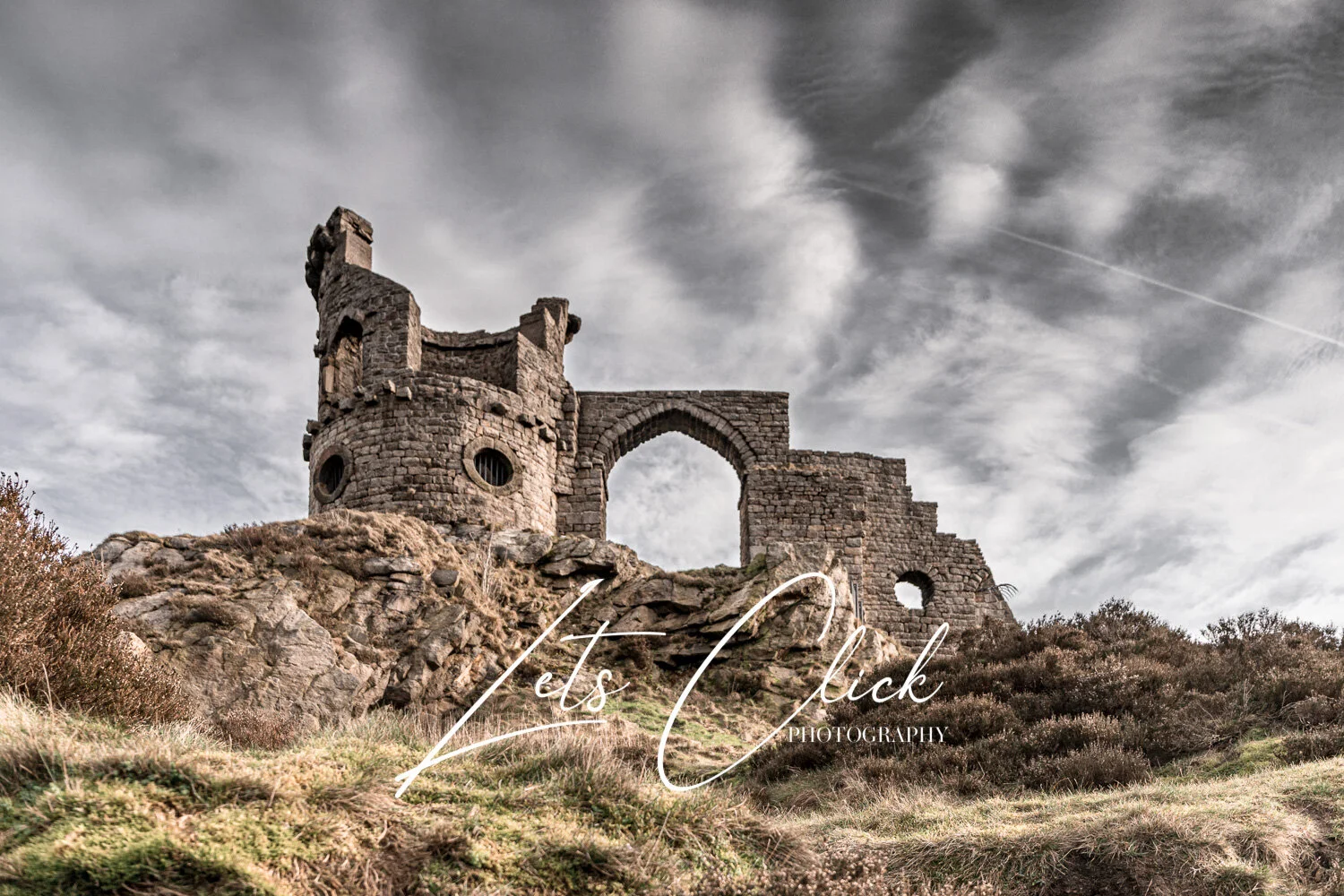
Throughout the journey there the conditions looked perfectly set for such a shot. Wave clouds were high in the sky, the horizon was hazy but clear of low cloud formations and it was fairly still. We hit a bit of a delay as a coach had come off the road near Devoke Water and whilst waiting to get moving again, a weather front moved in from the west coast. Upon arriving at Wastwater, the sky had completely covered with low cloud. the shot which I had planned from the southern end of the water was now pointless. The cloud would cover most of the water up to the peaks. A change of plan and a drive north, up the western edge, to around half way up the water found a slightly clearer view and the moody image you see above was born. A polariser helped cut through the remaining haze above the water, the square crop reflected how I felt under the grey sky; a little hemmed in.
The weather forecast the evening before had predicted that this would happen, but I was hoping that it may hit a little later, forecast are never truly accurate until a short while beforehand. However, even though the weather did go that way, I’m still pleased with the shot. It tells a story. And each time I look at it I’m reminded that whatever the weather, it is always worth going out to shoot.

Another Place in Crosby on a very overcast dull day
The two photographs (above and below) of Anthony Gormley’s Another Place in Crosby, Merseyside, show another example of just how different a shot might be dependant on the weather. In the first shot, taken at sunset in October, 2019. The weather was grey and cloudy with only hints of sunlight breaking through the clouds for brief moments. The sun wasn’t visible and it had been raining on and off throughout the afternoon. A long exposure became the order of the day as there was little detail in the sky. In May 2020, the shot became something else entirely as this time the sky was hazy with infrequent clouds, the sun setting right behind the scene into which I was shooting. No long exposure here, I would not have wanted to have the sun become a blurred line down to the horizon. The feel of the two shots is very different.

The same scene (albeit a slightly different composition and exposure) with a hazy sunset months later
Whatever the weather, there is always something to shoot, there is always a way to capture that moment in time. But it will certainly help if you have the right equipment for the weather. And I’m not talking camera gear or lenses etc. Comfort in terrible weather will play a huge part in your time in the landscape. I have been caught in some awful weather, and early on in my landscape photography journey, I did not have the right footwear, clothing, bags or jacket. I was cold, wet and miserable and the majority of the time completely unmotivated to even contemplate taking my camera out of the bag.
Investing, even a little, into outerwear and footwear has helped me out no end. You still end up wet, cold and miserable….but it takes a lot longer to get to that point.
And so, my ‘Landscape Day’ is a day on which I head out regardless, each week, ready to take on the Landscape and all of its challenges…...
Whatever The Weather
Dave
June, 2020

If you can get through the rain, you might just spot the rainbow
The Obvious Shot
…….So do photographers just going around plagiarising each others shots? Or is it just that the shot is so obvious, every photographer who walks that walk stops to take that shot?
In truth, in the age of the internet, it is likely that it is a bit of both………..
A couple of days ago I responded to a question which asked ‘how do you see compositions outside of the obvious shot? Everyone seems to take The Obvious Shot!’ This was in response to a shot I had taken on a trip to Mary’s Shell; a location well known for its long exposure eye level shots, where I had shot from a different perspective and included some pebbles in the foreground (another response told me that it must be fake as he had photographed there several times and never noticed pebbles…..which the beach is littered with! ‘Viewfinder Eye Syndrome’ I call that!).
My response to the question was simple ‘I shoot, shoot, and shoot some more, and I’m not afraid of getting bad shots - trial and error is the key.’
I then added a further comment. ‘And don’t be afraid of capturing ‘The Obvious Shot’, being obvious doesn’t make it bad.’
There are various locations out there that have been photographed thousands of times, many of which have an ‘obvious shot’. And chances are, if it is a well known, easily accessible location, that obvious shot has been photographed much more than just thousands of times.
A great example of just such a shot is on The Great Ridge from Mam Tor overlooking Hope Valley in the Peak District National Park, UK.

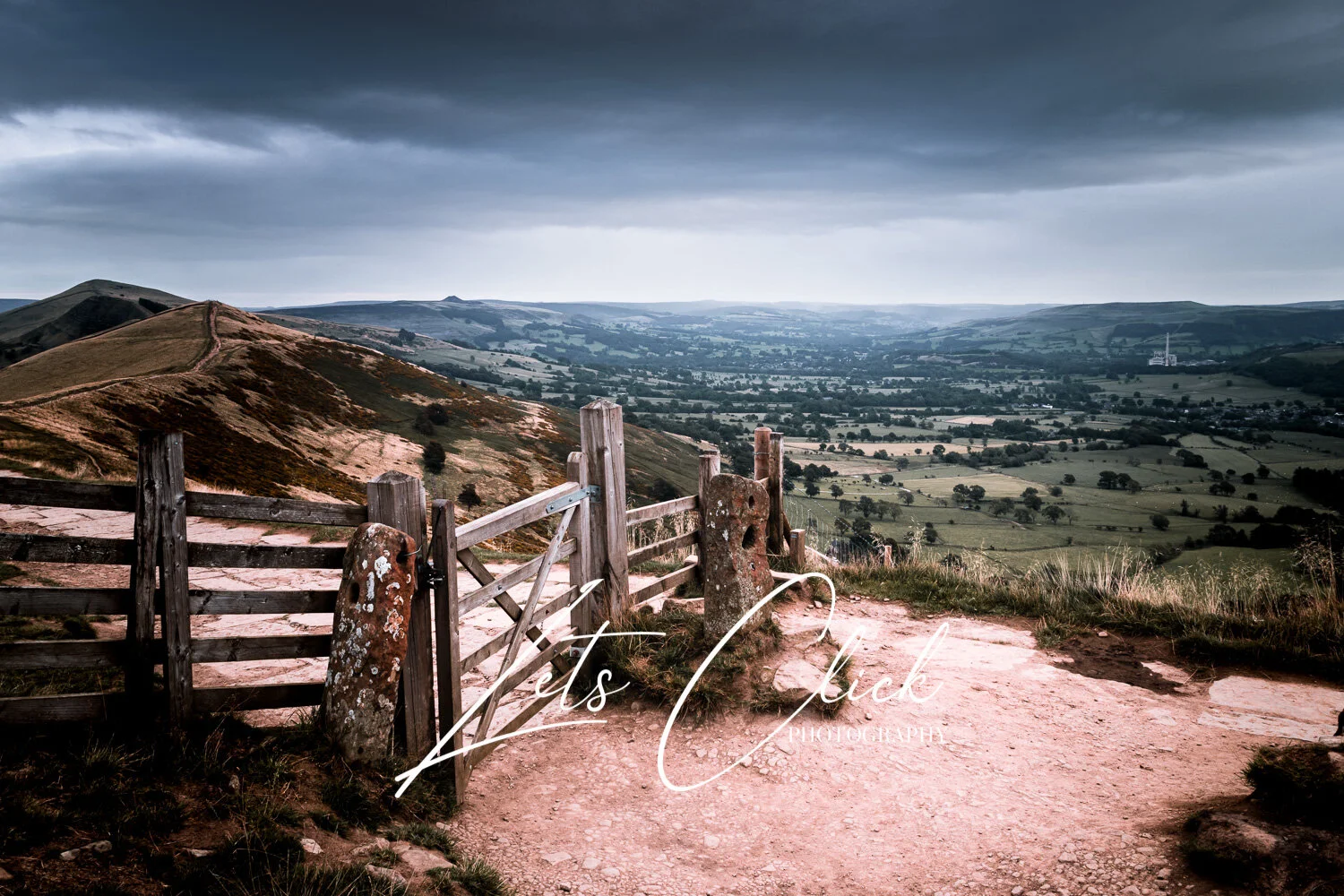
That ‘Bloody’ Gate! Great Ridge overlooking Hope Valley, Peak District National Park
Type ‘Mam Tor Gate’ into any search engine and look at the image results. You’ll see literally hundreds of shots of the scene above. Some slightly wider, some from a slightly different angle, some with a slightly different perspective. But all of a not too dissimilar composition and framing.
And there is a good reason for that. There is great foreground interest in the gate and fence, adding much sought-after depth, there are great leading lines (which I may have slightly cropped out!) leading towards Back Tor and Lose Hill. Hope Valley looks spectacular. The Slate Mine adds interest in the mid-ground and across the valley are great hills including Win Hill. All in all, an easy to capture image, brimming with all of the elements that Landscape Photographers crave. Which is exactly why there are so many photographers who head there to capture the scene……many of whom will have seen a version of the shot already.
So do photographers just go around plagiarising each others shots? Or is it just that the shot is so obvious, every photographer who walks that walk stops to take that shot?
In truth, in the age of the internet, it is likely that it is a bit of both. The majority of landscape photographers will do some research on a location before heading there, and be highly likely to see a shot a number of times whilst doing that research. And that isn’t restricted to the internet. As a member of the National Trust, each year, I receive a guide book to all the NT properties and locations in the UK, many of which are accompanied by a photograph, commissioned to be taken by hugely respected photographers such as Joe Cornish and Ross Hoddinott (have a search and check out some of their work - remarkable photographers) amongst others. When you come across a shot that makes you go ‘WOW!’ and you head to that location, chances are you want to try and capture that shot yourself.
Plagiarising? Or Inspired?
Gateway to the future. Trying a different angle can completely change the way you view the location.
Personally, I would go with inspired. And each shot becomes its own shot each time it is taken anyway. With ever changing weather conditions, changes in light and the direction it falls across a scene. With each changing season, and the changes in colour of the landscape that accompany seasonal change. And never forgetting man made changes - one such example being that the last time I ventured up Mam Tor and across the Great Ridge, ‘That Gate’ wasn’t there, It had been removed. I presume in light of the Covid 19 pandemic. So a scene is ever changing, with unlimited photography possibilities.
So take ‘The Obvious Shot’ because it will become your shot with all of the uniqueness of that precise moment in time. And then once you have it, try looking from a different perspective, change your angle, change your composition, see what else the location has to offer. Venture further and you may just capture something that hasn’t been shot a thousand times before. Perhaps your shot may become the inspiration for many more to come, even becoming ‘The Obvious Shot’ in itself.
‘Shoot, shoot and shoot some more…’
Dave
June 2020

Venture further and explore, you may just find something you’ve not seen before.
Revisiting a location - Marys Shell, Lancashire
This is always a popular part of the coast for photographers, who come from miles around to capture their take of the fabled shell. But most of those photographers aren’t aware that they are being watched from beneath the ocean by the Ogre. You see; Mary’s Shell is magical, and it has a story to tell…….
This was my second visit in 9 months to photograph Mary’s Shell in Cleveleys, Lancashire, UK. Revisiting locations is something that I have made a conscious effort to do in these weeks following the relaxation of lockdown measures within the English borders. Familiarity with a place means that I am more than knowledgeable in what I require to take, not just photography gear wise, but footwear, type of clothing, safety equipment and of course food. Unnecessarily having to visit a shop 60 miles from home is not part of the plan in our socially distanced way of life.
It seems like the natural first steps back out in our new way of life world.
Plus, of course, all of the photographic reasons to venture back to this lovely part of the world. The last time I was here was a wet overcast Autumn afternoon, grabbing shots in between the rain clouds. And whilst I was really pleased with the shots I got on that day; this time, I was looking forward to the sun

A shot from Autumn 2019 during a short respite from the rain
Upon arrival, I wasn’t surprised to see that a fair few of my peers had also decided to pay a visit. This is always a popular part of the coast for photographers, who come from miles around to capture their take of the fabled shell. But most of those photographers aren’t aware that they are being watched from beneath the ocean by the Ogre. You see; Mary’s Shell is magical, and it has a story to tell…….

The Ogre keeping watch from afar
It’s story starts in Singleton Thorpe, which was a village off the coast of Cleveleys in the mid 1500’s. Swallowed by a tsunami in 1554/55, only three people survived and they went on to become founders of the village now known as Singleton in Fylde, near Blackpool....or so folklore says.
And that folklore is responsible for inspiring ‘The Sea Swallows’ tale, a short story based on that sunken village. In the story, the heroine is Mary, who attempts to save the village from a Sea Ogre....armed only with her magical golden shell.
And so the Ogre sits there, looking on and getting swallowed by the ocean twice a day, whilst Marys Shell commands the swell to stop.
The short story is inscribed on the inside of the shell. Worthy of a read if ever in this part of the world at low tide. And when you have finished reading, take a look over to the far left of the shell towards Blackpool Tower and there you might just see a rather rotund rock glaring at you……or is it an ogre.

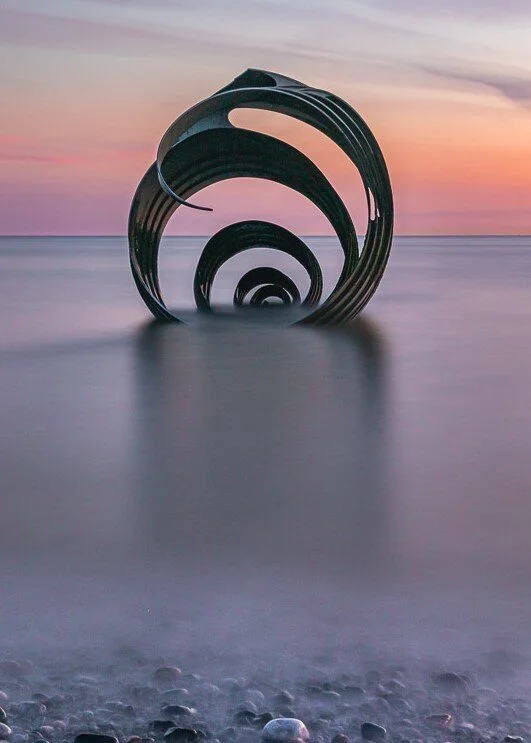
The Sun and The Shell. Cleveleys, Lancashire. June 2020
There are many, many shots of Mary’s Shell on the mirror like sea and I wanted to take at least one with the sea in flow. When lining up this shot I was a bit worried that the pebbles could become somewhat of a barrier in the image, putting the Shell at bay, rather than drawing the viewer into the scene. However the sky came to the rescue, providing a lovely wisp in towards the shell, perhaps it had worked its magic again? However, that magic didn’t come for free. As I removed a soft graduated filter from the front of my camera, the unthinkable happened and I dropped it front first onto the jagged pebbles. The price of photography I suppose.
The lovely colours of a spring sunset on the North West coast
There was no doubt though that I wanted to grab a long exposure and really flatten that, now reducing, tide. This would allow for a mirror like effect, twinned with the beauty of the final farewell of sunlight from the day. The big stopper came out. A 10 stop filter came out of the bag and, very carefully, was attached to the front of the lens. This would allow my exposure time to increase to 5 seconds, enough to flatten out that fast moving outward tide. But that wouldn’t be enough to create the image that I really wanted. A multiple exposure would be needed. This would allow for the dying embers of sunset to be captured gloriously, whilst also capturing the side of the shell which faced into the dark of ensuing night, to be captured at a long enough exposure to capture the details hidden in the shadow. Referred to as High-Dynamic-Range Imaging, this meant that the exposure time of 5 seconds would need to be both decreased and increased in order to capture all of the detail. Three separate shots of 1, 5 and 30 seconds were merged to create the final image seen below. Exactly the image I wanted.
Dave, June 2020
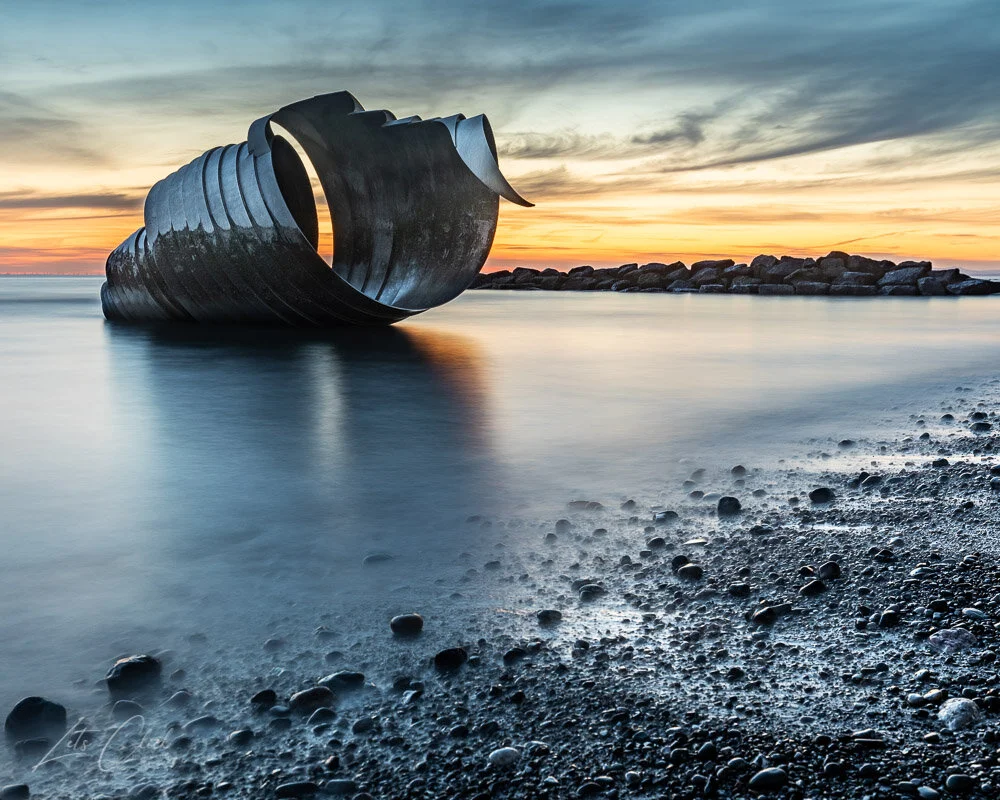
The image I wanted required a bit of time and thought but was well worth it